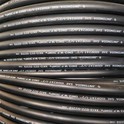
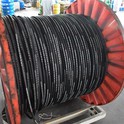
Hey there! As a supplier of Rubber Hose Pipe, I often get asked if a rubber hose pipe can be used for oil. It's a really common question, and the answer isn't as straightforward as you might think. So, let's dive right in and explore this topic together.
First off, it's important to understand that not all rubber hose pipes are created equal. The rubber used in hoses is formulated to have different properties depending on its intended use. For oil applications, the hose needs to be able to withstand the chemical properties of the oil, as well as any temperature and pressure variations it might encounter.
Some types of rubber are naturally more resistant to oil than others. For example, nitrile rubber (NBR) is well - known for its excellent oil resistance. It can handle a wide range of oils, including petroleum - based oils, hydraulic oils, and lubricating oils. NBR hoses are often used in automotive and industrial applications where oil transfer is required.
On the other hand, natural rubber (NR) is not suitable for oil applications. Natural rubber will swell and degrade when it comes into contact with oil, which can lead to leaks and failures. So, if you're thinking about using a rubber hose for oil, make sure it's made from a type of rubber that can handle the job.
Another factor to consider is the temperature. Oils can get pretty hot, especially in high - performance engines or industrial machinery. A rubber hose that's used for oil needs to be able to maintain its integrity at elevated temperatures. Some hoses are rated for specific temperature ranges, and it's crucial to choose one that matches the operating temperature of your oil system.
Pressure is also a key consideration. Oil systems can operate at different pressures, and the hose must be able to withstand these pressures without bursting or leaking. Hoses are typically rated for a maximum working pressure, and you should always choose a hose with a pressure rating that exceeds the maximum pressure of your oil system.
Now, let's talk about the specific types of hoses that are commonly used for oil. One of the popular options is the Hydraulic Hose. Hydraulic hoses are designed to handle high - pressure oil in hydraulic systems. They are usually made from multiple layers of rubber and reinforcement materials, such as braided or spiraled steel wire, to provide strength and flexibility.


If you're looking for a longer - length hose, the JINTONGDA Rubber Hose 15m could be a great choice. This hose is made from high - quality rubber and is suitable for a variety of oil - related applications. It offers a good balance between flexibility and durability, making it easy to install and use.
Our Rubber Hose Pipe line also includes a range of hoses that are specifically designed for oil. These hoses are tested to ensure they meet strict quality standards and can provide reliable performance in oil environments.
It's also worth mentioning that using the right fittings is just as important as choosing the right hose. The fittings need to be compatible with the hose and the oil system. They should be properly installed to prevent leaks and ensure a secure connection.
In some cases, you might need to take additional precautions when using a rubber hose for oil. For example, if the oil contains additives or aggressive chemicals, the hose might need to have a special lining or coating to protect it.
So, to sum it up, yes, a rubber hose pipe can be used for oil, but it has to be the right type of rubber hose. You need to consider factors like the type of oil, temperature, pressure, and the specific requirements of your application.
If you're in the market for a rubber hose for your oil system, don't hesitate to get in touch. We can provide you with expert advice and help you choose the right hose for your needs. Whether you're working on a small automotive project or a large - scale industrial application, we've got the products and knowledge to support you. Come and talk to us about your requirements, and let's find the perfect solution for your oil - handling needs.
References
- Handbook of Rubber Technology, K. C. Biswas
- Rubber Materials and Products, R. F. Ohm