



Hydraulic Hose Assembly
Your Leading Hydraulic Hose Assembly Manufacturer in China!
JUYE JINTONGDA PIPE INDUSTRY CO, Ltd is a professional manufacturer of steel wire braided hydraulic tubing with various specifications from 1999. Now we produce 1SN, 2SN, 4SP and 4SH hydraulic hoses as per American standards of SAEJ517, standards of DIN. With competitive prices, stable products quality and timely delivery, we have established long-term business relations with customers from more than 50 countries.
Quality Assurance
Our parts are checked for quality assurance at multiple points of the manufacturing process to insure we supply the very best products to our customers. We perform hydraulic impulse and hydraulic pressure testing to guarantee safe and effective operation during field use.
Wide Range of Applications
We are the one-stop shop for you to get all hydraulic hoses. Our products are widely used in agriculture, construction, coal mining, machinery, garden industry, automobile industry, oil & gas industry.
Complete Qualifications
We can provide material certs, conformance certs, all levels of PPAPS and RoHS compliance statements, 3TG compliance statements and other documentation, just request the forms you need when placing your RFQ with our team.
Highly Skilled Technical Team
We employ fluid power and mechanical engineers with degrees, along with trained and certified specialists. These professionals are available for you to have direct access to and will help diagnose your particular system and provide you recommended solutions.
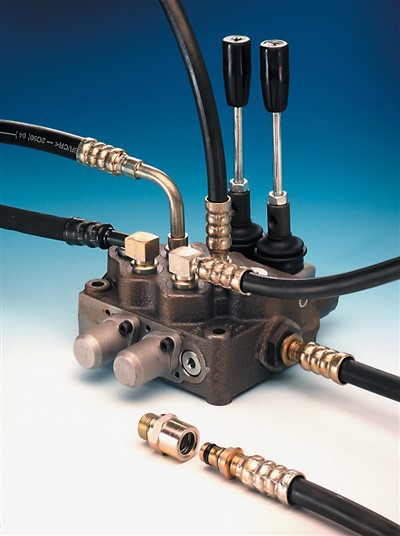


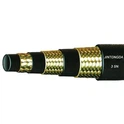

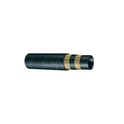

A hydraulic hose assembly is when the hose pipe is attached with fittings on the ends, which enables it to connect with machines and systems. It then helps transfer media/fluid from one end of the hose pipe to another. Hoses and assemblies: To many, they are one in the same. But technically, they are quite different.
What We Can do?
Custom Ends
We can manufacture the exact hose end your application requires.
Lay Line Branding
We offer customized branding for your OEM assemblies.
Gravimetrics
We have a cleanliness testing laboratory on site and can provide gravimetric reporting.
Pellet Cleaning
Our clean and pack area features an advanced pellet cleaning system.
Label / Ink Jetting
We provide many forms of custom labeling such as tags, ink jet printing, laser etching and more.
How to Make Hydraulic Hose Assembly?
A hydraulic hose is one piece of the puzzle within a hydraulic hose assembly. A hydraulic hose assembly actually consists of a hose and fittings. These fittings are what connect the hose to the other components within a hydraulic system. Hydraulic hose assemblies are made for many applications and are commonly found within the construction, injection molding, material handling and agricultural markets.

Collar Insert
First, the technician inserts a hose collar onto one end of the hose. The job of the collar is to hold the whole assembly in place. The technician twists the collar on until the hose is just short of the inside rim of the collar, to leave room for the hose to expand.
Projectile Cleaning
The hose gets cut on a chop saw and immediately after has a projectile shot through it. The purpose of the projectile is to clean any debris that may have entered into the hose due to the chop saw. After this, the hose is considered to be “ultra clean.”
Hose Measurement and Cutting
Next, the technician measures the hose to the required length, and cuts back to the center of the collar, as the fitting will provide that additional length.
Fitting Identification and Insertion
The proper fittings must be identified. Once identified, lubricants are applied to the threads of the fitting insert. Applying lubricant allows the fitting to be inserted easily and evenly, without marring or damaging the inner liner of the hose. The fitting should start to thread in easily.
Finishing the Hose
Then, a high-torque machine is used to thread in the insert the rest of the way. The same procedure will be performed on the other end of the hose, with the other fitting.
The Benefits of Using Custom Hydraulic Hose Assembly
When you have hoses that are designed specifically for the application in which they will be used, you can be certain you’ll get a better fit, and thus a better connection. If you try to use generic hoses for a wide range of purposes, it’s not as likely they’ll fit properly, which could make leaks of hydraulic fluid much more likely and potentially cause a dangerous situation, or at the very least an expensive problem.
It’s a lot easier to replace your hoses faster when the time comes if the hose has been custom-designed for the application at hand. Because it was designed to work with the equipment, everything will match and connect properly without you having to take extra time to tweak the connection and wrench it in place. Changes become much more efficient and less of a hassle, allowing you to increase productivity.
Generic hoses are mass-manufactured and aren’t as likely to use the same quality of materials or design. In addition, when those hoses are used in a variety of different applications, it’s a sure bet they will wear out faster than hoses that are only used for their designed purpose. Because custom-designed hydraulic hoses fit better, they don’t have to be bent, twisted or pulled in such a way that will make them fit. The result is longer-lasting, better-quality hoses that will be an excellent investment and able to stand the test of time in your facility.
Sure, you could get mass-produced generic hoses in bulk for a cheaper price per unit. But beyond this simply being a poor investment in terms of quality, it also fails to take into account one of the other benefits of going custom: the ability to support local businesses. Custom hydraulic hose manufacturers are often locally based, and you can support these companies in your local area by allowing them to design and manufacturer the hoses you need to your exact specifications.
Technical Guide: Step-By-Step Hydraulic Hose Assembly
- Hydraulic hose.
- Hydraulic hose fitting.
- Hose lubricant.
- Calipers.
- Paint pen.
- Safety goggles.
- Crimping machine.
- Crimping die and collar.
- Ultra Clean nozzle, projectiles, and clean seal caps.
At this point, put on your safety equipment. Company protocol is to wear safety glasses while cutting and crimping.
When selecting a fitting series, consider the working pressure, style, type, orientation, attachment methods, and material for its corrosion resistance. It is very important that you do not interchange hose and fitting brands.
Architectural design & planning cepteur sint occaecat cupidatat proident, taken possession of my entire soul, like these sweet mornings of spring which I enjoy with my whole...Architectural design & planning cepteur sint occaecat cupidatat proident, taken possession od my entire soul, like these sweet mornings of spring which I enjoy with my whole Lorem ipsum dolor sit ament, consectetur adipisicing elit,sed do eiusmod tempor incididunt labore et dolore magna aliqua. it enim ad minim veniam.
Determine insertion depth of the fitting by utilizing a hose insertion depth block or marking hose from hose end. Draw a thick chalk line around the hose to identify the insertion depth. Lubricate hose with P-80 if necessary, however, do not lubricate if using a spiral hose. Push the hose into the fitting until the mark on the hose is even with the end of the shell.
Confirm the capabilities of the crimping machine and adjust its settings or change die as necessary. Make sure to choose the correct crimp diameter for each hose assembly.
Select the appropriate crimper die set. A crimper die is specifically designed for certain hoses and fittings so make sure to verify the die set by using the crimper decal. As needed, lubricate the die bowl using a premium quality lithium-base grease.
Architectural design & planning cepteur sint occaecat cupidatat proident, taken possession of my entire soul, like these sweet mornings of spring which I enjoy with my whole...Architectural design & planning cepteur sint occaecat cupidatat proident, taken possession od my entire soul, like these sweet mornings of spring which I enjoy with my whole Lorem ipsum dolor sit ament, consectetur adipisicing elit,sed do eiusmod tempor incididunt labore et dolore magna aliqua. it enim ad minim veniam.
After you clean the hose, it is a good idea to cap the assembly on both ends. You can use plastic caps or heat shrink caps. Ultra Clean heat shrink caps or Clean Seal caps are a quick, easy, and clean alternative to cap your hose and fitting assemblies. Simply put a cap on a hose or fitting end and place in the heat shrink machine for a few seconds for a contamination-free hose assembly. The caps are available in fifteen different sizes and come in package or bulk quantities to fit your specific requirements.
Place the die ring on the step of adapter bowl. Reference the decal on the crimper for tool selection.
Turn on the machine. The cylinder head will slowly move down. As it pushes the collar, the collar compresses the die. Do not touch the machine until the collar is firmly at the bottom of the die. The machine should then stop.
Check the paint mark which you made on the hose. If it is no longer at the base of the fitting, it means the hose or the fitting moved during the crimping. However tight it may seem, this is not a good crimp. Otherwise, if the chalk mark is in place, you have successfully crimped the ends of the hydraulic hose. Measure the crimp diameter on a flat surface of the crimped shell and verify the crimp diameter referenced on the decal. Never use or sell hose assemblies with incorrect crimp diameters.
The Key Components of a Hydraulic Hose Assembly
Hydraulic hoses and their fittings have to meet various specifications, and hoses are typically designed to comply with either EN standards or SAE standards – the latter being the most commonly used in the UK. Hydraulic hoses come in many different shapes, sizes and materials. However, one thing that remains the same across the board is the main components that make up a hose assembly. These are
A crucial part of any hydraulic hose assembly. Hose end fittings are essential for holding and directing the flow of fluid, preventing leaks, maintaining specified pressure inside the hose and securely connecting the hose to other components in the hydraulic system such as cylinders, valves and pumps. There are many different types of hydraulic hose fittings with a very wide range of thread types and forms. No matter the fitting, they should always be designed to be compatible with the specific hose, and with the fluid used. Hydraulic fittings are most commonly assembled using the crimp method. Fitting components comprise
A ferrule: This section of the fitting is attached over the outer layer of the hose.
A hose insert: The insert pushes directly to the inner tube and extends out from the hose with the appropriate end thread, flange/fitting to attach to a component.
Inner lining
The internal part of the hose is typically a plastic or rubber inner lining which houses the hydraulic fluid. The material chosen will depend on the type of fluid that it will contain, in order to guarantee compatibility and avoid corrosion.
Reinforcement
The inner lining is encased in a coiled or braided wire reinforcement layer to provide support and enable the hose to withstand both internal and external pressure.
Outer layer
The third layer of a hydraulic hose is a protective cover that protects the hose against damage from external sources such as the environment, wear and abrasion. The outer layer is made from a rigid yet flexible material which ensures the integrity of the fluid is contained without impacting the operations.
Three Common Methods to Clean Inner Hose Linings
There are three common cleaning methods for hydraulic hose assemblies: air, fluid flushing, and projectiles. Each one has its uses and disadvantages, depending on the contamination level.
Air Cleaning
Air cleaning involves using compressed air to blow out any debris or contaminants from the inside of the hose assembly. It is effective for removing loose debris, dust, or other particles that may be present inside the hose assembly. It can be fast and cost-effective, but it is not effective for removing heavy or stubborn contaminants that may be present.
Fluid Flushing
Fluid flushing involves pumping a cleaning fluid through the hose assembly to remove any contaminants that may be present inside the hose. This method is often used when the hose assembly has been exposed to particularly dirty or contaminated hydraulic fluid. Fluid flushing requires a specialized flushing rig or a system that can provide the necessary flow and pressure to flush out the contaminants.
Projectile Cleaning
In Projectile cleaning, a foam pellet or sponge is inserted into the hose assembly and then propelled through the hose using compressed air or fluid pressure. As the projectile moves through the hose, it scrubs the inner surface of the hose and removes any contaminants that may be present. This method is very effective for a variety of hoses, but it can be time-consuming and require specialized equipment.
When choosing a cleaning method for hydraulic hose assemblies, it's important to consider the degree of contamination, the type of hose material, and any safety concerns. It's also important to use appropriate personal protective equipment (PPE) and safety measures when performing cleaning procedures
Ultimate FAQ Guide to Hydraulic Hose Assembly
Q: What is the purpose of a hose assy?
Q: What is fluid power hose assembly?
Q: What is the difference between a hose and a hose assembly?
Q: What is hose assembly working pressure?
Q: What are the three types of flexible hose assemblies?
Q: What are the three parts of a hydraulic hose?
Q: How tight should hydraulic fittings be?
Q: What is a thing called that is at the end of a hose?
Q: What is the difference between hydraulic tubing and hoses?
Q: What parts are used to connect hoses pipes and tubes in hydraulic systems?
Q: What is the difference between hydraulic hose and industrial hose?
Q: How many types of hose fittings are there?
Q: What PSI should hydraulic lines be?
Q: What is flexible hydraulic hose?
Q: What are the different types of hydraulic hose connection?
Q: What is the most common hydraulic hose?
Q: What is the difference between rubber hose and hydraulic hose?
Q: What are the advantages of hydraulic hoses?
Q: What is the hydraulic hose assembly used for?
Q: What precautions should be taken when installing hydraulic hoses?
As one of the leading hydraulic hose assembly manufacturers and suppliers in China, we warmly welcome you to buy discount hydraulic hose assembly for sale here from our factory. All our products are with high quality and competitive price.
hydraulic hose for loaders, flexible hydraulic hose, hydraulic hose for filters