



Hydraulic Rubber Hose SAE J517
Your Leading Hydraulic Rubber Hose SAE J517 Manufacturer in China!
JUYE JINTONGDA PIPE INDUSTRY CO, Ltd is a professional manufacturer of steel wire braided hydraulic tubing with various specifications from 1999. Now we produce 1SN, 2SN, 4SP and 4SH hydraulic hoses as per American standards of SAEJ517, standards of DIN. With competitive prices, stable products quality and timely delivery, we have established long-term business relations with customers from more than 50 countries.
Quality Assurance
Our parts are checked for quality assurance at multiple points of the manufacturing process to insure we supply the very best products to our customers. We perform hydraulic impulse and hydraulic pressure testing to guarantee safe and effective operation during field use.
Wide Range of Applications
We are the one-stop shop for you to get all hydraulic hoses. Our products are widely used in agriculture, construction, coal mining, machinery, garden industry, automobile industry, oil & gas industry.
Complete Qualifications
We can provide material certs, conformance certs, all levels of PPAPS and RoHS compliance statements, 3TG compliance statements and other documentation, just request the forms you need when placing your RFQ with our team.
Highly Skilled Technical Team
We employ fluid power and mechanical engineers with degrees, along with trained and certified specialists. These professionals are available for you to have direct access to and will help diagnose your particular system and provide you recommended solutions.


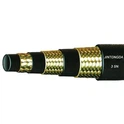

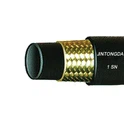
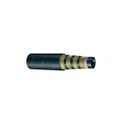
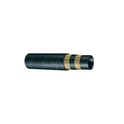

Hydraulic hose construction and performance is covered by various national and international standards including ISO, BSI, SAE, DIN, API and CETOP. Most proprietary hoses conform to one standard or another, the SAE standards being the most widely followed. SAE standards provides general, dimensional and performance specifications for the most common hoses used in hydraulic systems on mobile and stationary equipment.
SAE is based on construction technique and material of hydraulic hose. The various application parameters required when selecting hose are size, temperature, fluid type and pressure, to name a few. Depending on these criteria, the choice of hose construction will change to suit the conditions. The majority of hydraulic machines are not exotic, and typically your standard 100R1 or 100R2 ("1-wire" and "2-wire" respectively) hoses are appropriate. When extreme pressures and exotic fluids come into play, however, the options for suitable hose are reduced.
Hydraulic hoses work by using hydraulic fluid to transfer force between two different components. When fluid is pressurised, it generates force that can be used to power different components. The hydraulic hose acts as a flexible connection, allowing the fluid to move from one part of the machine to another.
The hose will be connected to the hydraulic components using fittings that are designed to create a tight seal and prevent leaks. When hydraulic fluid is pumped into the hose, it creates pressure that causes the hydraulic components to move or operate. The flexibility of the hose allows the components to move without placing unnecessary strain on the system.
As hydraulic hoses are an integral part of many systems, they must be both designed and maintained properly to ensure they function correctly and prevent potential leaks or failures. This includes selecting the appropriate size and type of hose for the specific application, regularly inspecting it for any signs of wear, and replacing damaged hoses.

What We Can do?
Custom Ends
We can manufacture the exact hose end your application requires.
Lay Line Branding
We offer customized branding for your OEM assemblies.
Lay Line Branding
We have a cleanliness testing laboratory on site and can provide gravimetric reporting.
Pellet Cleaning
Our clean and pack area features an advanced pellet cleaning system.
Label / Ink Jetting
We provide many forms of custom labeling such as tags, ink jet printing, laser etching and more.
SAE and EN Standards
Manufacturers in the Americans, Australia, and Europe adhere to two sets of quality standards. One is the Society of Automotive Engineers (SAE) J517, and the other is the European Norm (EN) Standards.

SAE Standards
SAE hose standards are the most popular benchmark in the hydraulics industry. To be more specific, J517 are guidelines that apply to the current SAE 100R series of hydraulic hoses. Sixteen hose styles exist. SAE designates these as 100R1 through 100R16. Each style must meet a dimensional and performance characteristics, which SAE sets forth. Meeting SAE standards is voluntary. Having these standards simply assured a similarity across products and different manufacturers.
EN Standards
EN standards evolved from on DIN German standards. Asian manufacturers follow these standards as well, but they gravitated toward EN specifications. Much of this is because EN-rated hose has a higher pressure rating than the equivalent SAE hose. This provides better safety factors.


Hydraulic hoses are often constructed of multiple materials. The most common materials are fluoropolymers and silicone, elastomers, metal, and thermoplastics. Composite or laminated materials are also common.
Rubber and elastomeric hydraulic hose is a strong choice when you need flexibility. Fluoropolymer hose has a durable flex life as well. It also has excellent corrosion and chemical resistance, and it can handle high temperatures.
Thermoplastic hydraulic hose has a tight minimum bend radius. It also features superior resistance to kinks. Metal hoses handle high temperatures and high flow materials well.
They can also handle high pressures. Finally, they can be flexible or stiff Flexible hoses are easy to install and route compared to rigid tubing. The flexibility reduces noise and vibrations. It also dampens pressure surges and allows for movement between the parts.
SAE Hose Designations
The Society of Automotive Engineers (SAE) dictates the specifications for hydraulic hoses. They use “100R Series” numbers to designate hose standards. Below is a list of the most common hose numbers.
|
SAE 100R Series |
Description |
|
100R1 |
Medium-Pressure Hydraulics; 1 Steel Braid, Rubber Cover |
|
100R2 |
High-Pressure Hydraulics; 2 Steel Braids, Rubber Cover |
|
100R5 |
Single Steel Braid; Textile Cover, DOT/SAE Truck Hose |
|
100R7 |
Medium-Pressure Thermoplastic Hydraulic Hose |
|
100R8 |
High-Pressure Thermoplastic Hydraulic Hose |
|
100R12 |
Heavy-Duty, High Impulse, Four Steel Spiral Reinforcement |
|
100R16 |
Compact High-Pressure Hose; Excellent Bend Radius |
|
100R17 |
Compact High Pressure, 1 and 2 Steel Wire, Constant Pressure |
Hydraulic Rubber Hose SAE J517 Connectors
Hydraulic hose connectors are typically made of metal, such as steel or brass, and are designed to withstand high pressure and elevated temperatures. It is important to select the right type of connector for your hydraulic system to ensure safe and efficient operation.
Hydraulic hose connectors are fittings or couplings used to connect two or more hydraulic hoses or to connect a hose to a hydraulic component such as a pump, cylinder, valve, or motor. There are several types of hydraulic hose connectors available, including:
Straight Connectors
These are used to connect hoses or components in a straight line.
Elbow Connectors
These are used to connect hoses or components at an angle.
Tee Connectors
These are used to connect three hoses or components.
Cross Connectors
These are used to connect four hoses or components.
Quick-connect Connectors
These are used to quickly and easily connect and disconnect hoses or components.

There are different types of hose fittings. Their purpose is to connect hoses securely to your hydraulic system’s components, such as valves, cylinders and pumps. It’s the fittings that help hold and direct the flow of fluid, maintaining the pressure while preventing leaks.
Fittings consist of the same two components. The hydraulic hose socket, along with the stem, mate the hoses. The socket goes over the hose cove while the stem fits into the tube’s inner tube. The stem extends out from the hose and acts as a connector for equipment to attach to. Fittings are usually designed to fit a specific hose, and not just regarding size. Fittings have to be compatible with the fluid being used. Hydraulic hose manufacturers advise on the correct fitting to use, so pay attention. Your hose and assembly will need to seal, and your choice is also part of the fittings. The three major types are:
O-ring
Excellent for high-pressure applications, preventing leaks. The component’s threads pull the fitting against the port. This traps the O-ring to flatten it, forming a snug seal.
Mating angle
The seal occurs when two different angles are wedged together. These fittings are sealed with straight or parallel threads.
Tapered threads
These come in male and female threads. When they’re threaded together, the tapered threads deform. This puts pressure on the couplings, which form a tight seal. These fittings are prone to leaking due to over-torquing. They’re also not precise, but do not use tape to compensate. Tape tends to shred, causing contamination.
How Can I Choose the Right Hydraulic Rubber Hose SAE J517?
To choose the right hose, you should measure the interior and exterior diameters of the hose by using high precision tools like a calliper. Aside from that, you should also measure the length of the hydraulic hose. Determining the external diameter of the tube is crucial, especially when you are planning to use hose-support clamps or when the hose is guided through bulkheads. So, you should always check the manual for the individual specification table of each tube to determine their external diameter.
All hydraulic hoses are designed to meet a maximum working temperature, and it ranges from 90oC to 150oC (which is based on the temperature of the liquid). So, when a hose is continually exposed to temperatures that exceed the standard, it can hasten their deterioration and can reduce their flexibility. Also, you need to ensure that you use the right hydraulic oil with the required viscosity to protect the hose from high temperatures. As I’ve said earlier, you should always follow the instructions set by the manufacturer.
Will your choice of hydraulic hose meet the required bend radius? You need to ask this because when you go over the bend radius (using a much smaller one), it will damage the hose reinforcement and will warrant repairs or replacement. Also, you need to place hydraulic lines with high-pressure parallel to the contours of the machine if it is possible. By doing so, you will save money because the length of the line is shorter, and the number of hard angles is reduced (it can restrict the flow of the fluid). Aside from that, you can also protect the hoses from damage, and it will be easier to repair in the future.
It is necessary to check a compatibility chart to see if the hose assembly is suitable for the fluid that will be used in the system. Due to the elevated temperature, fluid contamination, and liquid concentration will all play a role in the chemical compatibility of the hose and the fluid. Also, almost all hydraulic hoses are made out of petroleum-based oils, and newer, biodegradable or “green” fluids may pose a risk for a limited number of hoses.
The working pressure of the hydraulic hose must always be maintained so that it reaches or exceeds the maximum pressure that the system can handle including pressure spikes. If a pressure spike is above the standard operating pressure, it will likely damage the hydraulic hose and shorten its life.
The hose of your choice must have a coupling-to-hose mechanical interface that should be compatible with it. Besides, the right mating thread end must be used for the mating components to be leak-free when sealed. Permanent type couplings are usually used for industrial equipment, large-scale rebuilders, and repair shops while field-attachable couplings allow for more flexibility.
Is the product widely available or is it hard to find? How soon can you have it if you order from the distributor? So, it may be a better idea to consider a lot of options first to select one that offers flexibility and lessen the delays that can stem from choosing parts that are discontinued or in short supply.
Ultimate FAQ Guide to Hydraulic Rubber Hose SAE J517
Q: How do you preserve hydraulic hoses?
Q: Do hydraulic hoses need to be bled?
Q: What is the life expectancy of a hydraulic hose?
Q: How do you preserve rubber tubing?
Q: What causes the service life of hydraulic hoses to be shortened?
Q: Can you reuse hydraulic hose?
Q: Can you temporarily fix a hydraulic hose?
Q: How do you test a hydraulic hose?
Q: What is the common defect in the hydraulic hose?
Q: How do you stop rubber from deteriorating?
Q: How often do hydraulics need maintenance?
Q: What is the end of a hydraulic hose called?
Q: What is the most common cause of premature hydraulic hose failure?
Q: What are the signs indicate that a hose needs to be replaced?
Q: How tight should hydraulic hoses be?
Q: What is a rubber hydraulic hose used for?
Q: In which applications hydraulic hoses should be used?
Q: Can you use hydraulic hose for transmission line?
Q: Can you use hydraulic hose for oil?
As one of the leading hydraulic rubber hose sae j517 manufacturers and suppliers in China, we warmly welcome you to buy discount hydraulic rubber hose sae j517 for sale here from our factory. All our products are with high quality and competitive price.
hydraulic hose for metro construction, hydraulic hose for change management systems, hydraulic hose for switchgear systems