



Rubber Hose
Your Leading Hydraulic Rubber Hose SAE J517 Manufacturer in China!
JUYE JINTONGDA PIPE INDUSTRY CO, Ltd is a professional manufacturer of steel wire braided hydraulic tubing with various specifications from 1999. Now we produce 1SN, 2SN, 4SP and 4SH hydraulic hoses as per American standards of SAEJ517, standards of DIN. With competitive prices, stable products quality and timely delivery, we have established long-term business relations with customers from more than 50 countries.
Quality Assurance
Our parts are checked for quality assurance at multiple points of the manufacturing process to insure we supply the very best products to our customers. We perform hydraulic impulse and hydraulic pressure testing to guarantee safe and effective operation during field use.
Wide Range of Applications
We are the one-stop shop for you to get all hydraulic hoses. Our products are widely used in agriculture, construction, coal mining, machinery, garden industry, automobile industry, oil & gas industry.
Complete Qualifications
We can provide material certs, conformance certs, all levels of PPAPS and RoHS compliance statements, 3TG compliance statements and other documentation, just request the forms you need when placing your RFQ with our team.
Highly Skilled Technical Team
We employ fluid power and mechanical engineers with degrees, along with trained and certified specialists. These professionals are available for you to have direct access to and will help diagnose your particular system and provide you recommended solutions.


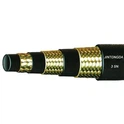

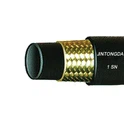
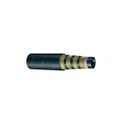
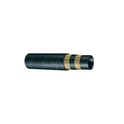

Rubber hoses are designed for specific fluid, temperature, and pressure ranges and are provided in various specifications. Rubber hoses consist of a minimum of three layers: a seamless synthetic rubber tube; one or more reinforcing layers of braided or spiraled cotton, wire, or synthetic fiber; and an outer cover. The inner tube is designed to withstand the attack of the fluid that passes through it. The braided or spiraled layers determine the strength of the hose. The more layers there are, the greater the pressure rating is. Hoses are provided in three pressure ranges: low, medium, and high. The outer cover is designed to withstand external abuse and contains identification markings.
What We Can do?
Custom Ends
We can manufacture the exact hose end your application requires.
Lay Line Branding
We offer customized branding for your OEM assemblies.
Gravimetrics
We have a cleanliness testing laboratory on site and can provide gravimetric reporting.
Pellet Cleaning
Our clean and pack area features an advanced pellet cleaning system.
Label / Ink Jetting
We provide many forms of custom labeling such as tags, ink jet printing, laser etching and more.
Features Of Rubber Hose
Flexibility
They are highly flexible and can bend and conform to a variety of shapes and angles, making them ideal for use in tight spaces.
Durability
Resistant to abrasion, impact, and most chemicals, rubber hoses can withstand harsh environments and heavy use over a long period of time.
Temperature Resistance
Rubber hoses can be designed to withstand high or low temperatures, depending on the specific application.
Pressure Resistance
When reinforcement layers are added to rubber hoses, it improves their pressure resistance.
Electrical Conductivity
Some rubber hoses can be designed to be electrically conductive, which makes them useful in applications where static electricity buildup is a concern.
Types Of Rubber Hoses In Industrial Applications
Fuel Hose
Fuel hoses are required to have extremely low permeability to fuel in order to regulate and lower hydrocarbon emissions. Mixed fuels like ethanol, methanol etc. require hoses with high resistance to polar solvents. Adding carbon blacks to rubber hoses reduces both permeability of gasoline and swelling of solvents.
Radiator Hose
Radiator hoses are resistant to coolants at elevated temperatures.
Industrial Hose
There are various types of applications of industrial hoses, including water and steam hoses, air hoses, oil and petroleum hoses, refrigerant hoses, and chemical hoses. Here also, strength and resistance to solvents and chemicals are key requirements.
Fire Service
Fire hoses are one of the most recognized hose pipe in industrial usage as they are largely applied in Fire stations and Fire Brigades. The inside of the hose is composed with water resistant rubber compound suitable for the intended use. The cover is also made from rubber which gives outstanding resistance to heat and abrasion.
Garden Hose
This is used to water plants in a garden or lawn or to carry water to a sprinkler for the same purpose.
Air hoses
These hoses are used in underwater diving to carry air from the surface or from air tanks.
Automotive Hoses
These are used in automobiles to move fluids around for use in lubrication or cooling and in hydraulics.
Common Materials of Rubber Hose
Natural rubber (NR) exhibits high tensile strength, abrasion resistance, resilience, tear strength and low hysteresis, giving it the most robust physical properties of any of the types compared here. It is ideal for bulk or dry material transfer. Natural rubber is a polymer of isoprene (2-methyl-1,3-butadiene) with a molecular weight of 100,000 to 1,000,000. Unlike synthetic rubber, it is bio-degradable and ecologically friendly, as its material is obtained from cultivated rubber trees (hevea brasiliensis) in the form of latex (isoprene). Polyisoprene, which is chemically similar to NR, has lower strength properties than the natural form but better low-temperature properties. Both rubbers are susceptible to degradation by weathering characteristics, and both show poor resistance to mineral and petroleum-based oils and fuels, making them unsuitable for oil/fuel transfer, which might cause the hose to swell and become weakened. NR has the lowest operating temperature range, typically from -50°C to 70°C, hence it is only applicable for a moderate application.
Styrene-Butadiene Rubber (SBR) is a copolymer of styrene and butadiene and is a cheaper alternative to NR. SBR compounds have similar physical properties to those of natural rubber, though they are not as robust. SBR is suitable for use as a utility hose to transfer air and water. SBR is not oil resistant hence is not applicable for fuel transfer hose. Like natural rubber, it will swell and become weakened by oil and hydrocarbon.
Ethylene Propylene Diene Monomer (EPDM) is the product of Ethylene and Polypropylene polymerization. EPDM elastomers have a fair tensile strength and excellent resistance to weathering, ozone and chemicals. They also exhibit excellent electrical insulation properties. Due to its weather, heat and ozone resistance, EPDM is the perfect hose cover, especially for outdoor environments. High-temperature tolerance-between 150°C (302°F) and 204°C (400°F) in water or steam)-makes EPDM an excellent steam hose, and it is also a great choice for conveying low and high pH fluid. However, EPDM is not oil resistant-thus unsuitable for fuel transfer hose-and can also be very costly.
Nitrile rubber (NBR) is the general term for acrylonitrile butadiene copolymer. The acrylonitrile content of nitrile sealing compounds varies considerably-from 18% to 50%-which influences the physical characteristics of the finished material. Of all the types examined here, Nitrile Rubber (NBR) has the best oil resistance, making it the ideal choice for a fuel transfer hose. The higher the acrylonitrile content, the better the resistance to oil and fuel. However, this may come at a cost; elasticity and compression resistance are adversely affected, and because of these effects, a compound with medium acrylonitrile content is often selected. NBR has decent mechanical properties when compared with other elastomers, and high wear resistance. However, NBR is not ozone or weather resistant and therefore not ideal as a hose cover.
Neoprene (CR) is typically used as hose cover because of its flame-retardant property. It also exhibits decent ozone, aging and chemical resistance. It has good mechanical properties over a wide temperature range, typically as high as 121°C (250°F) and as low as -40°C (-40°F). Neoprene demonstrates good oil resistance and was originally intended to be an oil resistant replacement for natural rubber. Neoprene is made from the polymerization of Chloroprene monomer, which was the first synthetic rubber developed commercially.
Applications of Rubber Hoses

Automotive and Transportation
In the automotive and transportation industry, rubber hoses are used for various applications, including fuel and brake line systems, air conditioning systems, and cooling systems, as they offer high heat and pressure resistance, flexibility, and durability.
Agriculture and Irrigation
Rubber hoses are commonly used in agriculture and irrigation industry to transfer water and fertilisers to crops.
Chemical and Petrochemical Industries
They are extensively used in chemical and petrochemical industries for transferring various chemicals, acids, and solvents, as they offer excellent chemical resistance and durability.
Food and Beverage Industries
Rubber hoses are used for transferring food and beverage products, including milk, beer, wine, and juices, as they are hygienic, odourless, and tasteless.
Marine and Offshore Applications
They are used for various applications, including ship-to-shore transfer of crude oil, petroleum products, and chemicals, as they offer excellent resistance to saltwater, weathering, and UV radiation.
Components of a Rubber Hose
A rubber hose is not just a simple tube; it consists of several essential components that work together to provide strength, flexibility, and durability. Understanding these components will give you a deeper appreciation of the complexity involved in designing and manufacturing rubber hoses.
The inner tube is the core component of a rubber hose. It is responsible for conveying the fluid or material being transferred. Typically made of synthetic rubber, such as nitrile rubber or EPDM (ethylene propylene diene monomer), the inner tube is designed to be resistant to the specific fluid or material it will come in contact with. It ensures compatibility and prevents any chemical reactions or degradation.
Reinforcement layers provide strength and stability to the rubber hose. They are usually made of synthetic fibres or steel wire braids, depending on the application and desired strength. Reinforcement layers prevent the hose from collapsing under a vacuum or bursting under high pressure. These layers also contribute to the hose’s flexibility and resistance to kinking.
The outer cover of a rubber hose acts as a protective shield. It guards against abrasion, environmental elements, and chemical exposure. The cover is typically made of synthetic rubber or a blend of rubber and other materials like PVC (polyvinyl chloride). It enhances the hose’s resistance to wear and tear, UV radiation, and ozone damage. The cover may also have additional properties, such as flame resistance or high-temperature resistance, based on specific application requirements.
Couplings and hose fittings are crucial components that enable the connection of the rubber hose to other equipment or devices. They provide a secure and leak-free attachment, ensuring efficient fluid transfer. Common types of couplings and fittings include threaded connectors, quick-connect fittings, and flanges. These components are designed to match the specific hose size and end connections required for a particular application.
How Do I Choose the Right Rubber Hose for My
The type of rubber hose you choose depends on your application and the specific properties you desire. In general, there are five main factors to consider when choosing a rubber hose
Temperature
Depending on the temperature of your application, you will need to select a hose that can withstand extreme hot or cold temperatures.
Pressure
The pressure rating of the hose will determine how much pressure the hose can withstand before it fails.
Chemical Compatibility
You need to make sure that the hose you select is compatible with the chemicals it will be exposed to.
Flexibility
Some hoses are more flexible than others. If your application requires a hose to be routed in a tight space, you will need a more flexible hose.
Weight
Heavier hoses can be more difficult to handle and may cause fatigue over time. If your application requires a hose to be moved around often, you will need to select a lighter-weight hose.
How to Store Rubber Hose Properly?
Physical Storage Conditions
Rubber hose must be stored away from mechanical pressure, including excessive stretching, compression, or deformation, and from contact with sharp or sharp objects. The rubber hose should be stored in a suitable bracket or placed on dry ground. Coiled hose must be stored horizontally. Rubber hose should not be stacked. If the stack cannot be avoided, the stack height should not permanently deform the hose at the bottom. As a rule, try to avoid rubber hose wound around posts or hooks. If they are shipped in straight pipes, it is recommended that they be stored horizontally without bending.
Storage Time
A rotation plan system should be adopted to minimize the storage time of the rubber hose.
If long-term storage cannot be avoided and the following recommendations cannot be followed, the rubber hose should be thoroughly checked before use.
Contact With Other Materials
Rubber hose shall not be in contact with solvents, fuels, oils, lipids, unstable chemicals, acids, disinfectants, or general organic liquids. Moreover, rubber of any kind can be damaged by contact with certain materials or mixtures, including manganese, iron, copper and their alloys. Rubber hose should avoid contact with polyvinyl chloride (PVC) or wood or cloth impregnated with miscellaneous oil.

Ultimate FAQ Guide to Rubber Hose
Q: What factors should be considered when choosing a rubber hose?
Q: What are the most common applications for rubber hoses?
Q: Is rubber hose good?
Q: What does rubber tubing do?
Q: What are the disadvantages of rubber hoses?
Q: Are all hoses made of rubber?
Q: How long do rubber hoses last?
Q: Does rubber hose kink?
Q: What is the shelf life of rubber hose?
Q: Is a rubber hose better than plastic?
Q: How do you soften a rubber hose?
Q: What is a rubber tube called?
Q: What material is best for a garden hose?
Q: Are rubber hoses safe?
Q: How do you keep rubber hoses from cracking?
Q: Can a rubber hose freeze?
Q: Can you leave a rubber hose out in the winter?
Q: What are the properties of rubber hose?
Q: What is the unique property of rubber?
Q: What is the structure of a rubber hose?
Q: How much pressure can a rubber hose hold?
As one of the leading rubber hose manufacturers and suppliers in China, we warmly welcome you to buy discount rubber hose for sale here from our factory. All our products are with high quality and competitive price.
sterile rubber hose, rubber hose recommendation, rubber hose dealer