



Your Leading Hydraulic Rubber Hose SAE J517 Manufacturer in China!
JUYE JINTONGDA PIPE INDUSTRY CO, Ltd is a professional manufacturer of steel wire braided hydraulic tubing with various specifications from 1999. Now we produce 1SN, 2SN, 4SP and 4SH hydraulic hoses as per American standards of SAEJ517, standards of DIN. With competitive prices, stable products quality and timely delivery, we have established long-term business relations with customers from more than 50 countries.
Quality Assurance
Our parts are checked for quality assurance at multiple points of the manufacturing process to insure we supply the very best products to our customers. We perform hydraulic impulse and hydraulic pressure testing to guarantee safe and effective operation during field use.
Wide Range of Applications
We are the one-stop shop for you to get all hydraulic hoses. Our products are widely used in agriculture, construction, coal mining, machinery, garden industry, automobile industry, oil & gas industry.
Complete Qualifications
We can provide material certs, conformance certs, all levels of PPAPS and RoHS compliance statements, 3TG compliance statements and other documentation, just request the forms you need when placing your RFQ with our team.
Highly Skilled Technical Team
We employ fluid power and mechanical engineers with degrees, along with trained and certified specialists. These professionals are available for you to have direct access to and will help diagnose your particular system and provide you recommended solutions.


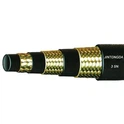

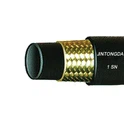

A rubber hydraulic hose is a flexible tube made of rubber that carries hydraulic fluid to and from hydraulic components, such as valves, pumps, motors, and cylinders. The hose's inner layer is usually made of synthetic rubber or thermoplastic material, which is resistant to hydraulic fluid, oil, and chemicals. The outer layer is designed to protect the hose from abrasion, weather, and other external factors.
What We Can do?
Custom Ends
We can manufacture the exact hose end your application requires.
Lay Line Branding
We offer customized branding for your OEM assemblies.
Gravimetrics
We have a cleanliness testing laboratory on site and can provide gravimetric reporting.
Pellet Cleaning
Our clean and pack area features an advanced pellet cleaning system.
Label / Ink Jetting
We provide many forms of custom labeling such as tags, ink jet printing, laser etching and more.
Common Types of Rubber Hydraulic Hose
Rubber hydraulic hoses come in different types, sizes, and shapes, depending on the application and the type of fluid being transferred. The most common types of rubber hydraulic hoses are
Braided Hoses These hoses have a single or multiple layers of braided wire reinforcement, which provides high-pressure resistance and flexibility.
Spiral Hoses These hoses have a spiral wire reinforcement, which provides high-pressure resistance and a tighter bend radius than braided hoses.
Thermoplastic Hoses These hoses are made of thermoplastic material, which is lighter, more flexible, and more durable than rubber. They are suitable for applications that require high-pressure and high-temperature resistance.
Types of Rubber Hydraulic Hose Construction
Due to the variety of hydraulic hose applications and the range of chemicals and pressures they will be subjected to, there are likewise a number of hydraulic hose constructions.
Reinforced
This type of hosing resembles the basic three-layer construction, but with extra buffers in the reinforcement layer, most often in the form of textile braid, wire braid, or wire helix material around the inner tube.
Coiled
Coiled hoses are semi-rigid hoses designed for expansion and easy storing. Because the hose is coiled, it can stretch in such a way that does not put unnecessary pressure on the hose materials.
Corrugated
Another method of increasing expansion and flexibility in a hose is to introduce corrugation. Corrugation manifests as small threads or folds in the material of the hose, somewhat like an accordion, that allow the hose to expand and compress without damaging the housing.
Articulated
Articulated hoses are hoses built in sections, with rigid shafts connected by flexible joints. The articulation allows hoses to turn corners or swivel around other components.
Multi-element
Hoses that involve multiple elements listed above are termed “multi-element hoses.”
Parts of Hydraulic Rubber Hose
Hydraulic hoses are made up of three parts
Inner Tube This conducts the flow of the fluid. Nitrile and neoprene are two popular materials used to make hydraulic hoses, but other materials can be used.
Reinforcement This provides the strength for the hose-in other words, the working pressure. A single fiber-braid hose typically has a lower pressure rating than a single or double wire-braid hose, which in turn has a lower pressure rating than a four- or six-ply spiral reinforced hose.
Cover This protects the hose reinforcement and can be made from a variety of materials, including fiber, neoprene, vinyl nitrile and synthetic rubber.
Features of Rubber Hydraulic Hose
Greater Flexibility: Hydraulic hoses whose minimum bend radius is smaller than standard.
Higher Pressure Parameters: Hydraulic hoses whose maximum working pressure is higher than the requirements given in the standards. This extends the scope of hose applications while keeping the safety factor and the same hose diameter, so there is no need to change it (e.g. to a smaller one) or change its type (e.g. from a double braided to a spiral hose).
Higher Temperature Parameters: Hydraulic hoses have a specific temperature range in which they should operate. This range is from -40°C to +100°C (with peaks up to 125°C) for hoses with textile braids ( 2TE, 3TE type), with compact steel wire braids (1SC, 2SC,1SN, 2SN), and for a certain group of hoses with spiral braids (4SP, 4SH). For spiral hydraulic hoses with constant working pressure regardless of diameter (R12, R13, R15) the range is from -40°C to +121°C (with peaks up to 125°C). Sometimes the operating temperature of a hydraulic system may happen to be higher than the temperature of standard hydraulic hoses. If the recommended temperature is exceeded, the rubber starts to lose its flexibility and stiffens, then leakage starts to occur at hose ends, close to the fittings. In such cases, hoses with a higher operating temperature range should be used.
Greater Abrasion Resistance:The outer layer of rubber hydraulic hoses manufactured according to popular standards has limited abrasion resistance. Abrasion resistance tests are performed according to EN ISO 6945 standard. It defines the weight loss of a hose sample after a specific number of cycles and vertically applied force (e.g. an average weight loss is 0.5 g for type 1SN and 2SN hoses tested to 2 000 cycles at vertical force (25±0.5 N). To increase the abrasion resistance of the outer layer, manufacturers apply an additional layer (e.g. UHMWPE Ultra-high molecular weight PE -cross-linked polyethylene). Then, there is no need to apply an extra protection cover (e.g. hose protection spiral).
Longer Service Life: The service life of hydraulic hose assemblies under actual operating conditions depends on many factors, including:
- Fatigue strength of a flexible hose assembly exposed to variable internal pressure, bending, internal and external temperature changes.
- Ageing resistance (natural loss of mechanical properties of hose material).
- Resistance to external damage.
Common Uses of Hydraulic Rubber Hoses
Hydraulic Systems
Hydraulic hoses are extensively used in hydraulic systems to transmit hydraulic fluid under high pressure. These systems are commonly found in construction equipment, agricultural machinery, industrial machinery, and transportation vehicles.
Heavy Machinery and Equipment
Hydraulic hoses play a crucial role in heavy machinery and equipment, such as excavators, loaders, cranes, forklifts, and bulldozers. They are used to control and transmit hydraulic power for various functions like lifting, digging, steering, and braking.
Industrial Machinery
Hydraulic hoses are used in various industrial applications, including manufacturing machinery, power generation equipment, presses, machine tools, and robotics. They enable precise control and efficient transmission of hydraulic power in these systems.
Automotive and Transportation
Hydraulic hoses are used in automotive applications, particularly in braking systems and power steering systems. They help transmit hydraulic pressure to control braking force and assist in steering movements.
Aerospace and Aviation
Hydraulic hoses are utilized in aircraft and aerospace systems, such as landing gears, control surfaces, and hydraulic actuators. These hoses ensure reliable transmission of hydraulic power for critical functions in the aviation industry.
Marine and Offshore Applications
Hydraulic hoses are used in marine environments, including shipbuilding, offshore drilling platforms, and hydraulic winches. They withstand harsh conditions and transmit power for various marine operations.
Mining and Construction
Hydraulic hoses are crucial in mining and construction activities, powering equipment like rock breakers, drilling rigs, loaders, and cranes. They enable efficient and reliable operation in challenging environments.
Material Handling
Hydraulic hoses are employed in material handling equipment, including conveyor systems, lifts, and hydraulic cylinders. They facilitate the movement and control of materials in warehouses, factories, and distribution centers.
Selection Criteria For Rubber Hydraulic Hose


Material
The material of the hydraulic hose should have chemical compatibility with the hydraulic fluid coming in contact with it. The hose is generally made up of synthetic rubber, like NBR (nitrile), EPDM (ethylene propylene diene monomer), and SBR (styrene-butadiene rubber).
However, they can also be thermoplastics, Teflon, or silicone. Synthetic rubber hoses are suitable to use with hydraulic oils.
Pressure
The hydraulic hose must be able to withstand the maximum working pressure, including pressure spikes that may occur during the operation.
Temperature
The hydraulic hose should be able to work comfortably in a defined temperature range. Exposure to high temperatures for a long time can cause the hose to lose its flexibility. A high-temperature hydraulic hose should be used for such applications.
Length
The hose length should be enough to allow for bending and flexing during the movement of the machinery parts.
Diameter
The inside diameter of the hose should be compatible with the fluid flow rate for the application. The smaller the diameter, the higher the velocity. This high velocity will cause excess heat, friction, and turbulence in the system.
Bending Radius
A bending radius is a minimum radius that a looped hose can achieve without causing any damage to the hose. Bending should not occur at the start of the hose end fitting because this might result in leaks at the hose fitting. Tight bends can increase the turbulence of the hydraulic fluid which can damage the inner layer of the hose.
Reinforcement
The reinforcements can be helical, spiral, or braided design. Helical design is best for suction application and spiral design for extreme high-pressure applications. A braided design is best used for a low or moderately high-pressure application.
End Connection
Depending upon your requirement, hydraulic hoses are available with pre-made fittings for fast and easy connection, or without fittings for easy customization according to your application. For pre-made fittings, it is important to ensure the correct size fittings for compatibility with your system.
Accessories
The hoses need to be equipped with specialized hydraulic accessories to make sure they can fit on the pumps/actuators. Hydraulic hose clamps and hydraulic hose crimpers are used to ensure the hose is properly connected to the fittings and are crimped to the exact diameter. The fittings used should be specifically designed for the hydraulic application, with the ability to withstand high pressure. A hydraulic hose cutter can be used to ensure the perfect length of the hose for the application.
Tips for Rubber Hydraulic Hose Maintenance
Visual inspections are one of the most important-and one of the simplest-steps of preventative maintenance. Regularly inspect the hose system and its fittings for damage, disrepair, or signs of unusual performance problems on a daily, weekly, or monthly basis as appropriate for your application. We recommend compiling a list of signals that trigger a complete shutdown and hose assembly replacement so your employees can quickly mitigate problems. Those signals should include:
- Leaks in the hose or around the fittings.
- Fittings displacement or slippage.
- Damaged fittings, including cracks, corrosion, and other visible damage.
- Damaged hoses, including signs of cracks or charred surfaces and unusual hardness or stiffness.
- Kinks, twists and flattened or crushed portions in the hose.
- Damaged covers, including cuts, abrasions, blisters, and cracks, especially if the damage exposes the reinforcement (which requires replacement as soon as possible).
- Loose, soft, or degraded covers.
Keep in mind that no hose should ever be repaired or reused as damage and deterioration of the hose may compromise its ability for use at its original design capability.
Each industrial and hydraulic hose-and its fittings-has a known expected lifespan. Each end application is at least somewhat unique and requires consideration as to how long the hose assembly should last. Ask your manufacturer or supplier about that lifespan and the ideal interval for inspections and tune-ups. Tailor the preventative maintenance schedule to the individual components to allow your facility’s inspectors to perform efficient, optimal maintenance. At each stage of the lifespan, look for signs of cuts, kinks, corrosion, or deterioration that match the life stage of the part. We recommend that this be documented in a log of the part’s condition over time. Your facility inspectors can then monitor for increases in damage and see trends in performance. Strongly consider permanently tagging or other suitable means of marking the hose assembly. This will also assist in signaling when a hose should be inspected and replaced.
Test each hose system by operating it at its maximum rated working pressure and checking it for leaks or problems. During this test, make sure any system surges also are below the maximum permissible pressure and that personnel maintain a safe distance from the equipment in the event of a malfunction. Never inspect a hose by being in direct physical contact with a hose under pressure. Fluid injections can cause severe injury.
Even with good preventative maintenance and optimal system operations, parts of the hose system will break down over time. The elastomeric seals, for example, will start to harden, wear, or turn brittle due to both age and frequent exposure to heat and pressure. Replacing these parts anytime the hose is removed helps keep the system as a whole in good condition and doesn’t require unscheduled downtime for troubleshooting and repairs. It prevents failures that could result in injuries or loss of production.
During each step of your facility’s preventative maintenance program, keep a running record of the assembly’s condition, any parts replaced or repaired, and even that regular inspections occurred without the need for adjustment. All of this data allows your company to monitor the long-term performance of the system and see if the system is performing as expected. Analyzing the data also can help your company determine if it’s time for a new design or system. When properly equipped, destructive testing, or testing replaced parts to determine how much strain or continued use they can handle, is also a profitable analysis that can help your company reconfigure replacement schedules.
As opposed to having to turn off the machines and cause delays for known or anticipated repairs because you don’t have the parts on hand, maintain an inventory of spare parts. A smart analytics system, combined with your preventative maintenance data, can recommend the right quantities of which components to keep on-site for fast replacement. Along with an in-house inventory, you can order replacements in preparation for scheduled parts replacement tasks and streamline the entire process.
Ultimate FAQ Guide to Hydraulic Rubber Hose
Q: How to test the fatigue strength of hose assembly?
Q: What are hydraulic hoses used for?
Q: How often should hydraulic hoses be replaced?
Q: How do I choose a hydraulic hose?
Q: What is the difference between rubber hose and hydraulic hose?
Q: What is a hydraulic hose used for?
Q: What is the difference between hydraulic hose and air hose?
Q: What is the most common hydraulic hose?
Q: How do I identify a hydraulic hose?
Q: How long do hydraulic hoses last?
Q: Can I use hydraulic hose for air hose?
Q: Can you use hydraulic hose for water?
Q: What is the disadvantage of using hydraulic hose in a hydraulic system?
Q: Does hydraulic hose size matter?
Q: How often do hydraulic hoses break?
Q: What size hydraulic hose do I have?
Q: How do I know if my hydraulic hose is bad?
Q: How tight should hydraulic hoses be?
Q: Why do hydraulic hoses burst?
Q: Do hydraulic hoses have O rings?
Q: Do hydraulic hoses wear out?
As one of the leading hydraulic rubber hose manufacturers and suppliers in China, we warmly welcome you to buy discount hydraulic rubber hose for sale here from our factory. All our products are with high quality and competitive price.
hydraulic system repair rubber hose, 3 8 Rubber Hose, hydraulic system oscillation reduction rubber hose