



Low Pressure Hose
Your Leading Hydraulic Rubber Hose SAE J517 Manufacturer in China!
JUYE JINTONGDA PIPE INDUSTRY CO, Ltd is a professional manufacturer of steel wire braided hydraulic tubing with various specifications from 1999. Now we produce 1SN, 2SN, 4SP and 4SH hydraulic hoses as per American standards of SAEJ517, standards of DIN. With competitive prices, stable products quality and timely delivery, we have established long-term business relations with customers from more than 50 countries.
Quality Assurance
Our parts are checked for quality assurance at multiple points of the manufacturing process to insure we supply the very best products to our customers. We perform hydraulic impulse and hydraulic pressure testing to guarantee safe and effective operation during field use.
Wide Range of Applications
We are the one-stop shop for you to get all hydraulic hoses. Our products are widely used in agriculture, construction, coal mining, machinery, garden industry, automobile industry, oil & gas industry.
Complete Qualifications
We can provide material certs, conformance certs, all levels of PPAPS and RoHS compliance statements, 3TG compliance statements and other documentation, just request the forms you need when placing your RFQ with our team.
Highly Skilled Technical Team
We employ fluid power and mechanical engineers with degrees, along with trained and certified specialists. These professionals are available for you to have direct access to and will help diagnose your particular system and provide you recommended solutions.


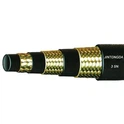

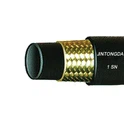
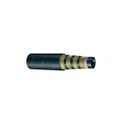
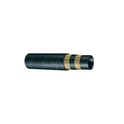

The low-pressure hydraulic hose is commonly applied to suction and return hydraulic lines, anti-static delivery lines, and some vacuum applications. Compared to the high pressure hydraulic hose, the working environment of the low-pressure hydraulic hose doesn’t require high pressure. Here working pressure is low to 300Psi, 20Bar in the hydraulic hose companies can be regarded as the low pressure hydraulic hose. Yes, low pressure hydraulic hose is still the hydraulic hose applied to convey the hydraulic fluids, including petroleum-based fluids and water-based fluids, but the working pressure is not that high.
What We Can do?
Custom Ends
We can manufacture the exact hose end your application requires.
Lay Line Branding
We offer customized branding for your OEM assemblies.
Gravimetrics
We have a cleanliness testing laboratory on site and can provide gravimetric reporting.
Pellet Cleaning
Our clean and pack area features an advanced pellet cleaning system.
Label / Ink Jetting
We provide many forms of custom labeling such as tags, ink jet printing, laser etching and more.
The Components Of Low Pressure Hose
Air and Vacuum Lines: Most low-pressure hoses are used for air and vacuum lines in airplanes. Air lines feed air to various systems, whereas vacuum lines create a “suction” for various systems. For air and vacuum lines, many airplanes use low-pressure hoses.
De-icing systems are often powered by low-pressure hoses. In cold climates, airplanes may deliver compressed air over the wings and fuselage to remove ice. Landing gear may also be powered by low-pressure hoses. Low-pressure hoses can feed air to an airplane’s pneumatic landing gear. Regardless, low-pressure hoses are typically used as air and vacuum lines in airplanes.
Fittings: Low-pressure hoses support fittings. Also known as a coupler, a fitting is a connector component that’s designed to join two or more hoses. You can slide a fitting over the end of one low-pressure hose, after which you can connect it to another low-pressure hose.
Fittings simplify the process of installing low-pressure hoses. As long as you choose the right type of fitting-and the right size-you can slide it over the end of a low-pressure hose. You can then connect it to another low-pressure hose for quick and easy installation.
Clamps: In addition to fittings, low-pressure hoses support the use of clamps. Clamps are simple devices that are designed to clamp down on the end of a hose so that fluid or air doesn’t leak out of it.
Our Featured Products
SAE 100R4 wire inserted low pressure hydraulic hose is frequently applied to suction & return line, anti-static delivery line, and vacuum applications for petroleum- and water-based hydraulic fluids. With superior abrasion and weather resistance, neoprene cover serves as guard to avoid hydraulic fluid leakage and protecting the inner tube. A ply or plies of textile with inserted high tensile steel wire anchor the fiber to the tube. Excellent oil resistant nitrile tube can standard up with high temperature hydraulic fluids without deformations and degradation in long terms.
EN 854 1TE single textile braid hydraulic hose has excellent performance in low pressure lines, return and drain lines. Environment resistant synthetic rubber covers the tube to keep it away from chemicals, ozone and other adverse factors. Oil resistant nitrile tube is compatible with petroleum based hydraulic fluids with -40 to 212°F. If the temperature of the media exceeds the maximum temperature, life service of hose will be substantially reduced.
EN 854 2TE medium pressure hydraulic hose has outstanding kick and impulse fatigue resistance. Double braided yarn reinforcement provides smaller bend radius ideal for especially tight routing. Ozone, weather, abrasion and oil resistant synthetic rubber covers the tube to keep reinforcement and inner tube from negative factors outside. Black oil resistant tube is compatible with the petroleum- or water-based hydraulic fluids with -40 to 121°C.
SAE 100R6 textile braided hydraulic hose does great job in low pressure conditions, especially where tight routing is urgently required. Black nitrile tube is quite compatible with petroleum base hydraulic fluids with temperature range from -40 to 100°C. Neoprene cover protects the inside parts from degradation from ozone, weather, oil and abrasion. Fiber reinforcement gives great flexibility to low pressure hydraulic hoses and suits narrow working spaces.
Applications of Low Pressure Hoses
Many agricultural machines, such as tractors, harvesters, and irrigation systems, rely on low-pressure hydraulic hoses for functions like steering, raising/lowering implements, and adjusting equipment settings. These hoses ensure smooth operations and help farmers optimize their processes.
Material Handling
Conveyor belts, lift systems, and loading docks often employ low-pressure hydraulic hoses for controlled movement of goods. Their ability to provide gentle force and motion control is ideal for delicate materials or situations where abrupt movements could cause damage.
Automotive Industry
Within vehicles, low-pressure hydraulic hoses contribute to various systems such as power steering, transmission cooling, and braking. These hoses facilitate responsive steering and braking while maintaining optimal fluid flow.
Industrial Machinery
Low-pressure hydraulic hoses find use in industries like manufacturing, where they assist in the functioning of automated machinery, assembly lines, and equipment adjustments.
Which Type of Hydraulic Hose to Select for Your Application?
Typically, hydraulic hoses comprise of three parts. An inner tube that carries the hydraulic oil, a middle layer(s) that reinforces the inner tube to withstand pressure, and an outer layer that guards the whole construction. The construction may change depending on the application, so look out for these hose types if you’re wondering which hydraulic hose type to choose for your application.

SAE Standard Hoses
SAE standard hydraulic hoses are some of the most commonly used hoses out there. The standard ranges from R1 to R18, each defining the construction of the hydraulic hose. The standard defines what material the inner tubing is made from so that you choose the correct one for fluid compatibility and operating temperature. It also tells you how many layers of reinforcement are there and what material they’re made from to give you an idea of the level of pressure it can withstand.
Low Pressure Hose
The SAE 100R4 and 100R6 are commonly used for low-pressure applications like return lines, anti-static lines, and vacuum applications. It is for this reason that they are low-pressure hoses with a layer or layers of braided textile fibers. Depending on the pressure, it may require a spiral of steel wire as well. Typically, they are suitable for petroleum and water-based hydraulic fluids and are small enough to be routed easily.


Thermoplastic Hydraulic Hose
Thermoplastic refers to the inner tubing material used. What sets it apart from its rubber counterpart is that for the same inner diameter, a thinner inner tubing polymer material is required that is more flexible, durable, easy to construct, and works great in low-temperature conditions. The SAE 100R7, R8, and R18 define the construction of this type of hydraulic hose.
Spiral Steel Wire Hydraulic Hose
Spiral steel wire hydraulic hoses are used for applications that require higher than normal pressures and superior resistance to flexing like heavy-duty machinery used in agriculture, logging, or mining. What makes R13 so suitable for high-pressure applications is the high number (minimum 4) of reinforcement braids used in its construction. Additionally, they are separated by a ply layer running in opposite directions to ensure adhesion between each layer, including the inner tube and the cover.

Suitable Warehouse Temperature
The hydraulic hose is made of synthetic rubber material, so, please keep the hydraulic hose in the suitable temperature range. And the warehouse temperature can’t be so high or so low, because heat will weaken the rubber material structure, the coldness will cause the rubber to stiff. Based on the experience, you can keep the temperature within 50 to 70 degrees.
Store Hydraulic Hose in Original Containers
The finished hydraulic hose will be wrapped using the plastic film, and then placed in the container. The container can be made of wood or plastic, and the wooden container will keep hydraulic hoses inside safe and protective. So please remain the hydraulic hose in the original containers, without changing the other ones to decrease losses during the moving process.
Away from Rodents and Insects
The rubber hose needs to be stored away from the rodents and insects because they probably bite the rubber material to cause the hydraulic hose breakage. Keep hydraulic hose warehouse clean and tidy all the time, without any possibles to attract the insects.
Avoid Any Electrical Device
Don’t make hydraulic hoses close to the electrical device, machinery, or other equipment, because that would emit gases. The ozone would cause some potential problems, which can compromise the hydraulic hose integrity.
No Directly Sunlight
Don’t store your hydraulic hoses in the place facing direct sunlight, and please shut up the windows of your hydraulic hose warehouse to avoid UV rays. This is also important to protect the hydraulic hose.
Safety Considerations When Using Low pressure Hose
Water Supply: It is important to ensure that there is a sufficient supply of water to meet the demands of the fire hose. If the water supply is not sufficient, the pressure of the water delivered through the hose may drop, reducing its effectiveness.
Correct Nozzle Selection: Different nozzles are designed for different types of fires and situations. It is important to use the correct nozzle for the job to ensure that the water flow is effective and to prevent damage to the hose or surrounding area.
Hose Placement: The placement of the fire hose can have a significant impact on its effectiveness. It is important to position the hose in a way that allows the water to reach the fire effectively and safely.
Water Pressure: The pressure of the water delivered through the fire hose should be carefully monitored to ensure that it is not too high or too low. Too much pressure can cause the hose to burst, while too little pressure may not be sufficient to extinguish the fire. Proper water pressure is essential for effectively fighting fires. It is important to monitor the water pressure and make adjustments as needed to ensure that the water flow is sufficient to extinguish the fire.
Hose Handling: It is important to handle the fire hose carefully to avoid damaging it or causing injury to oneself or others. Fire hoses can be heavy and unwieldy, and it is important to handle them properly to prevent injuries. This includes keeping the hose in a straight line, using proper lifting techniques, and avoiding tripping or falling.
Maintenance and Care of Low Pressure Hose
Regular Inspection
Routinely inspect the hoses for signs of wear, such as cracks, bulges, or abrasions. Address any issues promptly to prevent leaks or failures.
Cleanliness
Keep the hoses and surrounding areas clean to prevent dirt and debris from entering the hydraulic system. Contaminants can damage the inner tube and lead to reduced performance.
Correct Storage
Store hoses in a cool, dry place away from direct sunlight and extreme temperatures. This prevents premature degradation of the rubber and other materials.
Proper Installation
Ensure that hoses are installed with the appropriate fittings and connections. Improper installation can cause leaks and compromise system performance.
Fluid Compatibility
Always use hydraulic fluids recommended by the hose manufacturer. Incompatible fluids can cause the hose to deteriorate or fail.
Ultimate FAQ Guide to Low Pressure Hose
Q: What is low pressure hydraulic hose?
Q: What is a Type D hose?
Q: What is low pressure fire hose?
Q: How should a hard intake hose be cleaned after use?
Q: How do you take care of a fire hose?
Q: Is a regulator hose high or low pressure?
Q: Does a longer hose mean less pressure?
Q: What is Type 3 fire hose?
Q: What is the function of the low pressure hose?
Q: What is the difference between a discharge hose and a fire hose?
Q: How much psi comes out of a garden hose?
Q: How do I increase the PSI on my water hose?
Q: What is the hose called that firefighters use?
Q: What is class H hose?
Q: What is Type B fire hose?
Q: What is low pressure fittings?
Q: What type of reinforcement layer does a low pressure hose have?
Q: Can suction hose be used for pressure?
Q: Where should hoses be stored?
Q: Do hydraulic hoses need to be bled?
As one of the leading low pressure hose manufacturers and suppliers in China, we warmly welcome you to buy discount low pressure hose for sale here from our factory. All our products are with high quality and competitive price.
replacement low pressure hose, specific application low pressure hose, aga compliant low pressure hose