Hey there! As a supplier of Rubber Hose 1SC, I often get asked if this type of hose can be used in medical applications. It's a valid question, and one that I'm more than happy to dive into.
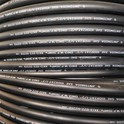
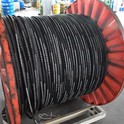
First off, let's talk a bit about what Rubber Hose 1SC is. It's a type of hydraulic rubber hose that's designed to handle high - pressure applications. The "1SC" refers to its specific construction and performance standards. It typically has a single - wire braid reinforcement, which gives it a good balance of flexibility and strength. You can find more detailed info about it on Rubber Hose 1SC.
Now, when it comes to medical applications, there are a bunch of strict requirements. Medical hoses need to be biocompatible, meaning they won't cause any adverse reactions when they come into contact with the human body or medical fluids. They also have to be resistant to various chemicals, sterilization processes, and maintain a high level of cleanliness.
Let's start with biocompatibility. Rubber Hose 1SC is usually made from materials like synthetic rubber compounds. These materials are generally chosen for their mechanical properties, like flexibility and resistance to pressure. However, they may not necessarily be formulated with biocompatibility in mind. In medical settings, hoses are often in direct contact with bodily fluids, tissues, or medications. If the rubber used in the hose releases any harmful substances, it could have serious consequences for the patient. So, right off the bat, the standard Rubber Hose 1SC may not meet the biocompatibility requirements for medical use.
Another important aspect is chemical resistance. Medical applications often involve the use of a wide range of chemicals, such as disinfectants, saline solutions, and various medications. Rubber Hose 1SC is designed mainly for hydraulic fluids in industrial settings. The chemicals it's exposed to in those environments are different from what it would encounter in a medical facility. For example, medical disinfectants can be quite harsh, and if the hose isn't resistant to them, it could start to degrade over time. This degradation can lead to leaks, which are a big no - no in medical applications where precision and reliability are crucial.
Sterilization is also a key factor. Medical hoses need to be sterilized regularly to prevent the growth of bacteria and other pathogens. Common sterilization methods include autoclaving (using high - pressure steam), chemical sterilization, and radiation sterilization. The materials in Rubber Hose 1SC may not be able to withstand these sterilization processes without losing their mechanical properties. For instance, high - temperature steam in autoclaving could cause the rubber to become brittle or change its shape, which would affect the hose's performance.


But here's the thing. While the standard Rubber Hose 1SC may not be suitable for direct medical applications, there could be some potential indirect uses. For example, in some medical equipment manufacturing processes, there might be parts of the machinery that require a high - pressure hose but don't come into direct contact with patients or medical fluids. In these cases, Rubber Hose 1SC could potentially be used, as long as it meets the other requirements of the specific equipment, like pressure ratings and compatibility with the surrounding environment.
It's also worth noting that compared to other hoses in our product line, like Rubber Hose 1SN and Rubber Hose 4SP, Rubber Hose 1SC has its own unique characteristics. Rubber Hose 1SN is also a single - wire braid hose but may have different pressure ratings and construction details. Rubber Hose 4SP, on the other hand, has a four - wire spiral reinforcement, which gives it even higher pressure capabilities. Each of these hoses is designed for specific industrial applications, and none of them are inherently designed for medical use without some modifications.
If there's a demand for a hose with the mechanical properties of Rubber Hose 1SC in a medical - adjacent application, it might be possible to develop a customized version. We could work on formulating a new rubber compound that is biocompatible, resistant to medical chemicals, and can withstand sterilization processes. This would involve a lot of research and development, but it's definitely doable.
In conclusion, the standard Rubber Hose 1SC is not typically suitable for direct medical applications due to issues with biocompatibility, chemical resistance, and sterilization. However, there could be some indirect uses or the possibility of developing a customized version for medical - related needs.
If you're in the medical equipment manufacturing industry or have a specific application in mind where you think a hose like Rubber Hose 1SC could be useful, I'd love to have a chat with you. We can discuss your requirements in detail and see if we can come up with a solution that works for you. Whether it's a customized version of Rubber Hose 1SC or another product from our range, we're here to help.
References
- General knowledge of rubber hose materials and properties in industrial and medical fields.
- Industry standards for medical hoses and hydraulic hoses.