Can Rubber Hose EN857 be recycled?
As a supplier of Rubber Hose EN857, I often get asked about the recyclability of this specific type of rubber hose. Recycling has become an increasingly important topic in today's environmentally - conscious world, and it's only natural that customers are curious about the end - of - life options for the products they purchase. In this blog, I'll delve into the science behind recycling Rubber Hose EN857, exploring whether it's possible and some of the challenges associated with the process.
Understanding Rubber Hose EN857
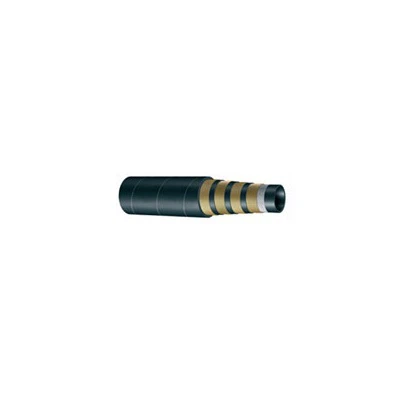
Before we discuss recycling, it's essential to understand what Rubber Hose EN857 is. EN857 is a European standard that defines the requirements for two - wire braid hydraulic rubber hoses. These hoses are widely used in hydraulic systems across various industries, such as construction, agriculture, and manufacturing. They are designed to withstand high pressures and are made up of multiple layers, including an inner tube, reinforcing braids, and an outer cover. The inner tube is usually made of synthetic rubber, which offers excellent resistance to the hydraulic fluids used within the system. The reinforcing braids, typically made of steel wire, provide the hose with its strength and pressure - handling capabilities, while the outer cover protects the hose from external factors such as abrasion, weather conditions, and chemicals.
The Recycling Process of Rubber
In general, rubber can be recycled, but the process is complex and not as straightforward as recycling materials like paper, plastic bottles, or aluminum cans. Recycling rubber involves several steps:
- Collection: The first step is to collect used rubber products. This can be challenging as rubber hoses are often installed in various industrial settings and may not be easily accessible for collection.
- Sorting: Once collected, the rubber products need to be sorted based on their type, composition, and quality. Different types of rubber may require different recycling processes.
- Shredding: The sorted rubber is then shredded into small pieces. This increases the surface area of the rubber, making it easier to process in subsequent steps.
- Devulcanization: Devulcanization is a critical process in rubber recycling. Vulcanization is the process that gives rubber its strength and durability by creating cross - links between rubber molecules. Devulcanization breaks these cross - links, allowing the rubber to be re - formed into new products. However, achieving effective devulcanization is difficult, and different methods, such as chemical, thermal, or mechanical, have been developed, each with its own advantages and limitations.
- Re - compounding and Re - molding: After devulcanization, the recycled rubber can be re - compounded with other materials, such as virgin rubber or additives, to improve its properties. The re - compounded rubber is then re - molded into new products.
Challenges in Recycling Rubber Hose EN857
When it comes to Rubber Hose EN857, there are specific challenges that make the recycling process more difficult:
- Composite Structure: As mentioned earlier, Rubber Hose EN857 has a multi - layer composite structure, consisting of rubber and steel wire. Separating the rubber from the steel wire is a complex and labor - intensive process. Specialized equipment is required to ensure that both materials are effectively separated without causing significant damage to either.
- Contamination: Hydraulic hoses are often exposed to various hydraulic fluids, oils, and chemicals during their use. These contaminants can affect the quality of the recycled rubber and make the recycling process more challenging. Thorough cleaning is necessary to remove these contaminants, but it may not be possible to remove them completely.
- Quality Degradation: During the recycling process, the quality of the rubber may degrade. The devulcanization process can cause some loss of the rubber's original properties, such as elasticity and strength. This means that the recycled rubber may not be suitable for use in high - performance applications, such as in new Rubber Hose EN857.
Current Recycling Solutions
Despite the challenges, there are some current solutions for recycling Rubber Hose EN857:
- Down - cycling: One common approach is down - cycling, where the recycled rubber is used in lower - performance applications. For example, recycled rubber from EN857 hoses can be used in products such as rubber mats, flooring, or in the manufacturing of smaller non - critical rubber components. While this doesn't fully utilize the original potential of the rubber, it does help to reduce waste.
- Advanced Recycling Technologies: Researchers are constantly working on developing more advanced recycling technologies. Some new methods aim to improve the efficiency of devulcanization and separation processes, as well as to enhance the quality of the recycled rubber. These technologies could potentially make the recycling of Rubber Hose EN857 more feasible in the future.
Other Related Rubber Hoses
If you're interested in other types of rubber hoses, we also offer Rubber Hose EN856, Rubber Hose 1SN, and Rubber Hose 4SH. These hoses also have their own unique properties and applications, but they share some similarities with Rubber Hose EN857 in terms of their construction and materials.
Encouraging Sustainable Practices
As a supplier of Rubber Hose EN857, we recognize the importance of sustainability. While the full - scale recycling of our hoses is currently a challenge, we are committed to promoting sustainable practices in other ways. For example, we ensure that our manufacturing processes are as efficient as possible to minimize waste. We also encourage our customers to properly maintain their hoses to extend their service life, reducing the frequency of replacement.
Contact for Purchase and Discussion
If you are interested in purchasing Rubber Hose EN857, or if you have any questions about recycling, our products, or their applications, we welcome you to contact us. We have a team of experts who can provide you with detailed information and guidance. We look forward to working with you to meet your hydraulic hose needs.

References
- "Recycling of Rubber Products: A Review", Journal of Applied Polymer Science
- "European Standard EN857: Two - wire braid hydraulic rubber hoses and hose assemblies"