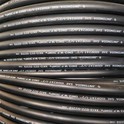
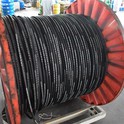
As a supplier of 3/8 rubber hoses, one question that frequently arises from our customers is whether these hoses are resistant to chemicals. This is a crucial concern, especially in industries where hoses come into contact with various chemical substances. In this blog post, I'll delve into the chemical resistance of 3/8 rubber hoses, exploring the factors that influence it and providing practical insights for our customers.
Understanding Rubber Hose Composition
Before we discuss chemical resistance, it's essential to understand what a 3/8 rubber hose is made of. Generally, a rubber hose consists of an inner tube, reinforcement layer, and outer cover. The inner tube is in direct contact with the fluid or gas being transported, so its material plays a significant role in determining chemical resistance.
Common materials for the inner tube of rubber hoses include natural rubber (NR), synthetic rubbers such as nitrile rubber (NBR), ethylene - propylene diene monomer (EPDM), and fluorocarbon rubber (FKM). Each of these materials has different chemical resistance properties.


- Natural Rubber (NR): NR has good flexibility and low - cost advantages. However, it has limited chemical resistance. It is susceptible to degradation when exposed to oils, solvents, and many chemicals. For example, it can swell and lose its physical properties when in contact with petroleum - based products.
- Nitrile Rubber (NBR): NBR is well - known for its excellent resistance to oils, fuels, and many hydrocarbons. It can withstand a wide range of aliphatic and aromatic hydrocarbons, making it a popular choice for applications in the automotive and oil industries. But it may not be suitable for use with strong oxidizing agents or certain solvents.
- Ethylene - Propylene Diene Monomer (EPDM): EPDM offers excellent resistance to weathering, ozone, and a variety of chemicals, including many acids, alkalis, and polar solvents. It is commonly used in applications where exposure to water, steam, and mild chemicals is expected, such as in the automotive cooling system and some industrial water - handling processes.
- Fluorocarbon Rubber (FKM): FKM has outstanding chemical resistance. It can resist a wide range of aggressive chemicals, including strong acids, bases, solvents, and fuels. It is often used in high - performance applications where extreme chemical resistance is required, such as in the chemical processing and aerospace industries.
Factors Affecting Chemical Resistance
Several factors can affect the chemical resistance of a 3/8 rubber hose:
Chemical Type
The nature of the chemical is the most significant factor. Different chemicals have different reactivity with rubber materials. For instance, polar chemicals like alcohols and ketones may interact differently with rubber compared to non - polar hydrocarbons. Strong acids and bases can cause rapid degradation of rubber if the material is not properly selected.
Concentration and Temperature
The concentration of the chemical also matters. A high - concentration chemical solution is more likely to cause damage to the rubber hose than a dilute one. Additionally, temperature plays a crucial role. Higher temperatures can accelerate the chemical reaction between the rubber and the chemical, reducing the hose's service life. For example, a rubber hose that can withstand a certain chemical at room temperature may fail when exposed to the same chemical at an elevated temperature.
Exposure Time
The longer the rubber hose is exposed to a chemical, the more likely it is to be damaged. Prolonged exposure can lead to cumulative damage, such as swelling, hardening, or cracking of the rubber.
Assessing Chemical Resistance in Real - World Applications
In real - world scenarios, our customers often need to use 3/8 rubber hoses in various chemical environments. To ensure the proper selection of hoses, we recommend the following steps:
Identify the Chemicals
First, accurately identify all the chemicals that the hose will come into contact with. This includes not only the main fluid being transported but also any contaminants or additives that may be present.
Check Chemical Compatibility Charts
Most rubber hose manufacturers provide chemical compatibility charts. These charts list the compatibility of different rubber materials with a wide range of chemicals. By referring to these charts, customers can get a preliminary idea of whether a particular 3/8 rubber hose is suitable for their application.
Conduct Tests
In some cases, it may be necessary to conduct actual tests. This can involve exposing a sample of the rubber hose to the specific chemical under the expected operating conditions (concentration, temperature, and exposure time). By monitoring the physical and mechanical properties of the sample over time, such as changes in weight, hardness, and tensile strength, a more accurate assessment of the hose's chemical resistance can be made.
Our Product Range and Chemical Resistance
At our company, we offer a diverse range of 3/8 rubber hoses to meet different chemical resistance requirements.
- For applications involving oils and fuels, our Industrial Rubber Hose with a nitrile rubber inner tube is an ideal choice. It provides reliable performance and long - term durability in such environments.
- If your application requires resistance to weathering, ozone, and mild chemicals, our hoses with an EPDM inner tube can be a great option.
- For extreme chemical resistance, we have Hydraulic Hose DIN EN857 and Hydraulic Hose DIN EN853 with FKM inner tubes. These hoses are designed to withstand the most aggressive chemical environments.
Contact Us for Your Hose Needs
Selecting the right 3/8 rubber hose with appropriate chemical resistance is crucial for the success of your application. Our team of experts is here to help you make the best choice. Whether you need more information about our products, assistance in hose selection, or have any other questions, we are ready to assist you. Please feel free to reach out to us to start a conversation about your procurement requirements.
References
- "Handbook of Rubber Technology" by A. Y. Coran
- "Rubber Compounding: Principles, Materials, and Techniques" by B. G. Ranby