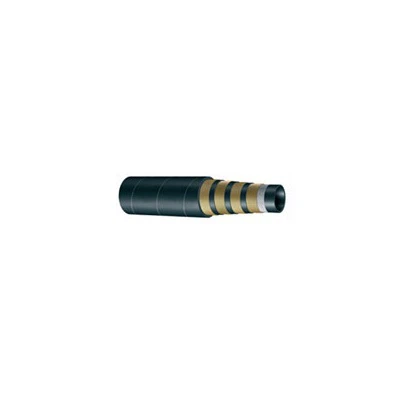
As a supplier of Rubber Hose 4SP, I've witnessed firsthand the challenges that customers often face with these hoses. In this blog post, I'll delve into the common failures of Rubber Hose 4SP and provide practical solutions to address them.
1. Abrasion and Wear
One of the most prevalent issues with Rubber Hose 4SP is abrasion and wear. These hoses are frequently used in industrial settings where they may come into contact with rough surfaces, sharp edges, or other abrasive materials. Over time, this constant friction can cause the outer cover of the hose to wear down, exposing the inner layers and potentially leading to leaks or even complete failure.
Causes
- Improper Installation: If the hose is not installed correctly, it may rub against other components or surfaces, accelerating the wear process.
- Harsh Environments: Hoses used in construction, mining, or other industries with high levels of dust, debris, or sharp objects are more prone to abrasion.
- Lack of Protection: Without proper guards or sleeves, the hose is left vulnerable to direct contact with abrasive materials.
Solutions
- Choose the Right Hose: Select a Rubber Hose 4SP with a high-quality outer cover that is resistant to abrasion. Some hoses are designed with special additives or materials to enhance their durability.
- Proper Installation: Ensure that the hose is installed in a way that minimizes contact with sharp edges or rough surfaces. Use clamps, brackets, or guides to keep the hose in place and prevent it from rubbing against other components.
- Add Protection: Consider using abrasion-resistant sleeves or guards to protect the hose from direct contact with abrasive materials. These can be easily installed and provide an extra layer of defense.
2. Pressure Failure
Another common failure mode of Rubber Hose 4SP is pressure failure. These hoses are designed to withstand specific pressure ratings, but if they are subjected to excessive pressure, they can burst or develop leaks.
Causes
- Overpressure: Using the hose at pressures higher than its rated capacity can cause the inner tube to rupture or the reinforcement layers to fail.
- Pressure Surges: Sudden changes in pressure, such as those caused by hydraulic shocks or water hammer, can also damage the hose.
- Aging and Degradation: Over time, the hose may lose its flexibility and strength, making it more susceptible to pressure failure.
Solutions
- Know the Pressure Rating: Always use the Rubber Hose 4SP within its rated pressure range. Check the manufacturer's specifications to ensure that the hose is suitable for your application.
- Install Pressure Relief Devices: To protect the hose from overpressure, install pressure relief valves or other safety devices in the hydraulic system. These devices can automatically release excess pressure and prevent damage to the hose.
- Regular Inspection and Replacement: Inspect the hose regularly for signs of wear, aging, or damage. Replace the hose if it shows any signs of deterioration or if it has reached the end of its service life.
3. Chemical Compatibility Issues
Rubber Hose 4SP is often used to transport various fluids, including hydraulic oils, chemicals, and fuels. However, if the hose is not compatible with the fluid it is carrying, it can experience chemical degradation, swelling, or other forms of damage.

Causes
- Incorrect Hose Selection: Choosing a hose that is not compatible with the fluid being transported can lead to chemical reactions that damage the hose.
- Contamination: If the fluid contains impurities or contaminants, it can also react with the hose material and cause damage.
- Temperature and Pressure: High temperatures and pressures can accelerate the chemical reactions between the fluid and the hose material, increasing the risk of damage.
Solutions
- Check Compatibility: Before using the Rubber Hose 4SP, check the manufacturer's compatibility chart to ensure that it is suitable for the fluid being transported. If in doubt, consult with the manufacturer or a chemical expert.
- Use Clean Fluids: Ensure that the fluid being transported is clean and free of impurities or contaminants. Use filters or other purification devices to remove any particles or debris from the fluid.
- Monitor Temperature and Pressure: Keep the temperature and pressure within the recommended range for the hose and the fluid. Avoid exposing the hose to extreme temperatures or pressures that could cause chemical reactions.
4. Flex Fatigue
Flex fatigue is a common failure mode of Rubber Hose 4SP, especially in applications where the hose is subjected to repeated bending or flexing. Over time, the constant flexing can cause the hose to develop cracks or fractures, leading to leaks or failure.
Causes
- Excessive Flexing: If the hose is bent or flexed beyond its recommended radius, it can cause stress concentrations in the hose material, leading to fatigue failure.
- High Cycle Rates: Applications that require frequent bending or flexing of the hose, such as robotic arms or hydraulic cylinders, are more prone to flex fatigue.
- Aging and Degradation: As the hose ages, it may lose its flexibility and become more brittle, making it more susceptible to flex fatigue.
Solutions
- Choose the Right Hose: Select a Rubber Hose 4SP with a high flex life rating. Some hoses are designed with special reinforcement layers or materials to enhance their flexibility and resistance to flex fatigue.
- Proper Routing: Ensure that the hose is routed in a way that minimizes bending or flexing. Use gentle curves and avoid sharp bends or kinks.
- Limit Cycle Rates: If possible, reduce the frequency of bending or flexing of the hose. This can help to extend its service life and reduce the risk of flex fatigue.
5. Leakage
Leakage is a common problem with Rubber Hose 4SP, and it can be caused by a variety of factors, including improper installation, damage to the hose, or faulty fittings.
Causes
- Improper Installation: If the hose is not installed correctly, it may not form a proper seal with the fittings, leading to leakage.
- Damage to the Hose: Cracks, cuts, or punctures in the hose can also cause leakage.
- Faulty Fittings: If the fittings are not tightened properly or are damaged, they can allow fluid to escape.
Solutions
- Proper Installation: Follow the manufacturer's instructions carefully when installing the Rubber Hose 4SP. Make sure that the hose is cut to the correct length, the fittings are properly tightened, and the seal is secure.
- Inspect the Hose: Regularly inspect the hose for signs of damage, such as cracks, cuts, or punctures. If any damage is found, replace the hose immediately.
- Check the Fittings: Ensure that the fittings are in good condition and are tightened to the correct torque. If necessary, replace any faulty fittings.
In conclusion, while Rubber Hose 4SP is a reliable and versatile product, it is not immune to failure. By understanding the common failure modes and taking appropriate preventive measures, you can ensure that your hoses perform optimally and have a long service life. If you have any questions or need further assistance with choosing the right Rubber Hose 4SP for your application, please don't hesitate to [contact us for procurement and further discussion]. We are here to help you find the best solution for your needs.
For more information about our other products, you can visit the following links: Rubber Hose 2SC, Rubber Hose 4SH, and Rubber Hose 4SP.
References
- Manufacturer's specifications and technical documentation for Rubber Hose 4SP.
- Industry standards and guidelines for hydraulic hoses.
- Research articles and case studies on hose failure analysis and prevention.