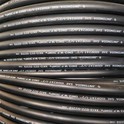
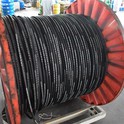
In the realm of hydraulic systems, rubber hoses play a crucial role, and the Rubber Hose EN853 stands out as a critical component. Understanding its modulus of elasticity properties is essential for both users and suppliers. As a dedicated supplier of Rubber Hose EN853, I am delighted to delve into this topic and share in - depth knowledge.
What is the Modulus of Elasticity?
The modulus of elasticity, also known as Young's modulus, is a fundamental mechanical property that measures a material's stiffness. It is defined as the ratio of stress (force per unit area) to strain (deformation per unit length) within the elastic range of a material. In simple terms, it tells us how much a material will stretch or compress when a certain force is applied, and how well it will return to its original shape once the force is removed. It is represented by the formula (E=\frac{\sigma}{\epsilon}), where (E) is the modulus of elasticity, (\sigma) is the stress, and (\epsilon) is the strain.
Modulus of Elasticity in Rubber Hose EN853
For Rubber Hose EN853, the modulus of elasticity is a key characteristic that affects its performance in various applications. This type of rubber hose is designed for hydraulic systems, where it needs to withstand high pressures and repeated flexing.
Impact on Pressure Resistance
A higher modulus of elasticity in Rubber Hose EN853 means that the hose is stiffer and can better resist deformation under pressure. When a hydraulic system is operating, high - pressure fluid is pumped through the hose. If the hose has a low modulus of elasticity, it may expand excessively, which can lead to premature failure, such as bursting or leakage. On the other hand, a hose with an appropriate high modulus can maintain its shape and integrity, ensuring the safe and efficient operation of the hydraulic system.
Flexibility and Durability
However, it's not just about high stiffness. The modulus of elasticity also needs to be balanced with the hose's flexibility. Rubber Hose EN853 often needs to be routed around various components in a hydraulic system, and it must be able to bend without cracking or losing its structural integrity. A hose with a very high modulus may be too rigid to be easily installed or may crack under repeated flexing. Therefore, manufacturers carefully engineer the modulus of elasticity of Rubber Hose EN853 to achieve an optimal balance between stiffness for pressure resistance and flexibility for ease of installation and long - term durability.
Temperature Effects
The modulus of elasticity of Rubber Hose EN853 is also affected by temperature. As the temperature increases, the rubber material generally becomes softer, and its modulus of elasticity decreases. This means that at higher temperatures, the hose may be more prone to deformation under pressure. Conversely, at lower temperatures, the rubber becomes stiffer, and the modulus of elasticity increases. This can make the hose more brittle and less flexible, increasing the risk of cracking during installation or operation. Suppliers like us need to ensure that the Rubber Hose EN853 we provide can maintain appropriate modulus of elasticity properties within a wide temperature range to meet the diverse needs of different applications.
Comparison with Other Rubber Hoses
To better understand the modulus of elasticity properties of Rubber Hose EN853, it's useful to compare it with other types of rubber hoses, such as Rubber Hose EN856 and Rubber Hose 1SC.
-
Rubber Hose EN856: This type of hose is also designed for hydraulic applications but may have different modulus of elasticity properties compared to EN853. EN856 hoses are often used in more demanding high - pressure applications. They may have a higher modulus of elasticity to better withstand extreme pressures, but this can also result in reduced flexibility. In contrast, Rubber Hose EN853 offers a more balanced combination of pressure resistance and flexibility, making it suitable for a wider range of general - purpose hydraulic applications.
-
Rubber Hose 1SC: The 1SC hose is typically a single - wire braid hydraulic hose. It usually has a relatively lower modulus of elasticity compared to Rubber Hose EN853. This makes it more flexible, which is beneficial for applications where the hose needs to be highly maneuverable. However, the lower modulus also means that it may not be able to withstand as high pressures as EN853 hoses.
Quality Control in Modulus of Elasticity for Rubber Hose EN853
As a supplier, ensuring the quality of the modulus of elasticity in Rubber Hose EN853 is of utmost importance. We implement a strict quality control process at every stage of production.
-
Raw Material Selection: The quality of the rubber compound used in the hose is the foundation for achieving the desired modulus of elasticity. We carefully select high - quality raw materials and work closely with our suppliers to ensure that the rubber has consistent properties.
-
Manufacturing Process: The manufacturing process, including extrusion, braiding, and vulcanization, can significantly affect the modulus of elasticity. We have precise control over these processes to ensure that each batch of Rubber Hose EN853 meets the specified modulus requirements. For example, the temperature and time during vulcanization are carefully regulated to optimize the cross - linking of the rubber molecules, which in turn affects the stiffness of the hose.
-
Testing: Every batch of Rubber Hose EN853 undergoes rigorous testing to measure its modulus of elasticity. We use advanced testing equipment to accurately determine the stress - strain relationship of the hose samples. Only hoses that meet our strict quality standards are released for sale.
Applications and the Importance of Modulus of Elasticity
Rubber Hose EN853 is widely used in various industries, including construction, agriculture, and manufacturing. In construction equipment, such as excavators and loaders, the hose needs to withstand high - pressure hydraulic fluid while being able to flex as the equipment moves. The appropriate modulus of elasticity ensures that the hose can handle the pressure without leaking or breaking, and can also adapt to the dynamic movements of the machinery.
In agricultural machinery, like tractors and harvesters, the hose may be exposed to different environmental conditions. The ability of Rubber Hose EN853 to maintain its modulus of elasticity under varying temperatures and pressures is crucial for the reliable operation of the hydraulic systems in these machines.
Contact Us for Your Rubber Hose EN853 Needs
If you are in the market for high - quality Rubber Hose EN853, look no further. Our company is committed to providing the best products with excellent modulus of elasticity properties. We understand the diverse requirements of different industries and can offer customized solutions to meet your specific needs. Whether you need a small quantity for a repair project or a large - scale supply for a manufacturing operation, we are here to serve you. To learn more about our Rubber Hose EN853 products and start a procurement discussion, please reach out to us. We look forward to working with you to ensure the success of your hydraulic system applications.


References
- ASTM International. (Year). Standard test methods for rubber properties in tension. ASTM D412.
- ISO Standards. (Year). ISO 1402: Rubber - Determination of tensile stress - strain properties.