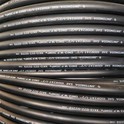
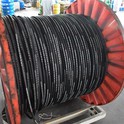
When it comes to hydraulic systems, the choice of hoses is crucial for ensuring optimal performance and longevity. Among the various types of rubber hoses available in the market, the RUBBER Hose SAE R16 stands out for its specific applications and features. One of the most important properties to consider when evaluating this hose is its abrasion resistance. As a supplier of RUBBER Hose SAE R16, I am well - versed in the technical details and practical implications of this characteristic.


Understanding Abrasion Resistance
Abrasion resistance refers to a material's ability to withstand the wear and tear caused by friction when it comes into contact with other surfaces. In the context of a RUBBER Hose SAE R16, this is of utmost importance because these hoses are often used in harsh industrial environments where they may rub against rough surfaces, machinery, or other components.
The abrasion resistance of a rubber hose is determined by several factors, including the type of rubber compound used, the reinforcement layers, and the outer cover design. For the RUBBER Hose SAE R16, manufacturers typically use high - quality synthetic rubber compounds that are formulated to resist abrasion. These compounds are engineered to have a high degree of toughness and elasticity, which allows them to absorb the energy from frictional forces without breaking down easily.
Rubber Compounds and Abrasion Resistance
The rubber compound is the foundation of the hose's abrasion resistance. Different types of rubber have different properties, and the choice of rubber for the RUBBER Hose SAE R16 is based on its ability to withstand the specific conditions of the application. For example, neoprene rubber is often used in these hoses because it offers excellent resistance to abrasion, as well as resistance to ozone, weathering, and chemicals.
Neoprene rubber has a unique molecular structure that gives it a high level of flexibility and toughness. This allows the hose to bend and flex without cracking or losing its integrity, even when it is subjected to repeated abrasion. Additionally, neoprene has good resistance to oil and grease, which is important in hydraulic applications where the hose may come into contact with these substances.
Another rubber compound that may be used in RUBBER Hose SAE R16 is nitrile rubber. Nitrile rubber is known for its excellent resistance to oil and fuel, as well as its good abrasion resistance. It is often used in applications where the hose needs to be in contact with petroleum - based fluids. The combination of nitrile rubber's chemical resistance and abrasion resistance makes it a suitable choice for many hydraulic systems.
Reinforcement Layers and Abrasion Resistance
In addition to the rubber compound, the reinforcement layers of the RUBBER Hose SAE R16 also play a significant role in its abrasion resistance. These hoses typically have multiple layers of reinforcement, which can be made of materials such as steel wire or synthetic fibers.
Steel wire reinforcement provides high strength and durability to the hose. It helps to prevent the hose from bursting under high pressure and also adds to its abrasion resistance. The steel wires are woven or braided in a specific pattern to distribute the stress evenly across the hose, reducing the likelihood of localized wear and tear.
Synthetic fiber reinforcement, such as aramid or polyester, is also used in some RUBBER Hose SAE R16. These fibers are lightweight and have high tensile strength. They offer good resistance to abrasion and can also improve the hose's flexibility. Synthetic fiber - reinforced hoses are often preferred in applications where weight is a concern, such as in mobile equipment.
Outer Cover Design and Abrasion Resistance
The outer cover of the RUBBER Hose SAE R16 is the first line of defense against abrasion. It is designed to protect the inner layers of the hose from physical damage. The outer cover can be made of the same rubber compound as the inner tube or a different, more abrasion - resistant material.
Some outer covers are textured or ribbed to reduce the contact area between the hose and the abrasive surface. This design feature helps to minimize the frictional forces and reduces the wear on the hose. Additionally, the outer cover can be treated with special coatings or additives to enhance its abrasion resistance. For example, a polyurethane coating can be applied to the outer cover to provide a hard, protective layer that is highly resistant to abrasion.
Comparing with Other SAE Rubber Hoses
When evaluating the abrasion resistance of the RUBBER Hose SAE R16, it is useful to compare it with other SAE rubber hoses, such as the RUBBER Hose SAE R9, RUBBER Hose SAE R12, and RUBBER Hose SAE R13.
The RUBBER Hose SAE R9 is designed for low - pressure applications and typically has a thinner outer cover compared to the R16. As a result, its abrasion resistance may be lower. The RUBBER Hose SAE R12 is a high - pressure hose with a different reinforcement structure, and while it offers good overall performance, its abrasion resistance may vary depending on the specific design and materials used. The RUBBER Hose SAE R13 is also a high - pressure hose, but its focus may be more on other properties such as flexibility and burst pressure, and its abrasion resistance may not be as optimized as that of the R16 in some cases.
Importance of Abrasion Resistance in Applications
The abrasion resistance of the RUBBER Hose SAE R16 is crucial in a wide range of applications. In construction equipment, for example, these hoses are often exposed to rough surfaces, rocks, and debris. If the hose does not have adequate abrasion resistance, it can quickly wear out, leading to leaks and potential system failures. This can result in costly downtime and repairs.
In mining operations, the hoses are subjected to extreme conditions, including high - pressure fluids and abrasive materials. The RUBBER Hose SAE R16's ability to resist abrasion ensures that it can withstand the harsh environment and maintain its performance over time.
In agricultural machinery, the hoses may come into contact with dirt, dust, and plant materials. Good abrasion resistance helps to prevent the hoses from being damaged by these substances, ensuring reliable operation of the hydraulic systems.
Testing Abrasion Resistance
To ensure the quality and performance of the RUBBER Hose SAE R16, manufacturers conduct various tests to measure its abrasion resistance. One common test is the Taber abrasion test, which involves rubbing the outer cover of the hose against an abrasive wheel under a specified load. The amount of material removed from the hose after a certain number of revolutions is measured, and this provides an indication of the hose's abrasion resistance.
Another test is the sandpaper abrasion test, where the hose is rubbed against a sandpaper surface with a defined force. The appearance of the hose after the test, such as the presence of cracks or wear marks, is evaluated to assess its abrasion resistance.
Conclusion and Call to Action
In conclusion, the abrasion resistance of the RUBBER Hose SAE R16 is a critical property that is determined by the rubber compound, reinforcement layers, and outer cover design. This hose offers excellent abrasion resistance, making it suitable for a variety of harsh industrial applications.
If you are in need of high - quality RUBBER Hose SAE R16 for your hydraulic systems, we are here to provide you with the best products. Our hoses are manufactured using the latest technologies and high - quality materials to ensure optimal abrasion resistance and overall performance. Contact us today to discuss your specific requirements and start a procurement negotiation.
References
- ASTM International. (Year). Standard test methods for rubber property - abrasion resistance.
- Hose Manufacturers Institute. (Year). Technical guide for hydraulic hoses.