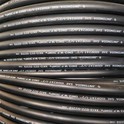
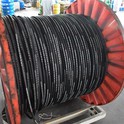
Hey there! As a supplier of Rubber Hose EN853, I often get asked about the bending radius of these hoses. So, I thought I'd write this blog to share some insights on this topic.
First off, let's understand what the bending radius is. The bending radius of a rubber hose is the minimum radius at which the hose can be bent without causing any significant damage to its structure or affecting its performance. It's a crucial factor because if you bend a hose beyond its recommended bending radius, it can lead to a bunch of problems. For example, it might reduce the flow capacity of the hose, cause kinking, or even damage the reinforcement layers inside the hose, which can ultimately shorten its lifespan.
Now, when it comes to Rubber Hose EN853, the bending radius isn't a one - size - fits - all value. It depends on several factors. One of the most important factors is the hose size. Generally speaking, larger diameter hoses have larger bending radii. This makes sense, right? A bigger hose is stiffer and less flexible than a smaller one, so it needs more space to bend properly.
Another factor that affects the bending radius is the hose construction. Rubber Hose EN853 comes in different types, such as single - wire braid and double - wire braid hoses. Double - wire braid hoses are usually stronger and more rigid than single - wire braid hoses. As a result, they typically have larger bending radii. The reinforcement material also plays a role. Different types of wires or fibers used in the reinforcement can change the hose's flexibility and, therefore, its bending radius.


Let me give you an example. Say you're using a small - diameter single - wire braid Rubber Hose EN853. This type of hose is relatively flexible, so it can have a smaller bending radius. You might be able to bend it around a small object without much trouble. On the other hand, a large - diameter double - wire braid hose will need a much larger space to bend. If you try to bend it too tightly, you're likely to run into problems like kinking or reduced flow.
So, how do you find out the specific bending radius for a particular Rubber Hose EN853? Well, the best way is to refer to the manufacturer's specifications. Every reputable manufacturer will provide detailed information about the bending radius for each of their hose products. These specifications are based on extensive testing and are designed to ensure that the hose performs optimally and has a long service life.
It's also important to note that the bending radius can change under different operating conditions. For instance, if the hose is under high pressure, it becomes stiffer, and its effective bending radius increases. So, when you're installing a Rubber Hose EN853 in a high - pressure system, you need to take this into account and make sure you have enough space for the hose to bend properly.
Now, I want to mention that there are some general guidelines that can give you a rough idea of the bending radius. For a single - wire braid Rubber Hose EN853, the bending radius is usually around 5 - 10 times the outer diameter of the hose. For a double - wire braid hose, it can be around 10 - 15 times the outer diameter. But again, these are just rough estimates, and you should always refer to the manufacturer's specs for accurate information.
When you're working with Rubber Hose EN853, it's crucial to install it correctly to avoid any issues related to the bending radius. Make sure you have enough clearance around the hose to allow for proper bending. If you're unsure about the installation, it might be a good idea to consult with a professional or someone with experience in hydraulic hose installations.
I also want to take a moment to mention some related products. If you're interested in other types of rubber hoses, you might want to check out Rubber Hose 2SC and Rubber Hose EN856. These hoses have their own unique characteristics and applications, and understanding their bending radii is just as important as for Rubber Hose EN853.
In conclusion, the bending radius of Rubber Hose EN853 is an important factor that can significantly affect the performance and lifespan of the hose. By understanding the factors that influence it, referring to the manufacturer's specifications, and installing the hose correctly, you can ensure that your Rubber Hose EN853 works as it should.
If you're in the market for Rubber Hose EN853 or have any questions about bending radii or other aspects of these hoses, I'd love to help. Just reach out to me, and we can start a conversation about your specific needs. Whether you're a small business or a large industrial operation, I'm here to provide you with high - quality Rubber Hose EN853 products and the support you need. So, don't hesitate to get in touch and let's discuss how I can assist you with your hose requirements.
References
- Manufacturer's product manuals for Rubber Hose EN853
- Industry standards and guidelines for hydraulic hoses