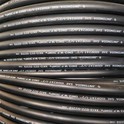
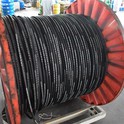
Hey there! As a supplier of Rubber Hose 4SH, I get asked a ton about its chemical stability in different solutions. So, I figured I'd write up this blog to help you understand exactly what makes our Rubber Hose 4SH stand up to various chemicals.
First off, let's talk about what Rubber Hose 4SH is. It's a high - pressure hydraulic hose designed for a wide range of industrial applications. The 4SH construction provides a great balance of strength and flexibility, making it an ideal choice for many tough jobs.
Chemical Stability Basics
Chemical stability refers to how well a material can resist chemical attack. For a rubber hose like our 4SH, this means that it should be able to maintain its physical and mechanical properties when in contact with different solutions. These properties include things like tensile strength, elongation, and flexibility.
When a rubber hose gets exposed to a chemical solution, a few things can happen. It could swell, which means it absorbs the liquid and gets bigger. This can make the hose lose its shape and functionality. Or, it could harden, becoming brittle and more likely to crack. In some extreme cases, the hose could start to dissolve, which is obviously a major problem.
Chemical Stability in Different Solutions
Water
Water is probably the most common solution out there. Our Rubber Hose 4SH has excellent chemical stability in water. Whether it's fresh water or slightly salty water, the hose won't react much. It doesn't swell or break down easily because the rubber material we use has a natural resistance to water. This makes it a great choice for applications where it might come in contact with water, like in some hydraulic systems near water sources or in water - handling equipment.
Hydraulic Fluids
Most of the time, Rubber Hose 4SH is used in hydraulic systems with hydraulic fluids. We've designed the hose to have really good stability in common hydraulic fluids such as mineral - based oils. These fluids are used in a lot of construction and industrial machinery. The rubber can handle the pressure and temperature changes associated with hydraulic operations without degrading. But it's important to note that if you're using some special synthetic hydraulic fluids, you might want to double - check the compatibility just to be safe.
Petroleum - Based Products
When it comes to petroleum - based products like gasoline and diesel, Rubber Hose 4SH shows decent stability. However, you can't just expose it to these fuels for an extended period without any caution. The rubber will start to absorb some of the petroleum, which can cause a bit of swelling over time. But for short - term use or in applications where there's just occasional contact, it will work fine. If you need a hose for continuous contact with petroleum - based fuels, you might want to look into our Rubber Hose 4SP which is more optimized for fuel - handling.
Acids and Bases
Acids and bases are a whole different ballgame. The chemical stability of Rubber Hose 4SH in acid and base solutions varies depending on the concentration and type of the acid or base. In general, weak acids or bases won't cause too much trouble. But strong acids and bases can quickly degrade the rubber. For instance, concentrated sulfuric acid can rapidly break down the rubber structure, turning it brittle and useless. On the other hand, mild alkaline solutions might only cause a slight change in the hose properties over a long time. If you're dealing with acidic or basic solutions, you might need to consider using our Rubber Hose EN856 which has better resistance to some chemicals.
Solvents
Solvents are another tricky area. Organic solvents like acetone or toluene can be pretty rough on Rubber Hose 4SH. These solvents have a high affinity for the rubber, and they can cause significant swelling and softening. The hose can lose its shape and strength quite quickly when exposed to these substances. But for some less aggressive solvents, like some light alcohols, the hose can tolerate short - term exposure. If your application involves a lot of solvent contact, I'd recommend taking a look at our Rubber Hose 1SC, which has a better chemical resistance profile for such cases.


Factors Affecting Chemical Stability
It's not just the type of solution that affects the chemical stability of Rubber Hose 4SH. There are a few other factors too.
Temperature
Higher temperatures can speed up chemical reactions. So, if the hose is in a hot environment and also in contact with a chemical solution, the degradation process can be much faster. For example, if you have a Rubber Hose 4SH in a hydraulic system that operates at high temperatures and is also exposed to a slightly acidic hydraulic fluid, the hose might wear out quicker than it would at room temperature.
Concentration
The concentration of the chemical solution matters a lot. A highly concentrated solution is going to be more aggressive towards the rubber than a diluted one. Even if a chemical is relatively mild in a low - concentration form, a high - concentration version can cause major problems.
Exposure Time
The longer the hose is in contact with a chemical solution, the more likely it is to be affected. A short, accidental splash might not cause much harm, but continuous immersion over days or weeks can lead to significant degradation.
How We Test Chemical Stability
As a responsible supplier, we conduct a series of tests to ensure the chemical stability of our Rubber Hose 4SH. We take samples of the hose and immerse them in different chemical solutions for a set period of time, under controlled temperature and pressure conditions. After that, we measure the changes in the hose's physical properties, like its weight, volume, and hardness. This helps us determine how well the hose can withstand different chemicals and gives us a clear idea of its limitations.
Summary
In summary, Rubber Hose 4SH has good chemical stability in many common solutions, especially water and normal hydraulic fluids. But when it comes to more aggressive substances like strong acids, bases, and some solvents, you need to be more careful. Depending on your specific application, you might want to consider other hoses from our range, such as Rubber Hose 4SP, Rubber Hose EN856, or Rubber Hose 1SC.
If you're in the market for high - quality rubber hoses and need products that can handle different chemicals, don't hesitate to get in touch. Let's have a chat about your requirements so we can find the best solution for your business.
References
- ASTM D471 Standard Test Method for Rubber Property - Effect of Liquids.
- ISO 1402 Standard for Hydraulic Fluid Power - Hoses, Tubing, and Fittings - Bulk Volume Expansion.