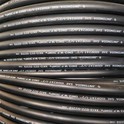
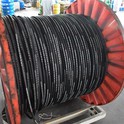
Hey there! As a supplier of Rubber Hose EN857, I've gotten tons of questions about the differences between different grades of these hoses. So, I thought I'd break it down for you in this blog post.
First off, let's talk about what EN857 is. EN857 is a European standard that specifies the requirements for hydraulic rubber hoses with two or four spiral wire reinforcements. It's a widely recognized standard in the industry, and it helps ensure that the hoses meet certain quality and performance criteria.
Now, let's get into the different grades of Rubber Hose EN857. The main grades you'll come across are 1SC, 2SC, and 4SP. Each grade has its own unique characteristics and is designed for specific applications.
Rubber Hose 1SC
The Rubber Hose 1SC is a single-wire braid hose. It's the most basic type of hose in the EN857 standard. This hose is typically used for low-pressure applications where flexibility is important. It's not designed to handle extremely high pressures, but it's great for things like agricultural equipment, light industrial machinery, and some automotive applications.
One of the key features of the 1SC hose is its flexibility. Because it has only one layer of wire braid, it can bend more easily than hoses with multiple layers of reinforcement. This makes it easier to install in tight spaces. However, this also means that it has a lower pressure rating compared to the other grades.
The inner tube of the 1SC hose is usually made of synthetic rubber, which is resistant to oil and other hydraulic fluids. The outer cover is also made of rubber, which provides protection against abrasion, weather, and other environmental factors.
Rubber Hose 2SC
The Rubber Hose 2SC is a double-wire braid hose. It's a step up from the 1SC hose in terms of pressure rating and durability. This hose is suitable for medium-pressure applications, such as construction equipment, material handling machinery, and some industrial hydraulic systems.
The two layers of wire braid in the 2SC hose provide more strength and support, allowing it to handle higher pressures than the 1SC hose. However, this also makes it a bit less flexible. So, while it can still be bent, it may require a bit more effort to install in tight spaces compared to the 1SC hose.
Like the 1SC hose, the 2SC hose has an inner tube made of synthetic rubber and an outer cover made of rubber. The inner tube is designed to resist the flow of hydraulic fluids, while the outer cover protects the hose from damage.
Rubber Hose 4SP
The Rubber Hose 4SP is a four-spiral wire hose. It's the highest grade of hose in the EN857 standard and is designed for high-pressure applications. This hose is commonly used in heavy-duty equipment, such as mining machinery, offshore drilling rigs, and high-performance hydraulic systems.
The four layers of spiral wire reinforcement in the 4SP hose give it excellent strength and pressure resistance. It can handle much higher pressures than the 1SC and 2SC hoses. However, this also makes it the least flexible of the three grades. Installing a 4SP hose may require more planning and effort, especially in tight spaces.


The inner tube and outer cover of the 4SP hose are similar to those of the other grades, made of synthetic rubber for fluid resistance and protection against the environment.
Other Differences
In addition to the differences in pressure rating and flexibility, there are also some other differences between the different grades of Rubber Hose EN857.
Size and Diameter: The different grades may come in different sizes and diameters. The 4SP hose, for example, is often available in larger diameters to accommodate the higher flow rates required in high-pressure applications. The 1SC and 2SC hoses may be available in a wider range of smaller diameters for more general-purpose applications.
Price: Generally, the higher the grade of the hose, the more expensive it is. The 4SP hose, with its higher pressure rating and more complex construction, is usually more costly than the 1SC and 2SC hoses. However, it's important to remember that you get what you pay for. Investing in a higher-grade hose for a high-pressure application can save you money in the long run by reducing the risk of hose failure and downtime.
Application Suitability: As mentioned earlier, each grade is designed for specific applications. Choosing the right grade of hose for your application is crucial to ensure optimal performance and safety. Using a hose with a lower pressure rating than required can lead to hose failure, which can be dangerous and costly. On the other hand, using a hose with a much higher pressure rating than needed may be overkill and more expensive than necessary.
Conclusion
So, there you have it - the main differences between the different grades of Rubber Hose EN857. Whether you need a flexible hose for a low-pressure application or a high-strength hose for a high-pressure system, there's a grade of EN857 hose that's right for you.
As a supplier, I'm here to help you choose the best hose for your needs. If you're not sure which grade is suitable for your application, just give me a shout. I can provide you with more information, answer your questions, and even offer samples if needed.
If you're interested in purchasing Rubber Hose EN857, I'd love to have a chat with you about your requirements. We can discuss the grades, sizes, and other specifications to find the perfect hose for your project. Don't hesitate to reach out and start the conversation. Let's work together to get you the best hydraulic hoses for your business.
References
- EN857: European standard for hydraulic rubber hoses with two or four spiral wire reinforcements.
- Industry knowledge and experience from working as a Rubber Hose EN857 supplier.