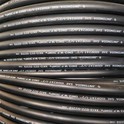
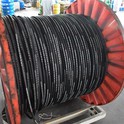
Hey there! As a supplier of Rubber Hose 1SC, I often get asked about the differences between Rubber Hose 1SC and other rubber hoses. In this blog, I'll break down these differences to help you understand which hose is the best fit for your needs.
Structure and Design
Let's start with the structure. Rubber Hose 1SC is designed according to specific DIN standards. It's a single - wire braided hydraulic hose. The single - wire braid provides a good balance between flexibility and strength.
In contrast, Rubber Hose 1SN also has a single - wire braid construction, but there are differences in the details. The 1SN hose typically has a different inner tube material and a different way the braid is applied. The inner tube of 1SN is usually formulated to handle different types of hydraulic fluids, and the braiding pattern might be optimized for different pressure ratings.
Rubber Hose 2SC is a double - wire braided hose. This extra layer of braiding gives it more strength compared to the single - wire braided hoses like 1SC. The double braid makes it suitable for applications where higher pressure is involved. However, this also means that 2SC is less flexible than 1SC. If you need a hose to be bent and maneuvered in tight spaces, 1SC is a better choice, but if you're dealing with high - pressure systems, 2SC might be the way to go.
Pressure Ratings
Pressure rating is a crucial factor when choosing a rubber hose. Rubber Hose 1SC is rated for medium - pressure applications. It can handle a certain range of pressures that are common in many industrial and mobile hydraulic systems.
The Rubber Hose 1SN has a similar pressure rating range to 1SC in some cases, but again, it depends on the specific design and the materials used. Some 1SN hoses might be able to handle slightly higher or lower pressures depending on their construction.
On the other hand, Rubber Hose 2SC is built for high - pressure applications. The double - wire braid construction allows it to withstand much higher pressures than 1SC. So, if your system operates at very high pressures, using a 1SC hose could lead to failures, and you'd be better off with a 2SC.
Temperature Resistance
Temperature can have a big impact on the performance of rubber hoses. Rubber Hose 1SC is designed to operate within a specific temperature range. It can handle normal operating temperatures in most industrial and mobile equipment.
The Rubber Hose 1SN might have a similar temperature resistance, but it can vary depending on the inner tube and cover materials. Some 1SN hoses are made with materials that can withstand a wider range of temperatures, especially if they are designed for use in extreme environments.
Rubber Hose 2SC also has a good temperature resistance. Since it's often used in high - pressure systems that can generate more heat, it needs to be able to handle elevated temperatures. However, like all hoses, its performance can degrade if the temperature goes beyond its rated range.
Fluid Compatibility
Fluid compatibility is another important aspect. Rubber Hose 1SC is compatible with a variety of hydraulic fluids, including mineral - based oils, water - glycol mixtures, and some synthetic fluids.
The Rubber Hose 1SN has a similar fluid compatibility profile, but as with other factors, it can vary. Some 1SN hoses are specifically designed to be more resistant to certain types of fluids, such as fire - resistant fluids or high - viscosity oils.
Rubber Hose 2SC also has a wide range of fluid compatibility. However, because it's often used in more demanding applications, it might need to be more resistant to aggressive fluids. So, when choosing a hose, you need to make sure it's compatible with the fluid that will be flowing through it to avoid any chemical reactions that could damage the hose.
Abrasion Resistance
Abrasion resistance is important, especially in applications where the hose might rub against other components. Rubber Hose 1SC has a certain level of abrasion resistance. The outer cover is designed to protect the inner layers from wear and tear.
The Rubber Hose 1SN usually has a similar abrasion - resistant outer cover. However, the quality and thickness of the cover can vary between different manufacturers and models. Some 1SN hoses might have a more durable outer cover if they are intended for use in harsh environments.
Rubber Hose 2SC often has a more robust outer cover due to its use in high - pressure and more demanding applications. The extra layer of protection helps it withstand more abrasion, but again, it depends on the specific design and materials used.


Cost
Cost is always a consideration when purchasing rubber hoses. Rubber Hose 1SC is generally more cost - effective compared to Rubber Hose 2SC. The single - wire braid construction and the materials used in 1SC make it less expensive to manufacture.
The Rubber Hose 1SN can have a similar cost to 1SC, but it can also vary depending on the brand, quality, and specific features. If you're on a tight budget and your application doesn't require the high - pressure capabilities of 2SC, 1SC or 1SN can be a great option.
Applications
Rubber Hose 1SC is commonly used in a wide range of applications. It's suitable for mobile equipment such as forklifts, agricultural machinery, and small construction equipment. Its flexibility and medium - pressure rating make it a good choice for these types of applications where the hose needs to be bent and moved around.
Rubber Hose 1SN is also used in similar applications. It's often found in industrial hydraulic systems where medium - pressure fluids need to be transferred. Some 1SN hoses are also used in automotive applications.
Rubber Hose 2SC is used in high - pressure applications such as large construction equipment, heavy - duty industrial presses, and some aerospace hydraulic systems. The high - pressure rating and the extra strength provided by the double - wire braid make it essential for these demanding applications.
Conclusion
In conclusion, there are several differences between Rubber Hose 1SC and other rubber hoses like Rubber Hose 1SN and Rubber Hose 2SC. These differences include structure, pressure ratings, temperature resistance, fluid compatibility, abrasion resistance, cost, and applications.
If you're looking for a flexible, cost - effective hose for medium - pressure applications, Rubber Hose 1SC is a great option. But if you need a hose for high - pressure systems, you might want to consider Rubber Hose 2SC. And if you have specific fluid or temperature requirements, you need to carefully evaluate the compatibility of each hose type.
If you're interested in purchasing Rubber Hose 1SC or have any questions about which hose is right for your application, feel free to reach out for a procurement discussion. I'm here to help you make the best choice for your needs.
References
- Hydraulic Hose Handbook, Various Industry Publications
- DIN Standards for Rubber Hoses