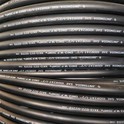
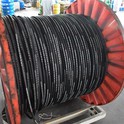
Temperature is a crucial environmental factor that significantly influences the performance of various industrial components, including Rubber Hose 4SH. As a dedicated supplier of Rubber Hose 4SH, I have witnessed firsthand how temperature fluctuations can affect the flexibility of these hoses. In this blog, I will delve into the scientific aspects of how temperature impacts the flexibility of Rubber Hose 4SH, drawing on both theoretical knowledge and practical experience in the industry.


Understanding Rubber Hose 4SH
Before discussing the effect of temperature on flexibility, it is essential to understand what Rubber Hose 4SH is. Rubber Hose 4SH is a high - pressure hydraulic hose designed to meet the demanding requirements of modern hydraulic systems. It is commonly used in heavy - duty applications such as construction equipment, mining machinery, and agricultural vehicles. The hose consists of an inner tube, reinforcement layers, and an outer cover. The inner tube is usually made of synthetic rubber, which provides resistance to the hydraulic fluid. The reinforcement layers, typically made of high - tensile steel wire, give the hose its strength to withstand high pressures. The outer cover protects the hose from environmental factors such as abrasion, ozone, and weathering.
You can find more information about Rubber Hose 4SH on our website: Rubber Hose 4SH. We also offer other related products like Rubber Hose 4SP and Rubber Hose EN856.
The Science of Rubber and Temperature
Rubber is a polymer material with unique viscoelastic properties. At a molecular level, rubber molecules are long chains that can move and slide past one another. The flexibility of rubber is closely related to the mobility of these molecular chains. Temperature plays a vital role in determining the mobility of rubber molecules.
High - Temperature Effects
When the temperature rises, the kinetic energy of rubber molecules increases. The increased kinetic energy allows the molecular chains to move more freely, resulting in a decrease in the intermolecular forces between the chains. As a consequence, the rubber becomes softer and more flexible. In the case of Rubber Hose 4SH, at high temperatures, the hose can be bent more easily, and the resistance to deformation is reduced.
However, high temperatures also have some negative impacts. Prolonged exposure to high temperatures can cause the rubber to degrade. The chemical bonds in the rubber may break, leading to a loss of mechanical properties such as strength and tear resistance. The outer cover of the hose may also become sticky, increasing the risk of abrasion and damage. Moreover, high temperatures can accelerate the oxidation of the rubber, which further deteriorates its performance over time.
Low - Temperature Effects
Conversely, at low temperatures, the kinetic energy of rubber molecules decreases. The molecular chains become less mobile, and the intermolecular forces become stronger. This causes the rubber to become stiffer and less flexible. For Rubber Hose 4SH, cold temperatures can make the hose difficult to bend, and it may crack if subjected to excessive stress.
The low - temperature brittleness of rubber is a significant concern in cold - climate applications. If the temperature drops below the glass transition temperature (Tg) of the rubber, the rubber essentially turns into a glassy state. In this state, the rubber loses its elasticity and becomes extremely brittle. Any attempt to bend or flex the hose can result in catastrophic failure.
Practical Implications in Different Applications
The effect of temperature on the flexibility of Rubber Hose 4SH has practical implications in various industries.
Construction Industry
In construction, heavy - duty equipment such as excavators, bulldozers, and cranes rely on Rubber Hose 4SH for their hydraulic systems. In hot summer days, the hoses may be more flexible, which can be an advantage when the equipment needs to perform complex maneuvers. However, the high temperatures can also lead to premature wear and failure of the hoses if not properly maintained.
In cold winter months, the hoses may become stiff, making it difficult for the hydraulic cylinders to operate smoothly. Operators may need to take extra precautions, such as pre - heating the equipment or using hoses specifically designed for low - temperature applications.
Mining Industry
Mining operations often take place in harsh environments with extreme temperature variations. In underground mines, the temperature can be relatively high due to the heat generated by machinery and the lack of ventilation. The increased flexibility of Rubber Hose 4SH at high temperatures can help in routing the hoses around the complex mine equipment. However, the risk of hose degradation due to high - temperature exposure is also a concern.
In open - pit mines, especially in cold regions, the low - temperature brittleness of the hoses can pose a significant problem. The hoses may be damaged during installation or operation, leading to hydraulic fluid leaks and potential safety hazards.
Agricultural Industry
Agricultural machinery such as tractors and combines use Rubber Hose 4SH in their hydraulic systems. In summer, the hoses may be more flexible, allowing for easier movement of the implements. However, the heat from the engine and the sun can cause the hoses to age faster. In winter, the cold temperatures can make it difficult to operate the machinery smoothly, as the hoses may not be able to bend as required.
Testing and Quality Assurance
To ensure the performance of Rubber Hose 4SH under different temperature conditions, rigorous testing is essential. We conduct a series of tests on our hoses, including temperature - cycling tests. In these tests, the hoses are exposed to a range of temperatures from low to high and back again. This simulates the real - world temperature variations that the hoses may encounter.
We also test the hoses for their low - temperature flexibility and high - temperature resistance. The low - temperature flexibility is measured by bending the hose at a specified low temperature and observing if it cracks or fails. The high - temperature resistance is evaluated by measuring the change in mechanical properties after the hose is exposed to high temperatures for a certain period.
Selecting the Right Hose for Temperature Conditions
As a supplier of Rubber Hose 4SH, we understand the importance of selecting the right hose for different temperature conditions. We offer hoses with different formulations that are optimized for specific temperature ranges. For high - temperature applications, we have hoses with heat - resistant rubber compounds that can withstand prolonged exposure to elevated temperatures without significant degradation.
For low - temperature applications, we provide hoses with low - temperature - resistant rubber materials. These hoses have a lower glass transition temperature, which allows them to remain flexible even in cold environments. Our technical team can assist customers in choosing the most suitable hose based on their specific temperature requirements and application scenarios.
Conclusion
In conclusion, temperature has a profound effect on the flexibility of Rubber Hose 4SH. High temperatures generally increase the flexibility of the hose but can also cause degradation, while low temperatures make the hose stiffer and more prone to cracking. Understanding these temperature - related effects is crucial for ensuring the proper selection, installation, and maintenance of Rubber Hose 4SH in various industrial applications.
If you are in need of Rubber Hose 4SH or have any questions regarding the temperature performance of our hoses, please feel free to contact us. We are committed to providing high - quality hoses that meet your specific needs. Our experienced team can offer professional advice and support to help you make the best choice for your applications.
References
- Mark, J. E., & Erman, B. (2007). Rubberlike Elasticity: A Molecular Primer. Cambridge University Press.
- Gent, A. N. (2012). Rubber Technology. Hanser Publishers.
- ASTM International. (2021). Standard Test Methods for Rubber Property - Vulcanizates and Thermoplastic Elastomers - Low - Temperature Brittleness. ASTM D2137.