What is the elongation rate of a 3/8 Rubber Hose?
As a supplier of 3/8 rubber hoses, I often get asked about various technical aspects of these products, and one frequently pondered question is the elongation rate of a 3/8 rubber hose. Understanding the elongation rate is crucial for both manufacturers and end - users, as it directly impacts the performance and safety of the hose in different applications.
To begin with, let's clarify what elongation rate means. In the context of rubber hoses, the elongation rate is defined as the percentage increase in the length of the hose when it is subjected to a specific tensile force. This is typically measured under controlled laboratory conditions, following industry standards such as those set by the Society of Automotive Engineers (SAE) or other relevant international standards.
For a 3/8 rubber hose, the elongation rate can vary significantly depending on multiple factors. The first and foremost factor is the type of rubber compound used in the hose's construction. Different rubber materials have different elastic properties. For instance, natural rubber offers high elasticity and relatively high elongation rates. But it may not be the best choice for applications where resistance to heat, ozone, or chemicals is critical. In contrast, synthetic rubbers like neoprene, nitrile, or ethylene - propylene diene monomer (EPDM) are often used in hose manufacturing due to their excellent resistance to various environmental factors, yet their elongation rates might be different from that of natural rubber.
Another significant factor affecting the elongation rate is the reinforcement structure within the hose. Most 3/8 rubber hoses are reinforced with materials like braided or spiral - wound synthetic fibers (such as polyester or nylon) or steel wires. These reinforcements are designed to enhance the hose's strength and durability, but they also limit its elongation. A hose with a tighter - braided or multi - layer reinforcement will generally have a lower elongation rate compared to a hose with a looser or single - layer reinforcement.
The manufacturing process also plays an important role in determining the elongation rate. Proper curing and vulcanization techniques ensure that the rubber reaches its optimal physical properties. If the curing process is not well - controlled, it can lead to inconsistencies in the rubber's structure, which may result in an abnormal elongation rate.
In practical applications, the elongation rate of a 3/8 rubber hose has several implications. In hydraulic systems, for example, excessive elongation can cause the hose to stretch and potentially loosen its connections, leading to leaks. This not only wastes hydraulic fluid but can also pose a safety hazard if the leaked fluid comes into contact with hot surfaces or electrical components. On the other hand, if the elongation rate is too low, the hose may be too rigid to handle dynamic movements, which can cause premature failures due to excessive stress on the hose and its fittings.
When considering the elongation rate, users should also take into account the operating conditions of the hose. Higher temperatures can cause rubber to soften, increasing its elongation rate. Similarly, if the hose is exposed to high - pressure fluids for an extended period, it may experience more significant elongation. Therefore, it's essential to select a 3/8 rubber hose with an appropriate elongation rate based on the specific operating environment.
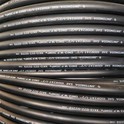
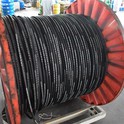
As a 3/8 rubber hose supplier, we offer a wide range of products to meet different customer requirements. Our Industrial Rubber Hose series is designed for various industrial applications, with carefully selected rubber compounds and reinforcement structures to ensure a balanced elongation rate. For those who need a longer hose, our JINTONGDA Rubber Hose 15m provides a reliable solution, taking into account the potential impact of length on elongation. And if you are looking for a hose with specific compatibility with PVC and meeting SAE R7 or R8 standards, our Rubber Hose To Pvc SAE R7 R8 is an ideal choice.
To accurately determine the elongation rate of our 3/8 rubber hoses, we conduct a series of tests in our well - equipped laboratory. These tests simulate different real - world conditions, including temperature, pressure, and tensile forces. The results of these tests are carefully recorded and analyzed to ensure that each batch of hoses meets or exceeds the industry standards.


When you are in the process of selecting a 3/8 rubber hose, it's important to communicate your specific needs with us. We can provide detailed technical information about the elongation rate and other properties of our hoses, helping you make an informed decision. Whether you are working on a small DIY project or a large - scale industrial application, our team of experts is ready to offer professional advice.
In conclusion, the elongation rate of a 3/8 rubber hose is a complex yet important parameter that affects the hose's performance and safety. By understanding the factors that influence it and choosing the right hose for your application, you can ensure the efficient and reliable operation of your system. If you are interested in our 3/8 rubber hoses or have any questions regarding the elongation rate or other aspects of our products, please don't hesitate to contact us for further discussion and potential procurement opportunities.
References
- Society of Automotive Engineers (SAE) standards for rubber hoses
- Technical literature on rubber materials and their properties