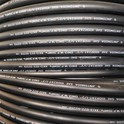
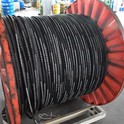
Hey there! As a supplier of Rubber Hose 1SC, I often get asked about the expansion coefficient of this product. It's a crucial factor, especially for those who rely on these hoses in various applications. So, let's dive right in and explore what the expansion coefficient of Rubber Hose 1SC is all about.
First things first, what exactly is the expansion coefficient? In simple terms, it's a measure of how much a material will expand or contract when its temperature changes. For Rubber Hose 1SC, this coefficient plays a significant role in its performance and durability. You see, when the temperature rises, the hose will expand, and if it's not designed to handle that expansion properly, it can lead to all sorts of problems, like leaks or even hose failure.
Now, the expansion coefficient of Rubber Hose 1SC isn't a fixed number. It can vary depending on a few different factors. One of the main factors is the type of rubber used in the hose. Different rubber compounds have different expansion characteristics. For example, some rubbers are more flexible and will expand more easily than others. At our company, we use high - quality rubber compounds that are carefully selected to ensure the best possible expansion performance for our Rubber Hose 1SC.
Another factor that affects the expansion coefficient is the construction of the hose. Rubber Hose 1SC typically has a certain layer structure, which can influence how it expands. The reinforcement layers inside the hose, such as braided or spiraled steel wires, can help to control the expansion. These reinforcement layers add strength and stability to the hose, preventing it from expanding too much and maintaining its shape under different temperature conditions.
The operating conditions also play a big role. If the Rubber Hose 1SC is used in a high - temperature environment, the expansion will be more significant compared to a low - temperature setting. For instance, in industrial applications where the hose is exposed to hot fluids or steam, the expansion coefficient becomes even more important. We've seen cases where improper consideration of the expansion coefficient has led to costly repairs and downtime for our customers.
So, how do we determine the expansion coefficient of our Rubber Hose 1SC? Well, we conduct a series of tests in our state - of - the - art laboratory. We subject the hoses to different temperature ranges and measure the amount of expansion. This data is then analyzed to calculate the expansion coefficient. We also take into account industry standards and best practices to ensure that our hoses meet or exceed the requirements of our customers.
It's important to note that the expansion coefficient of Rubber Hose 1SC is different from other types of rubber hoses. For example, Rubber Hose 1SN and Rubber Hose EN857 have their own unique expansion characteristics. Each type of hose is designed for specific applications, and the expansion coefficient is tailored to those needs. Similarly, Rubber Hose 2SC also has its distinct expansion properties.
When it comes to using Rubber Hose 1SC in your projects, understanding the expansion coefficient is essential for proper installation and maintenance. You need to make sure that there is enough space for the hose to expand without causing any damage. For example, when installing the hose, you should leave some slack to accommodate the expansion. Also, regular inspections are necessary to check for any signs of excessive expansion or damage.
If you're wondering how the expansion coefficient of Rubber Hose 1SC compares to other materials, it's important to know that rubber generally has a relatively high expansion coefficient compared to metals. Metals like steel have a much lower expansion rate. This is why rubber hoses are often used in applications where flexibility and vibration absorption are required, but you have to be aware of the expansion factor.


We've had many customers who were initially skeptical about the expansion coefficient of our Rubber Hose 1SC. But after using our products and seeing the reliable performance, they've become loyal clients. We're always happy to share our test results and technical data with our customers to give them peace of mind.
In addition to the expansion coefficient, we also focus on other important aspects of our Rubber Hose 1SC, such as pressure resistance, abrasion resistance, and chemical compatibility. All these factors work together to ensure that our hoses can perform well in a wide range of applications, from hydraulic systems to automotive and industrial uses.
If you're in the market for high - quality Rubber Hose 1SC, we'd love to hear from you. Whether you're a small business or a large industrial enterprise, we can provide you with the right hoses that meet your specific requirements. Our team of experts is always ready to assist you with any questions you may have about the expansion coefficient or any other technical details of our products.
We understand that every project is unique, and we're committed to providing customized solutions. So, if you have any special needs regarding the expansion coefficient or other performance parameters of Rubber Hose 1SC, just let us know. We'll work closely with you to develop the perfect hose for your application.
Don't hesitate to reach out if you're interested in learning more about our Rubber Hose 1SC. We can arrange a consultation to discuss your project in detail and provide you with a quote. Whether you're looking to replace old hoses or start a new project, we're here to help you make the right choice.
References
- ASTM International standards related to rubber hoses
- Industry research papers on rubber material properties and expansion coefficients
- Internal test reports from our laboratory on Rubber Hose 1SC expansion performance