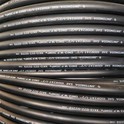
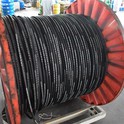
As a supplier of RUBBER Hose SAE R17, I've received numerous inquiries regarding the flexibility rating of this particular product. In this blog post, I aim to provide a comprehensive understanding of what the flexibility rating of RUBBER Hose SAE R17 means, how it is determined, and its significance in various applications.
Understanding Flexibility Rating
Flexibility rating is a crucial parameter when it comes to rubber hoses. It refers to the ability of a hose to bend or flex without kinking, collapsing, or losing its structural integrity. A higher flexibility rating indicates that the hose can be bent more easily and through a greater range of motion, making it suitable for applications where tight spaces or complex routing are involved.
For RUBBER Hose SAE R17, the flexibility rating is determined by a combination of factors, including the hose's construction, materials used, and the design of its reinforcement layers. These factors work together to ensure that the hose can withstand the stresses and strains associated with bending while maintaining its performance and durability.
Construction and Materials
The construction of RUBBER Hose SAE R17 plays a significant role in its flexibility rating. Typically, this type of hose consists of an inner tube, one or more reinforcement layers, and an outer cover. The inner tube is usually made of synthetic rubber, which provides resistance to the fluid being conveyed. The reinforcement layers, on the other hand, are responsible for providing strength and support to the hose.


The materials used in the reinforcement layers can vary, but common options include high - tensile steel wire or synthetic fibers such as polyester or aramid. The choice of material affects the hose's flexibility, as well as its pressure rating and burst strength. For example, hoses with steel wire reinforcement may be less flexible than those with synthetic fiber reinforcement, but they can withstand higher pressures.
The outer cover of RUBBER Hose SAE R17 is designed to protect the inner components from environmental factors such as abrasion, ozone, and weathering. It is also made of synthetic rubber, which can be formulated to provide different levels of flexibility and durability.
Determining the Flexibility Rating
The flexibility rating of RUBBER Hose SAE R17 is typically determined through a series of standardized tests. One of the most common tests is the minimum bend radius test. This test measures the smallest radius to which a hose can be bent without kinking or causing permanent damage. The smaller the minimum bend radius, the more flexible the hose is considered to be.
Another test that is often used is the fatigue test. In this test, the hose is subjected to repeated bending cycles to simulate real - world usage. The number of cycles the hose can withstand before failure is an indication of its flexibility and durability.
Manufacturers of RUBBER Hose SAE R17 also take into account other factors when determining the flexibility rating, such as the hose's length, diameter, and the type of fluid it is designed to carry. These factors can all affect the hose's performance and flexibility in different applications.
Significance in Applications
The flexibility rating of RUBBER Hose SAE R17 is of great significance in various applications. In the automotive industry, for example, flexible hoses are essential for routing fluids such as coolant, fuel, and brake fluid. The ability of the hose to bend around engine components and other obstacles allows for more compact and efficient engine designs.
In the industrial sector, RUBBER Hose SAE R17 is often used in hydraulic systems. Hydraulic hoses need to be flexible to accommodate the movement of machinery and equipment. A hose with a high flexibility rating can be easily installed in tight spaces and can withstand the constant bending and flexing associated with hydraulic system operation.
Compared to other types of rubber hoses, such as RUBBER Hose SAE R2AT, RUBBER Hose SAE R13, and RUBBER Hose SAE R16, RUBBER Hose SAE R17 offers a unique combination of flexibility and strength. While R2AT hoses are known for their high - pressure capabilities, R13 hoses are more flexible but have lower pressure ratings. R16 hoses, on the other hand, are designed for high - impulse applications. RUBBER Hose SAE R17 strikes a balance between these characteristics, making it suitable for a wide range of applications.
Quality Assurance and Compliance
As a supplier of RUBBER Hose SAE R17, we are committed to providing high - quality products that meet or exceed industry standards. Our hoses are manufactured using state - of - the - art technology and undergo rigorous quality control tests to ensure their flexibility, strength, and durability.
We also ensure that our products comply with all relevant safety and performance standards, such as SAE J517. This standard specifies the requirements for hydraulic rubber hoses, including their construction, materials, and performance characteristics. By complying with these standards, we can guarantee that our RUBBER Hose SAE R17 will perform reliably in various applications.
Conclusion
In conclusion, the flexibility rating of RUBBER Hose SAE R17 is a critical factor that determines its suitability for different applications. It is influenced by the hose's construction, materials, and the results of standardized tests. A high flexibility rating allows the hose to be easily bent and routed in tight spaces, making it ideal for use in automotive, industrial, and other sectors.
If you are in the market for RUBBER Hose SAE R17 or have any questions about its flexibility rating or other performance characteristics, please feel free to contact us. We are here to provide you with the best products and solutions to meet your specific needs. Our team of experts is ready to assist you in selecting the right hose for your application and can provide you with detailed technical information and support.
References
- SAE International. SAE J517 - Hydraulic Rubber Hoses.
- Various industry reports on rubber hose performance and testing.