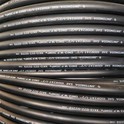
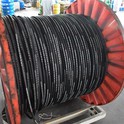
As a supplier of Rubber Hose 4SH, I've witnessed firsthand the growing demand for high - performance hydraulic hoses in various industries. One of the most critical factors users often inquire about is the impact resistance of Rubber Hose 4SH. In this blog, I'll delve deep into this topic, exploring what impact resistance means, how it's measured, and why it matters for Rubber Hose 4SH.


Understanding Impact Resistance
Impact resistance refers to a material's ability to withstand sudden and intense forces without suffering significant damage. In the context of Rubber Hose 4SH, this means the hose's capacity to endure impacts from external objects, such as falling tools, debris, or accidental collisions during normal operation or installation.
A hose with poor impact resistance may develop cracks, punctures, or other forms of damage when subjected to such impacts. These damages can lead to fluid leakage, reduced pressure - bearing capacity, and ultimately, system failure. On the other hand, a hose with high impact resistance can maintain its integrity and functionality even under harsh conditions, ensuring the reliable operation of hydraulic systems.
Measuring Impact Resistance of Rubber Hose 4SH
The impact resistance of Rubber Hose 4SH is typically evaluated through standardized testing procedures. One common method is the drop - weight test. In this test, a weighted object is dropped onto the hose from a specific height. The weight, height, and shape of the dropping object are carefully controlled according to industry standards.
The hose is then inspected for signs of damage. If the hose remains intact without visible cracks, punctures, or significant deformation after the impact, it passes the test. The degree of impact resistance can also be quantified by measuring the maximum impact energy the hose can withstand before failure.
Another approach is the pendulum impact test. In this test, a pendulum with a specific mass and length is swung to strike the hose. Similar to the drop - weight test, the hose is examined for damage after the impact. These tests provide objective data that manufacturers can use to assess and improve the impact resistance of their Rubber Hose 4SH products.
Importance of Impact Resistance for Rubber Hose 4SH
-
Safety in Industrial Applications
In industrial settings, such as construction sites, mining operations, and manufacturing plants, Rubber Hose 4SH is often used in hydraulic systems that power heavy machinery. These environments are full of potential impact hazards. A hose with high impact resistance reduces the risk of sudden failures that could lead to dangerous situations, such as unexpected machine movements, fluid leaks, or fires (if the hydraulic fluid is flammable). -
Longevity and Cost - Effectiveness
Hoses with good impact resistance are less likely to be damaged during normal use. This means fewer replacements and repairs, which translates into cost savings for end - users. A durable Rubber Hose 4SH can serve for a longer period, reducing the overall cost of ownership of hydraulic systems. -
Maintaining System Performance
Impact - resistant hoses can maintain their structural integrity and fluid - carrying capacity over time. This ensures that the hydraulic system operates at its optimal performance level, providing consistent power and efficiency to the machinery it powers.
Factors Affecting the Impact Resistance of Rubber Hose 4SH
-
Material Composition
The type of rubber used in the hose's outer layer plays a crucial role in its impact resistance. High - quality synthetic rubbers, such as nitrile rubber (NBR) or chloroprene rubber (CR), often offer better impact resistance compared to natural rubber. Additionally, the reinforcement layer, usually made of steel wire braids or spirals in Rubber Hose 4SH, also contributes to its overall strength and impact resistance. -
Design and Manufacturing Process
The design of the hose, including the thickness of the rubber layers and the arrangement of the reinforcement, affects its ability to absorb and distribute impact forces. A well - designed hose with proper manufacturing techniques can provide better impact resistance. For example, a hose with a thicker outer rubber layer may be more resistant to surface damage from impacts.
Comparing with Other Types of Rubber Hoses
When compared to other types of rubber hoses, such as Rubber Hose EN857, Rubber Hose EN853, and Rubber Hose 1SN, Rubber Hose 4SH generally has a higher impact resistance. This is mainly due to its double - wire spiral reinforcement structure, which provides greater strength and flexibility.
Rubber Hose EN857, for instance, is designed for different applications and may have different performance characteristics. It may be more focused on other aspects such as flexibility or chemical resistance rather than high - level impact resistance. Rubber Hose 1SN, with a single - wire braid reinforcement, may not be as robust as Rubber Hose 4SH in terms of withstanding heavy impacts.
Real - World Applications and Impact Resistance
In the construction industry, Rubber Hose 4SH is used in hydraulic excavators, loaders, and other heavy equipment. These machines are often exposed to impacts from rocks, tools, and other construction materials. The high impact resistance of Rubber Hose 4SH ensures that the hydraulic systems can continue to operate smoothly even in these harsh conditions.
In the mining industry, where the environment is extremely tough and hoses are at a high risk of being hit by falling rocks or mining equipment, the impact resistance of Rubber Hose 4SH is a critical factor. A reliable hose can prevent costly downtime and safety incidents.
Conclusion
The impact resistance of Rubber Hose 4SH is a vital characteristic that makes it suitable for a wide range of industrial applications. Its ability to withstand impacts ensures safety, longevity, and optimal performance of hydraulic systems. As a supplier, we are committed to providing high - quality Rubber Hose 4SH products with excellent impact resistance.
If you are in the market for Rubber Hose 4SH or have any questions regarding its impact resistance or other performance characteristics, please feel free to contact us for a detailed discussion and procurement negotiation. We look forward to serving your hydraulic hose needs.
References
- "Hydraulic Hose Handbook", Industry Standard Publication
- Research papers on rubber material properties and impact testing in leading engineering journals.