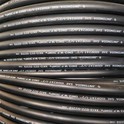
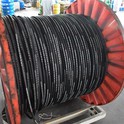
In the dynamic landscape of industrial and automotive applications, hydraulic hoses play a pivotal role in ensuring the smooth and efficient operation of various systems. Among these, the RUBBER Hose SAE R12 stands out as a reliable and widely used component. As a dedicated supplier of RUBBER Hose SAE R12, I am often asked about its impact resistance, a crucial characteristic that determines its performance in demanding environments. In this blog post, I will delve into the intricacies of the impact resistance of RUBBER Hose SAE R12, exploring its significance, the factors that influence it, and how it compares to other hoses in the market.
Significance of Impact Resistance in RUBBER Hose SAE R12
Impact resistance is a vital property for hydraulic hoses, especially in applications where they are exposed to mechanical stress, vibrations, and potential collisions. The RUBBER Hose SAE R12 is commonly used in high-pressure hydraulic systems, such as those found in construction equipment, agricultural machinery, and industrial manufacturing plants. In these environments, the hoses are subject to constant movement, pressure fluctuations, and the risk of being struck by objects. A hose with poor impact resistance is more likely to develop cracks, leaks, or even rupture, leading to system failures, downtime, and potential safety hazards.
On the other hand, a hose with high impact resistance can withstand these challenges, ensuring the reliability and longevity of the hydraulic system. It can resist the forces generated by sudden impacts, vibrations, and abrasions, maintaining its structural integrity and performance over time. This not only reduces the risk of costly repairs and replacements but also enhances the safety and efficiency of the equipment.
Factors Influencing the Impact Resistance of RUBBER Hose SAE R12
Several factors contribute to the impact resistance of RUBBER Hose SAE R12. Understanding these factors can help users select the right hose for their specific applications and ensure its optimal performance.


Material Composition
The material used in the construction of the hose is one of the most significant factors affecting its impact resistance. The RUBBER Hose SAE R12 typically consists of an inner tube, reinforcement layers, and an outer cover. The inner tube is usually made of synthetic rubber, such as nitrile or fluorocarbon, which provides resistance to the hydraulic fluid and prevents leakage. The reinforcement layers, which can be made of steel wire or synthetic fibers, provide strength and support to the hose, allowing it to withstand high pressures. The outer cover, also made of synthetic rubber, protects the hose from environmental factors, such as abrasion, ozone, and sunlight.
The quality and type of rubber used in the inner tube and outer cover can significantly impact the hose's impact resistance. High-quality rubber compounds are designed to be flexible, tough, and resistant to cracking and tearing. They can absorb the energy generated by impacts and distribute it evenly across the hose, reducing the risk of damage. Additionally, the reinforcement layers play a crucial role in enhancing the hose's strength and resistance to deformation. Steel wire reinforcement, for example, provides excellent tensile strength and stiffness, making the hose more resistant to impact.
Design and Construction
The design and construction of the hose also play a role in its impact resistance. The thickness of the inner tube, reinforcement layers, and outer cover can affect the hose's ability to withstand impacts. A thicker inner tube and outer cover can provide additional protection against punctures and abrasions, while a more robust reinforcement structure can enhance the hose's overall strength.
The way the reinforcement layers are arranged can also impact the hose's impact resistance. For example, a hose with a spiral-wound reinforcement structure is generally more flexible and resistant to kinking than a hose with a braided reinforcement structure. However, a braided reinforcement structure can provide better resistance to lateral forces and impacts, making it more suitable for applications where the hose is subject to bending and twisting.
Manufacturing Process
The manufacturing process used to produce the RUBBER Hose SAE R12 can also affect its impact resistance. A high-quality manufacturing process ensures that the hose is uniform in thickness, density, and composition, reducing the risk of weak spots or defects. Additionally, proper vulcanization, which is the process of cross-linking the rubber molecules, can enhance the hose's strength, flexibility, and resistance to aging.
Environmental Conditions
The environmental conditions in which the hose is used can also impact its impact resistance. Extreme temperatures, humidity, and exposure to chemicals or solvents can degrade the rubber material over time, reducing its strength and flexibility. Additionally, the presence of abrasive particles or sharp objects in the environment can increase the risk of damage to the hose.
Comparison with Other Hoses
When considering the impact resistance of RUBBER Hose SAE R12, it is useful to compare it with other types of hydraulic hoses. Two commonly used alternatives are RUBBER Hose SAE R16 and RUBBER Hose SAE R17.
The RUBBER Hose SAE R16 is similar to the R12 in terms of its application and performance. It is also designed for high-pressure hydraulic systems and offers good resistance to abrasion and impact. However, the R16 typically has a higher working pressure rating than the R12, making it more suitable for applications where higher pressures are required. In terms of impact resistance, both hoses are designed to be tough and durable, but the specific performance may vary depending on the material composition, design, and manufacturing process.
The RUBBER Hose SAE R17, on the other hand, is a low-pressure hose that is commonly used in applications where flexibility and light weight are important. It is typically made of synthetic rubber with a single layer of reinforcement, which makes it more flexible than the R12 and R16. However, the R17 has a lower working pressure rating and may not be suitable for applications where high pressures are involved. In terms of impact resistance, the R17 is generally less resistant than the R12 and R16 due to its thinner construction and lower reinforcement.
Another hose worth mentioning is the RUBBER Hose SAE R2AT. The R2AT is a high-pressure hydraulic hose that is similar to the R12 in terms of its performance and application. It is designed for use in hydraulic systems where high pressures and flexibility are required. The R2AT typically has a higher working pressure rating than the R12 and offers excellent resistance to abrasion and impact. However, the specific impact resistance of the R2AT may vary depending on the material composition, design, and manufacturing process.
Conclusion
In conclusion, the impact resistance of RUBBER Hose SAE R12 is a crucial characteristic that determines its performance and reliability in high-pressure hydraulic systems. The material composition, design and construction, manufacturing process, and environmental conditions all play a role in influencing the hose's impact resistance. By understanding these factors, users can select the right hose for their specific applications and ensure its optimal performance.
As a supplier of RUBBER Hose SAE R12, I am committed to providing high-quality hoses that meet the needs of our customers. Our hoses are manufactured using the latest technology and highest quality materials, ensuring excellent impact resistance, durability, and performance. If you are in the market for a reliable and high-performance hydraulic hose, I encourage you to contact us to discuss your requirements and explore our range of products. We look forward to the opportunity to work with you and help you find the perfect solution for your hydraulic system.
References
- Society of Automotive Engineers (SAE). SAE J517: Hydraulic Rubber Hoses.
- Rubber Manufacturers Association (RMA). Hose Design Manual.
- Various industry publications and technical resources on hydraulic hoses.