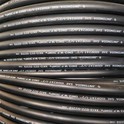
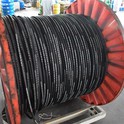
Hey there! As a supplier of RUBBER Hose SAE R9, I often get asked about the maximum length of this type of hose that can be used. It's a great question, and one that doesn't have a one - size - fits - all answer. So, let's dig into it and explore all the factors that play a role in determining the max length of RUBBER Hose SAE R9.
First off, what exactly is RUBBER Hose SAE R9? Well, it's a specialized hydraulic rubber hose that meets the SAE J517 standards. These standards ensure that the hose is built to handle specific pressures, temperatures, and other operating conditions. You can learn more about it on RUBBER Hose SAE R9.
Now, when it comes to figuring out the maximum length, there are several key factors we need to consider.


Pressure Drop
One of the most important factors is pressure drop. As fluid flows through the hose, there's a natural loss of pressure due to friction between the fluid and the inner walls of the hose. The longer the hose, the greater the pressure drop. If the pressure drop is too high, it can lead to reduced system performance. For example, in a hydraulic system, the equipment might not operate as efficiently or might not work at all.
To calculate the pressure drop, we need to look at the flow rate of the fluid, the viscosity of the fluid, and the internal diameter of the hose. A higher flow rate and more viscous fluid will generally result in a greater pressure drop. And when it comes to the hose diameter, a smaller diameter will cause more friction and thus a higher pressure drop.
Let's say you have a hydraulic system with a relatively low flow rate. In this case, you might be able to use a longer RUBBER Hose SAE R9 without experiencing a significant pressure drop. But if you're dealing with a high - flow system, you'll need to keep the hose length shorter to maintain the required pressure.
Hose Material and Construction
The material and construction of the RUBBER Hose SAE R9 also affect its maximum usable length. These hoses are typically made from high - quality rubber compounds that are designed to be flexible, durable, and resistant to various chemicals and environmental conditions.
However, different materials have different properties. Some rubber compounds might be more flexible but less resistant to abrasion, while others might be the opposite. The reinforcement layers inside the hose also play a role. The type and number of reinforcement layers determine the hose's strength and ability to withstand pressure.
A hose with a stronger reinforcement and a more durable rubber material can generally handle a longer length because it's less likely to burst or fail under pressure. But if the hose is made from a weaker material or has insufficient reinforcement, a long length could lead to problems like bulging or even rupture.
Operating Conditions
The environment in which the hose is used is another crucial factor. Temperature, for example, can have a big impact on the hose's performance. Extreme temperatures can cause the rubber to become brittle or soft, which can affect its strength and flexibility.
If the hose is used in a very hot environment, the rubber might start to break down more quickly, and the pressure - handling capacity could be reduced. In a cold environment, the hose might become stiff and less flexible, increasing the risk of damage when bent or flexed.
Vibration is also an issue. In a high - vibration environment, a long hose is more likely to develop fatigue and wear over time. This can lead to leaks or even complete failure of the hose.
System Requirements
The specific requirements of the hydraulic system are also important. Different systems have different pressure and flow requirements. For example, a small - scale hydraulic system in a light - duty machine might not need as much pressure or flow as a large - scale industrial system.
If the system has strict pressure and flow requirements, you'll need to be more careful about the hose length. You might need to consult with a hydraulic engineer to ensure that the hose length you choose is compatible with the system's needs.
Comparing with Other Hoses
It's also interesting to compare RUBBER Hose SAE R9 with other types of hoses, like RUBBER Hose SAE R12 and Rubber Hose 2SN. Each of these hoses has its own characteristics and maximum length limitations.
RUBBER Hose SAE R12, for instance, is designed for different applications and might have different pressure - handling capabilities. It could potentially be used in longer lengths in some situations, depending on the system requirements. Rubber Hose 2SN is another option, and it also has its own set of pros and cons when it comes to length and performance.
So, What's the Maximum Length?
There's no single answer to the question of the maximum length of RUBBER Hose SAE R9. In general, for most standard hydraulic systems, a length of around 50 feet (15 meters) is often considered a practical limit. But this can vary widely depending on all the factors we've discussed.
In some low - pressure, low - flow systems, you might be able to use a hose that's 100 feet (30 meters) or more. On the other hand, in high - pressure, high - flow systems, you might need to keep the length to 20 feet (6 meters) or less.
It's always a good idea to do a detailed analysis of your specific system before choosing a hose length. You can use hydraulic calculation software or consult with an expert to get a more accurate estimate.
Why Choose Our RUBBER Hose SAE R9?
As a supplier, we take pride in offering high - quality RUBBER Hose SAE R9. Our hoses are made from the best materials and are manufactured to the highest standards. We have a wide range of sizes and lengths available, so we can meet your specific needs.
We also provide excellent customer service. Our team of experts is always ready to help you choose the right hose length and type for your system. Whether you're a small business or a large industrial company, we can work with you to find the perfect solution.
Let's Talk!
If you're in the market for RUBBER Hose SAE R9 or have any questions about the maximum length or other aspects of our hoses, we'd love to hear from you. Contact us to start a discussion about your requirements. We're here to help you make the best choice for your hydraulic system.
References
- SAE J517 standards documentation
- Hydraulic engineering textbooks and manuals
- Industry research on rubber hose performance and limitations