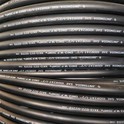
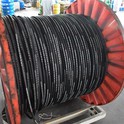
In the world of industrial components, rubber hoses play a crucial role in various applications, from hydraulic systems to fluid transfer. Among the different types of rubber hoses, the Rubber Hose 1SN stands out as a popular choice due to its specific design and performance characteristics. As a supplier of Rubber Hose 1SN, I often get asked about the price difference between standard and customized versions. In this blog post, I'll delve into the factors that contribute to this price gap and provide some insights for those considering purchasing these hoses.
Understanding Standard Rubber Hose 1SN
Standard Rubber Hose 1SN is a type of hydraulic hose that conforms to specific industry standards. These hoses are designed to meet a wide range of common applications and are mass - produced in large quantities. The standardization process ensures that they have consistent dimensions, pressure ratings, and performance features.
The manufacturing of standard Rubber Hose 1SN benefits from economies of scale. Since they are produced in large volumes, the cost per unit is relatively low. The raw materials used are often readily available and purchased in bulk, which further reduces the production cost. For example, the rubber compounds, reinforcement layers, and outer covers are selected based on common requirements, allowing for efficient production processes.
The standard design also means that there is less need for custom tooling or specialized manufacturing steps. The production lines are set up to produce these hoses with minimal variation, which streamlines the manufacturing process and reduces labor and equipment costs.
Customized Rubber Hose 1SN: A Tailored Solution
On the other hand, customized Rubber Hose 1SN is designed to meet specific requirements that go beyond the capabilities of standard hoses. Customers may need hoses with unique dimensions, special pressure ratings, or specific chemical resistance properties. For instance, in some industries, such as aerospace or chemical processing, the operating conditions are highly specialized, and standard hoses may not be suitable.
When it comes to customization, the first step is often a detailed consultation with the customer. This involves understanding their exact needs, including the application environment, fluid compatibility, and any other performance requirements. Once the requirements are clear, the engineering team has to develop a new design or modify an existing one. This design process requires significant time and expertise, which adds to the overall cost.
Customized hoses may also require special raw materials. For example, if a customer needs a hose with high - temperature resistance, a more advanced rubber compound may be required. These specialized materials are often more expensive than the standard ones used in mass - produced hoses.
In addition, the manufacturing of customized hoses may involve custom tooling. If the hose has non - standard dimensions or a unique shape, new molds or production equipment may need to be fabricated. This one - time investment in tooling is factored into the cost of the customized hoses.
Price Comparison Factors
- Raw Materials: As mentioned earlier, standard hoses use common and readily available raw materials, which are purchased in bulk at a lower cost. Customized hoses, however, may require specialized materials that are more expensive and may be purchased in smaller quantities. For example, a standard Rubber Hose 1SN may use a general - purpose rubber compound, while a customized hose for a chemical - resistant application may require a fluoropolymer - based rubber, which is significantly more costly.
- Design and Engineering: Standard hoses are based on existing designs that have been optimized for mass production. There is little to no need for new design work. Customized hoses, on the contrary, require extensive design and engineering efforts. Engineers need to conduct research, perform calculations, and create detailed drawings to ensure that the hose meets the customer's requirements. This design work is labor - intensive and adds to the cost.
- Tooling and Production Setup: Standard hoses are produced on established production lines with minimal setup time. Customized hoses may need new tooling, such as molds for different hose diameters or shapes. The cost of designing, fabricating, and testing these tools is substantial and is passed on to the customer.
- Volume of Production: Standard hoses are produced in large volumes, which allows for cost - effective manufacturing. Customized hoses are often produced in smaller quantities. The fixed costs associated with production, such as setup time and quality control, are spread over a smaller number of units, resulting in a higher per - unit cost.
Real - World Price Differences
In practice, the price difference between standard and customized Rubber Hose 1SN can vary significantly. On average, customized hoses can cost anywhere from 20% to 200% more than standard hoses, depending on the level of customization.
For simple customizations, such as a slightly different length or a different end - fitting, the price increase may be on the lower end of the spectrum, around 20% - 50%. However, for more complex customizations, such as hoses with extreme pressure ratings or specialized chemical resistance, the price increase can be much higher, up to 200% or more.


Choosing the Right Option
When deciding between standard and customized Rubber Hose 1SN, it's important to consider the specific needs of your application. If your requirements fall within the range of standard hoses, choosing a standard option can save you a significant amount of money. Standard hoses are also readily available, which means shorter lead times.
However, if your application has unique requirements that cannot be met by standard hoses, investing in a customized solution is necessary. In such cases, the additional cost is justified by the improved performance and reliability of the hose.
Conclusion
In conclusion, the price difference between standard and customized Rubber Hose 1SN is influenced by several factors, including raw materials, design and engineering, tooling, and production volume. As a supplier, I understand that customers need to make informed decisions based on their specific needs and budget.
If you are in the market for Rubber Hose 1SN, whether standard or customized, I encourage you to reach out for a detailed consultation. We can discuss your requirements, provide accurate pricing, and help you choose the best option for your application. Whether you need a standard Rubber Hose 1SN for a common hydraulic system or a customized one for a specialized application, we have the expertise and resources to meet your needs. We also offer other types of hoses, such as Rubber Hose EN856 and Rubber Hose 4SP, to cater to a wider range of industrial requirements.
Don't hesitate to contact us to start the procurement process and discuss how we can provide the right rubber hoses for your business.
References
- Industrial Hydraulic Hose Handbook
- Rubber Hose Manufacturing Industry Reports