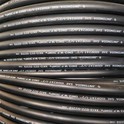
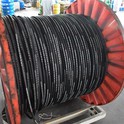
Hey there! As a supplier of Rubber Hose 2SN, I often get asked about the tensile strength of this particular type of hose. So, I thought I'd take some time to break it down for you all.


First off, let's understand what tensile strength means. In simple terms, tensile strength is the maximum amount of tensile (pulling) stress that a material can withstand before it breaks or fails. For a Rubber Hose 2SN, this is a crucial factor because it often operates in environments where it's subjected to pulling forces, whether it's during installation, operation, or even storage.
The Rubber Hose 2SN is a hydraulic hose that's designed to handle high - pressure applications. It's built to be tough and reliable, and its tensile strength plays a big role in that. The construction of the 2SN hose typically consists of an inner tube, reinforcement layers, and an outer cover. The inner tube is usually made of oil - resistant synthetic rubber, which helps in carrying the hydraulic fluid. The reinforcement layers, which are the key to its strength, are made of high - tensile steel wire braids. These braids are what give the hose its ability to handle high pressures and resist pulling forces.
The exact tensile strength of a Rubber Hose 2SN can vary depending on a few factors. One of the main factors is the diameter of the hose. Generally, smaller diameter hoses tend to have a higher tensile strength per unit area compared to larger diameter hoses. This is because the stress is distributed over a smaller cross - sectional area.
Another factor is the quality of the materials used. High - quality steel wire braids will have a higher tensile strength themselves, which in turn will increase the overall tensile strength of the hose. At our company, we take great care in sourcing the best materials for our Rubber Hose 2SN. We work with trusted suppliers who provide us with steel wire that meets strict quality standards. This ensures that our hoses can withstand the rigors of real - world applications.
Let's talk about some real - world implications of the tensile strength of Rubber Hose 2SN. In hydraulic systems, hoses are often bent, twisted, and pulled during installation. If the hose doesn't have sufficient tensile strength, it could start to develop cracks or even break during these processes. This not only leads to downtime but can also be a safety hazard. For example, in a construction equipment hydraulic system, a broken hose could cause a sudden loss of pressure, leading to equipment malfunction and potentially endangering the operators.
Moreover, during the operation of hydraulic systems, hoses are constantly under pressure. The fluid flowing through the hose creates internal pressure, and any external pulling forces can add to the stress on the hose. A hose with a high tensile strength can better withstand these combined forces, reducing the risk of failure.
Now, if you're in the market for a durable hydraulic hose, you might want to check out our Durable Hydraulic Rubber Hose. It's designed to meet the highest standards of quality and performance. We also offer other types of hoses like the RUBBER Hose SAE R1AT and RUBBER Hose SAE R2AT, which have their own unique features and applications.
When it comes to testing the tensile strength of our Rubber Hose 2SN, we follow strict industry standards. We use specialized testing equipment to apply a controlled pulling force to the hose until it fails. This allows us to accurately measure the maximum tensile strength. We also conduct regular quality control checks to ensure that every hose we produce meets or exceeds the specified tensile strength requirements.
In addition to tensile strength, there are other important properties of Rubber Hose 2SN that you should consider. For example, its abrasion resistance is crucial, especially in applications where the hose might rub against other surfaces. The outer cover of our hoses is made of a tough, abrasion - resistant rubber that helps protect the inner layers from damage.
Flexibility is another important factor. A flexible hose is easier to install and can better adapt to different operating conditions. Our Rubber Hose 2SN is designed to be flexible without sacrificing its strength. This means you can bend and route the hose as needed without worrying about it losing its integrity.
Chemical resistance is also something to keep in mind. Since the hose is used to carry hydraulic fluids, it needs to be resistant to the chemicals in those fluids. Our inner tube material is carefully selected to ensure excellent chemical resistance, which helps in prolonging the life of the hose.
If you're involved in industries such as construction, agriculture, or manufacturing, where hydraulic systems are widely used, the tensile strength of your hoses can make a big difference. A reliable Rubber Hose 2SN can help improve the efficiency and safety of your operations.
So, if you're looking for a high - quality Rubber Hose 2SN with excellent tensile strength, we're here to help. Whether you need a small quantity for a repair job or a large order for a new project, we can meet your requirements. Contact us today to start a conversation about your hose needs. We're always happy to provide you with more information, offer technical support, and help you find the right hose for your specific application.
In conclusion, the tensile strength of Rubber Hose 2SN is a critical property that determines its performance and reliability in high - pressure hydraulic applications. By understanding the factors that affect it and choosing a high - quality hose, you can ensure the smooth operation of your hydraulic systems. Don't hesitate to reach out to us if you have any questions or if you're ready to make a purchase.
References:
- Industry standards for hydraulic hoses
- Technical literature on rubber hose materials and construction