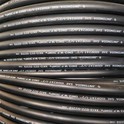
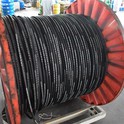
Hey there! As a supplier of Rubber Hose 2SN, I often get asked about the working pressure of this product. So, I thought I'd write a blog post to share some insights on this topic.
First off, let's understand what Rubber Hose 2SN is. It's a type of hydraulic hose that's widely used in various industrial applications. It's designed to withstand high pressures and harsh working conditions, making it a popular choice for heavy - duty machinery, construction equipment, and more.
The working pressure of Rubber Hose 2SN is a crucial factor. It determines how much pressure the hose can handle during normal operation without failing. The working pressure of Rubber Hose 2SN typically ranges from around 20.7 MPa (3000 psi) to 34.5 MPa (5000 psi). But it's important to note that this can vary depending on several factors.
One of the main factors affecting the working pressure is the construction of the hose. Rubber Hose 2SN usually consists of an inner tube, reinforcement layers, and an outer cover. The inner tube is made of oil - resistant rubber, which comes into direct contact with the hydraulic fluid. The reinforcement layers are typically made of high - strength steel wire braids. The number and quality of these braids play a significant role in determining the hose's pressure - handling capacity. More braids generally mean higher working pressure. For example, a hose with two layers of steel wire braids will have a different working pressure compared to one with three layers.
The temperature of the working environment also has an impact on the working pressure. High temperatures can cause the rubber in the hose to degrade over time, reducing its strength and pressure - handling ability. On the other hand, extremely low temperatures can make the rubber more brittle, which can also lead to a decrease in working pressure. So, when using Rubber Hose 2SN, it's essential to consider the temperature range of the application. If the working environment is hot, you might need to choose a hose with a higher working pressure rating to account for the temperature - related degradation.
Another factor is the type of hydraulic fluid being used. Different hydraulic fluids have different chemical properties, and some can be more aggressive towards the rubber in the hose. For instance, some synthetic hydraulic fluids might require a hose with a special inner tube material to ensure compatibility and maintain the working pressure. If the fluid is not compatible with the hose, it can cause swelling, cracking, or other forms of damage to the inner tube, which will ultimately reduce the hose's ability to handle pressure.
Now, let's compare Rubber Hose 2SN with some other types of rubber hoses. There are hoses like RUBBER Hose SAE R1AT, RUBBER Hose SAE R9, and RUBBER Hose SAE R12. Each of these hoses has its own unique characteristics and working pressure ranges.
RUBBER Hose SAE R1AT is a single - wire braid hose. It's generally used for low - to medium - pressure applications. Its working pressure is usually lower compared to Rubber Hose 2SN, typically in the range of 10.3 MPa (1500 psi) to 17.2 MPa (2500 psi). This makes it suitable for less demanding hydraulic systems where the pressure requirements are not as high.
RUBBER Hose SAE R9 is a thermoplastic hose. It offers good flexibility and is often used in applications where space is limited. The working pressure of RUBBER Hose SAE R9 can vary, but it's usually in the medium - pressure range, around 13.8 MPa (2000 psi) to 24.1 MPa (3500 psi). While it has its advantages in terms of flexibility, it might not be able to handle the high pressures that Rubber Hose 2SN can.
RUBBER Hose SAE R12 is a four - wire spiral hose. It's designed for high - pressure applications. Its working pressure can be quite high, often exceeding that of Rubber Hose 2SN in some cases, reaching up to 55.2 MPa (8000 psi) or more. However, it's also more expensive and less flexible compared to Rubber Hose 2SN.
When choosing a rubber hose for your application, it's crucial to accurately assess your pressure requirements. If you over - estimate the pressure and choose a hose with a much higher working pressure than needed, you'll end up spending more money on a hose that's more than what you actually require. On the other hand, if you under - estimate the pressure and choose a hose with a lower working pressure rating, it can lead to hose failure, which can be dangerous and costly in terms of equipment damage and downtime.
As a supplier of Rubber Hose 2SN, I always recommend that customers provide as much information as possible about their applications. This includes details about the working pressure, temperature, type of hydraulic fluid, and any other specific requirements. Based on this information, I can help them select the right hose that meets their needs and ensures safe and efficient operation.


If you're in the market for Rubber Hose 2SN or have any questions about its working pressure or other aspects, don't hesitate to reach out. I'm here to assist you in making the best choice for your hydraulic system. Whether you're a small - scale workshop or a large industrial enterprise, I can provide you with high - quality Rubber Hose 2SN that meets your specific requirements.
In conclusion, the working pressure of Rubber Hose 2SN is an important consideration, and it's influenced by multiple factors such as construction, temperature, and hydraulic fluid. By understanding these factors and comparing it with other types of hoses, you can make an informed decision when purchasing a rubber hose for your application. So, if you think Rubber Hose 2SN might be the right fit for you, let's start a conversation and see how we can work together to meet your needs.
References
- Hydraulic Hose Handbook, various industry publications
- Manufacturer's specifications for Rubber Hose 2SN and related hoses