As a supplier of Rubber Hose 1SN, I often receive inquiries from customers about the suitability of this product for various applications, especially regarding its use in transporting gases. In this blog post, I'll delve into the technical aspects to answer the question: Can Rubber Hose 1SN be used for transporting gases?
Understanding Rubber Hose 1SN
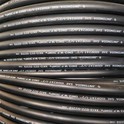
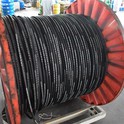
First, let's understand what Rubber Hose 1SN is. Rubber Hose 1SN is a type of hydraulic rubber hose designed according to specific industry standards. It is typically used in hydraulic systems to transfer hydraulic fluids under pressure. The construction of Rubber Hose 1SN usually consists of an inner tube, reinforcement layers, and an outer cover. The inner tube is made of oil - resistant synthetic rubber, which is designed to be compatible with hydraulic fluids. The reinforcement layer is often made of high - tensile steel wire braid, providing strength and pressure resistance. The outer cover is made of weather - resistant and abrasion - resistant rubber, protecting the inner structure from environmental damage.
Can Rubber Hose 1SN Transport Gases?
The short answer is that it depends on several factors.


Compatibility with Gases
The inner tube material of Rubber Hose 1SN is formulated mainly to be compatible with hydraulic fluids. Different gases have different chemical properties. Some gases are inert, such as nitrogen, while others are reactive, like oxygen or chlorine. If the gas is chemically compatible with the inner tube rubber material, there is a possibility that the hose can be used. For example, nitrogen is relatively inert and may not react with the rubber in the inner tube of Rubber Hose 1SN. However, gases like oxygen, especially at high pressures or in the presence of heat sources, can react with rubber, causing oxidation and degradation of the rubber material over time.
Pressure Rating
Rubber Hose 1SN has a specific pressure rating designed for hydraulic fluid applications. When transporting gases, the pressure requirements need to be carefully considered. Gases can be compressed to high pressures, and if the pressure of the gas exceeds the pressure rating of the Rubber Hose 1SN, it can lead to hose failure, such as bursting or leakage. For instance, in industrial gas storage and transportation systems, the gas pressure can be extremely high, and using a hose not rated for such pressures is extremely dangerous.
Temperature Considerations
Gases can be transported at different temperatures. The performance of Rubber Hose 1SN is also affected by temperature. Extreme temperatures, either high or low, can change the physical properties of the rubber. At high temperatures, the rubber may become soft and lose its strength, while at low temperatures, it may become brittle and crack. For example, in cryogenic gas applications where the temperature can be extremely low, Rubber Hose 1SN may not be suitable as the rubber may become too brittle to maintain its integrity.
Gas Permeation
Another factor to consider is gas permeation. Some gases can permeate through the rubber material over time. This is especially important in applications where gas leakage needs to be minimized, such as in medical gas delivery systems or high - precision industrial processes. Even if the rubber material is chemically compatible with the gas, the rate of gas permeation may be unacceptable for certain applications.
Alternative Hoses for Gas Transport
If Rubber Hose 1SN is not suitable for a particular gas - transporting application, there are other options available.
Rubber Hose EN853 is a standard for hydraulic hoses, and some hoses meeting this standard may be more suitable for gas applications depending on their specific design and material selection. These hoses are also designed with different inner tube materials and reinforcement structures, which can be tailored to different gas - related requirements.
Rubber Hose 2SC is another type of hydraulic hose. It has a different construction compared to Rubber Hose 1SN, usually with a double - steel - wire braid reinforcement. This can provide higher pressure resistance, which may be beneficial in some gas - transporting scenarios where higher pressures are involved.
Safety Considerations
Regardless of whether Rubber Hose 1SN is used for gas transport or not, safety should always be the top priority. When using any hose for gas transport, it is essential to conduct regular inspections for signs of wear, damage, or degradation. Pressure gauges and safety valves should be installed in the gas transport system to monitor and control the pressure. In addition, proper training should be provided to the operators to ensure they understand the potential risks and how to handle the system safely.
Conclusion
In conclusion, whether Rubber Hose 1SN can be used for transporting gases is a complex question that depends on gas compatibility, pressure requirements, temperature conditions, and gas permeation. While it may be possible to use Rubber Hose 1SN for some specific gas applications under certain conditions, a thorough assessment of all relevant factors is necessary. If you are considering using Rubber Hose 1SN for gas transport, it is recommended that you consult with a professional engineer or our technical team.
As a supplier of Rubber Hose 1SN, we have a team of experts who can provide in - depth technical support and advice. We can help you assess whether our product is suitable for your specific gas - transporting needs. If Rubber Hose 1SN is not the right choice, we can also recommend alternative hoses, such as Rubber Hose EN853 or Rubber Hose 2SC.
If you have any questions or are interested in purchasing our products for your gas - transporting or other applications, please feel free to contact us. We look forward to discussing your requirements and providing you with the best solutions.
References
- Hydraulic Hose Handbook, Industry Standard Publication
- Rubber Material Compatibility Databases
- Gas Safety and Transport Guidelines