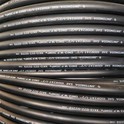
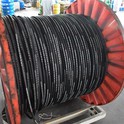
When it comes to selecting the appropriate rubber hose for specific applications, one crucial consideration is whether the hose can withstand the environmental conditions it will be exposed to. A common question that often arises is whether RUBBER Hose SAE R15 can be used in cryogenic applications. As a supplier of RUBBER Hose SAE R15, I'll delve into this topic to provide you with a comprehensive understanding.
Understanding RUBBER Hose SAE R15
First, let's understand what RUBBER Hose SAE R15 is. SAE (Society of Automotive Engineers) has established a set of standards for hydraulic rubber hoses, and SAE R15 is one of them. This type of hose is designed for high - pressure hydraulic applications. It typically features a synthetic rubber tube, multiple layers of high - tensile steel wire reinforcement, and a synthetic rubber cover. The tube is engineered to resist the chemical attack of hydraulic fluids, while the steel wire reinforcement provides the necessary strength to handle high pressures. The outer cover protects the inner components from abrasion, ozone, and other environmental factors.
Cryogenic Applications: What Are They?
Cryogenic applications involve extremely low temperatures, usually below - 150°C (- 238°F). These applications can be found in various industries, such as aerospace, food processing, and medical. In aerospace, cryogenic fuels like liquid oxygen and liquid hydrogen are used in rocket engines. In the food industry, cryogenic freezing is used to preserve food quickly. In the medical field, cryogenic temperatures are used for tissue preservation and some surgical procedures.


Factors to Consider for Cryogenic Use
To determine if RUBBER Hose SAE R15 can be used in cryogenic applications, we need to consider several key factors:
Material Compatibility
The materials used in RUBBER Hose SAE R15 must be able to withstand cryogenic temperatures without significant degradation. The synthetic rubber tube and cover are the main components that come into contact with the low - temperature environment. At extremely low temperatures, rubber materials can become brittle and lose their elasticity. This can lead to cracking, which may result in leaks and failure of the hose. Different types of rubber have different cryogenic performance. For example, some special synthetic rubbers like fluorocarbon rubber (FKM) have better low - temperature resistance compared to general - purpose rubbers.
Flexibility and Fatigue Resistance
Flexibility is an important characteristic of rubber hoses. In cryogenic applications, the hose may need to be bent or flexed during installation or operation. At low temperatures, the flexibility of the hose can be severely reduced. If the hose cannot flex without cracking, it will not be suitable for cryogenic use. Additionally, the hose should be able to withstand repeated flexing without experiencing fatigue failure. The steel wire reinforcement in RUBBER Hose SAE R15 also needs to maintain its mechanical properties at cryogenic temperatures. If the steel wire becomes too brittle, it may break under stress, leading to hose failure.
Pressure and Vacuum Resistance
Cryogenic applications may involve both high pressures and vacuum conditions. The RUBBER Hose SAE R15 is designed for high - pressure hydraulic systems. However, at cryogenic temperatures, the pressure - bearing capacity of the hose may change. The contraction of the materials at low temperatures can affect the internal stress distribution in the hose. In vacuum conditions, the hose needs to be able to resist collapsing. The combination of low temperature, high pressure, and vacuum can pose significant challenges to the hose's performance.
Comparing with Other Hose Types
To better understand the suitability of RUBBER Hose SAE R15 for cryogenic applications, let's compare it with some other common hose types.
- RUBBER Hose SAE R13: SAE R13 hoses are also used in high - pressure hydraulic applications. They have a different construction and material composition compared to SAE R15. Some SAE R13 hoses may have better low - temperature performance depending on the specific rubber compounds used. However, like SAE R15, they still need to be carefully evaluated for cryogenic use.
- RUBBER Hose SAE R9: SAE R9 hoses are designed for medium - pressure hydraulic applications. They usually have a different reinforcement structure and rubber formulation. Some SAE R9 hoses are made with materials that have better low - temperature flexibility, which may make them more suitable for cryogenic applications in some cases.
- Rubber Hose 2SN: The 2SN rubber hose is a high - pressure hose commonly used in hydraulic systems. Similar to SAE R15, it has steel wire reinforcement. But its performance in cryogenic conditions depends on the specific materials and manufacturing processes.
Can RUBBER Hose SAE R15 Be Used in Cryogenic Applications?
The answer is not straightforward. In general, standard RUBBER Hose SAE R15 may not be suitable for cryogenic applications due to the limitations of the rubber materials at low temperatures. However, with some modifications and special manufacturing processes, it may be possible to adapt the hose for cryogenic use.
Some suppliers can develop custom - made RUBBER Hose SAE R15 with special rubber compounds that have better low - temperature resistance. These compounds can maintain their elasticity and mechanical properties at cryogenic temperatures. Additionally, the manufacturing process can be optimized to ensure that the hose has better flexibility and fatigue resistance at low temperatures. For example, the steel wire reinforcement can be heat - treated or coated to improve its performance in cryogenic environments.
Our Capabilities as a Supplier
As a supplier of RUBBER Hose SAE R15, we have the expertise and resources to develop and produce hoses that meet the requirements of cryogenic applications. Our R & D team is constantly working on improving the performance of our hoses, especially in extreme environments. We can customize the rubber compounds used in the tube and cover to enhance low - temperature resistance. We also have advanced manufacturing equipment and quality control systems to ensure that each hose meets the highest standards.
If you are considering using RUBBER Hose SAE R15 in cryogenic applications, we can provide you with detailed technical support. Our engineers can analyze your specific requirements, such as temperature range, pressure, and chemical compatibility, and recommend the most suitable hose solution. We can also conduct tests on our hoses under cryogenic conditions to verify their performance.
Contact Us for Procurement and Negotiation
If you are interested in our RUBBER Hose SAE R15 products for cryogenic applications or any other applications, we welcome you to contact us for procurement and negotiation. We are committed to providing you with high - quality products and excellent customer service. Whether you need a small quantity for testing or a large - scale order for your project, we can meet your needs.
References
- "Handbook of Elastomers" by B. D. Croll and M. E. James
- "Hydraulic Hose and Fitting Standards" published by the Society of Automotive Engineers (SAE)
- "Cryogenic Engineering" by Richard F. Barron