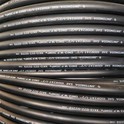
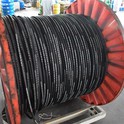
Hey there! As a supplier of RUBBER Hose SAE R16, I often get asked a bunch of questions about these hoses. One of the most common ones is, "Can RUBBER Hose SAE R16 be bent? And what's the minimum bend radius?" Well, let's dive right into it and find out.
First off, the short answer is yes, RUBBER Hose SAE R16 can be bent. These hoses are designed to be flexible to a certain extent, which is super important in a lot of applications. Whether it's in industrial machinery, automotive systems, or hydraulic equipment, the ability to bend the hose allows for easier installation around various components and structures.


But here's the deal. Just because it can be bent doesn't mean you can bend it however you want. There's a thing called the minimum bend radius, and it's a crucial factor to consider. The minimum bend radius is the smallest radius that a hose can be bent around without causing damage to the hose itself. If you bend the hose beyond this minimum radius, you're likely to run into some problems.
When you bend a RUBBER Hose SAE R16 beyond its minimum bend radius, it can lead to a few issues. For starters, it can restrict the flow of fluid through the hose. The internal structure of the hose gets distorted, and this can create blockages or reduce the cross - sectional area available for the fluid to flow. This not only affects the efficiency of the system but can also put extra strain on other components, leading to premature wear and tear.
Another problem is that excessive bending can damage the reinforcement layers inside the hose. RUBBER Hose SAE R16 typically has multiple layers of reinforcement to handle high pressures. When you bend it too sharply, these reinforcement layers can break or separate, weakening the hose and making it more prone to leaks or even complete failure.
So, what exactly is the minimum bend radius for RUBBER Hose SAE R16? Well, it depends on a few factors. The size of the hose is a major one. Generally, larger diameter hoses have larger minimum bend radii. For example, a smaller diameter RUBBER Hose SAE R16 might have a minimum bend radius of around 3 - 4 times the outer diameter of the hose, while a larger one could be 5 - 6 times or more.
The type of application also plays a role. If the hose is going to be used in a high - pressure system, the minimum bend radius might need to be larger to ensure the hose can withstand the forces involved. Additionally, the material of the hose and the specific design of the reinforcement layers can influence the minimum bend radius.
Now, I know all this technical stuff can be a bit overwhelming, but it's really important to get it right. That's why we, as a RUBBER Hose SAE R16 supplier, are always here to help. We have the expertise and experience to recommend the right minimum bend radius for your specific needs.
If you're still not sure, you can always refer to the manufacturer's specifications. These documents usually provide detailed information about the minimum bend radius for different sizes and types of RUBBER Hose SAE R16. And if you need further assistance, just give us a shout.
When comparing RUBBER Hose SAE R16 with other types of hoses, like Rubber Hose 2SN or RUBBER Hose SAE R9, each has its own characteristics regarding bendability and minimum bend radii. The Rubber Hose 2SN, for instance, might have different flexibility properties based on its design and intended use. The RUBBER Hose SAE R9, on the other hand, could be more suitable for different pressure ranges and bending requirements.
In some cases, you might find that the RUBBER Hose SAE R16 offers a better balance between flexibility and pressure - handling capabilities compared to other hoses. It's designed to meet specific industry standards, which means you can trust its performance in a wide range of applications.
So, if you're in the market for a reliable and flexible hose, RUBBER Hose SAE R16 is definitely worth considering. We've got a wide range of sizes and specifications available to meet your unique needs. Whether you're a small - scale workshop or a large industrial facility, we can provide you with the right hoses.
When it comes to installation, make sure you take the time to measure and plan the bends carefully. Use proper tools and techniques to ensure that the hose is bent within the recommended minimum bend radius. If you're unsure about the installation process, we can also offer some guidance and support.
In conclusion, RUBBER Hose SAE R16 can be bent, but it's essential to pay attention to the minimum bend radius. By doing so, you can ensure the longevity and performance of your hoses and the overall efficiency of your system. If you have any questions or need to place an order, don't hesitate to get in touch. We're here to make your hose - buying experience as smooth as possible.
References
- Industry standards for hydraulic hoses
- Manufacturer's specifications for RUBBER Hose SAE R16