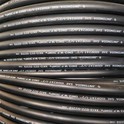
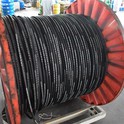
Is Rubber Hose EN856 resistant to fungus?


As a supplier of Rubber Hose EN856, I often encounter inquiries from customers regarding the product's various properties, one of the most common being its resistance to fungus. This is a crucial question, especially for applications where the hoses are exposed to humid or damp environments, which are conducive to fungal growth.
Understanding Rubber Hose EN856
Before delving into the fungus resistance of Rubber Hose EN856, it's essential to understand what this type of hose is. EN856 is a European standard that specifies the requirements for hydraulic rubber hoses and hose assemblies. These hoses are designed for use in hydraulic systems, where they transmit hydraulic fluid under pressure. They are known for their durability, flexibility, and ability to withstand high pressures.
There are different types of hoses under the EN856 standard, each with its own specific characteristics. For example, Rubber Hose 2SC is a double - wire braided hydraulic hose that offers high pressure resistance and is suitable for a wide range of hydraulic applications. Rubber Hose EN853 is another type, which has different construction and performance features compared to EN856 hoses. And Rubber Hose 1SN is a single - wire braided hose, often used in less demanding hydraulic systems.
Factors Affecting Fungus Resistance
Several factors determine whether a Rubber Hose EN856 is resistant to fungus.
Material Composition
The materials used in the construction of the hose play a significant role. The inner tube, reinforcement layer, and outer cover are all made of different materials, and their susceptibility to fungus varies. The outer cover is particularly important as it is directly exposed to the external environment. Most Rubber Hose EN856 outer covers are made of synthetic rubber compounds. These compounds can be formulated with anti - fungal additives during the manufacturing process. For example, some manufacturers use additives like zinc pyrithione, which has been proven to inhibit the growth of fungi.
Environmental Conditions
The environment in which the hose is used has a major impact on its fungus resistance. If the hose is installed in a dry, well - ventilated area, the risk of fungal growth is relatively low. However, in areas with high humidity, such as underground mines, tropical regions, or near water bodies, the chances of fungus developing on the hose increase significantly. Temperature also plays a role. Fungi tend to grow more rapidly in warm, moist conditions.
Surface Condition
The surface smoothness and cleanliness of the hose can affect fungus growth. A rough surface provides more areas for fungi to attach and grow. Additionally, if the hose surface is contaminated with dirt, grease, or other organic matter, it can serve as a nutrient source for fungi, promoting their growth.
Testing for Fungus Resistance
To determine the fungus resistance of Rubber Hose EN856, various testing methods are available.
Laboratory Testing
In a laboratory setting, hoses can be exposed to specific fungal strains under controlled conditions. The hoses are placed in chambers with controlled temperature, humidity, and fungal spore concentrations. After a certain period, the hoses are inspected for signs of fungal growth. This method allows for accurate assessment of the hose's resistance to different types of fungi.
Field Testing
Field testing involves installing the hoses in real - world environments where fungus is likely to be a problem. The hoses are monitored over an extended period to observe any fungal growth. This type of testing provides valuable information about how the hoses perform in actual operating conditions.
Our Experience as a Supplier
Based on our experience as a Rubber Hose EN856 supplier, we have found that our hoses generally have good fungus resistance. We take several steps during the manufacturing process to enhance this property.
We carefully select the materials for the outer cover, ensuring that they are formulated with anti - fungal additives. Our production facilities maintain strict quality control measures to ensure that the hoses meet the required standards. We also provide our customers with guidelines on proper installation and maintenance to minimize the risk of fungal growth. For example, we recommend that the hoses be installed in well - ventilated areas and kept clean.
Benefits of Fungus - Resistant Hoses
Using fungus - resistant Rubber Hose EN856 offers several benefits.
Extended Service Life
Fungal growth can cause deterioration of the hose material, leading to cracking, weakening, and ultimately, failure of the hose. By using fungus - resistant hoses, the service life of the hoses can be significantly extended, reducing the need for frequent replacements.
Reduced Maintenance Costs
With less fungal growth, there is less need for cleaning and maintenance of the hoses. This not only saves time but also reduces the overall maintenance costs associated with the hydraulic system.
Reliable Performance
In critical hydraulic applications, such as in heavy machinery or industrial equipment, reliable performance is essential. Fungus - resistant hoses ensure that the hydraulic system operates smoothly without interruptions caused by hose failure.
Conclusion
In conclusion, Rubber Hose EN856 can be resistant to fungus, depending on various factors such as material composition, environmental conditions, and surface condition. As a supplier, we are committed to providing high - quality hoses with excellent fungus resistance. Our hoses are tested thoroughly to ensure that they meet the highest standards.
If you are in the market for Rubber Hose EN856 and are concerned about fungus resistance, we invite you to contact us for more information. We can provide detailed product specifications, testing reports, and advice on proper installation and maintenance. Our team of experts is ready to assist you in finding the right hose for your specific application.
References
- ASTM International. Standard Test Methods for Evaluating the Resistance of Nonmetallic Materials to Fungi.
- ISO Standards on Hydraulic Rubber Hoses and Hose Assemblies.
- Technical literature from rubber hose manufacturers on anti - fungal additives and their effectiveness.