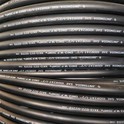
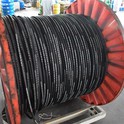
As a supplier of Rubber Hose EN853, I often get asked about the flexibility of these hoses. In this blog post, I'll delve into the factors that determine the flexibility of Rubber Hose EN853, compare it with other types of hoses, and share some real - world applications where its flexibility shines.
What is Rubber Hose EN853?
Rubber Hose EN853 is a standard for hydraulic rubber hoses in Europe. It encompasses various types of hoses, such as Rubber Hose 1SN, Rubber Hose 2SC, and Rubber Hose 4SH. These hoses are designed to handle hydraulic fluids and are widely used in industrial, construction, and agricultural machinery.
Factors Affecting the Flexibility of Rubber Hose EN853
1. Material Composition
The rubber compound used in the inner tube and outer cover of the hose plays a crucial role in its flexibility. High - quality synthetic rubbers, such as nitrile rubber (NBR), are often used for the inner tube because of their excellent resistance to hydraulic fluids. These rubbers can be formulated to have a certain degree of softness, which contributes to the hose's flexibility.
The outer cover material also matters. For example, a hose with a smooth, flexible outer cover made of synthetic rubber or a blend of rubbers will be more flexible than one with a rigid or thick outer layer.
2. Reinforcement Layers
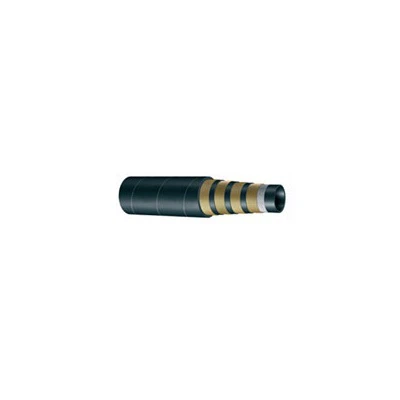
The number and type of reinforcement layers in the hose significantly impact its flexibility. Rubber Hose EN853 hoses typically have one or more layers of steel wire braid or spiral reinforcement.
Hoses with a single - wire braid, like some variants of Rubber Hose 1SN, tend to be more flexible compared to those with multiple layers of reinforcement. This is because the single - layer braid allows for more freedom of movement of the rubber layers, enabling the hose to bend more easily.
On the other hand, hoses with spiral reinforcement, such as Rubber Hose 4SH, are designed for high - pressure applications. While they are still flexible to a certain extent, the spiral reinforcement provides more strength at the cost of some flexibility compared to single - braid hoses.
3. Hose Diameter
Generally, smaller - diameter hoses are more flexible than larger - diameter ones. A smaller cross - sectional area means there is less material to bend, and the forces required to deform the hose are lower. For example, a 1/4 - inch diameter Rubber Hose EN853 will be much easier to bend around a tight corner than a 1 - inch diameter hose.
Comparing the Flexibility of Rubber Hose EN853 with Other Hoses
1. Metal Hoses
Metal hoses, such as stainless - steel braided hoses, are known for their high strength and durability. However, they are significantly less flexible than Rubber Hose EN853 hoses. Metal hoses have a rigid structure that makes it difficult to bend them into tight curves without the use of special tools. In contrast, Rubber Hose EN853 hoses can be easily bent by hand in many cases, especially the more flexible single - braid variants.
2. PVC Hoses
PVC hoses are often used in low - pressure applications. While they can be quite flexible, they lack the pressure - handling capabilities of Rubber Hose EN853 hoses. PVC hoses may also become brittle over time, especially in cold temperatures, which reduces their flexibility. Rubber Hose EN853 hoses, with their better - formulated rubber compounds, maintain their flexibility over a wider range of temperatures and operating conditions.
Real - World Applications Where Flexibility of Rubber Hose EN853 Shines
1. Construction Machinery
In construction equipment like excavators, loaders, and forklifts, Rubber Hose EN853 hoses are used to transfer hydraulic fluid to various components. The flexibility of these hoses allows them to be routed around the complex machinery parts easily. For example, when the boom of an excavator moves, the hydraulic hoses need to bend and flex without kinking. The flexibility of Rubber Hose EN853 ensures that the hydraulic system operates smoothly and efficiently.
2. Agricultural Equipment
Tractors, combines, and other agricultural machinery rely on hydraulic systems for various functions, such as lifting and lowering implements. The hoses need to be flexible enough to adapt to the movements of the equipment. In tight spaces within the machinery, the ability of Rubber Hose EN853 hoses to bend without restricting the flow of hydraulic fluid is essential for the proper functioning of the equipment.
3. Mobile Hydraulic Systems
Mobile hydraulic systems, such as those used in cranes and aerial work platforms, require hoses that can withstand repeated bending and flexing during operation. Rubber Hose EN853 hoses are ideal for these applications because of their good flexibility and resistance to fatigue.
Testing the Flexibility of Rubber Hose EN853
Manufacturers of Rubber Hose EN853 hoses conduct various tests to ensure that the hoses meet the required flexibility standards. One common test is the minimum bend radius test. This test determines the smallest radius around which the hose can be bent without kinking or causing a significant reduction in the internal diameter.
Another test is the flexing fatigue test. In this test, the hose is repeatedly bent and flexed a certain number of times to simulate real - world conditions. The hose must maintain its integrity and performance after the specified number of flexing cycles.

Conclusion
In conclusion, Rubber Hose EN853 generally has good flexibility, especially when considering its application in hydraulic systems. The material composition, reinforcement layers, and hose diameter all play important roles in determining its flexibility.
Compared to other types of hoses, Rubber Hose EN853 offers a good balance between flexibility and pressure - handling capabilities. Its flexibility makes it suitable for a wide range of applications in construction, agriculture, and mobile hydraulic systems.
If you are in need of high - quality Rubber Hose EN853 for your hydraulic systems, we are here to provide you with the best products. Our hoses are manufactured to meet the strictest quality standards, ensuring excellent flexibility and long - term performance. Contact us for more information and to discuss your specific requirements.
References
- ISO 18752:2015 - Rubber and plastics hoses and hose assemblies - Determination of flexing fatigue by means of a rotating mandrel
- EN 853:2013 - Rubber and plastics hoses and hose assemblies for hydraulic fluid power - Specification for two - wire braid reinforced types