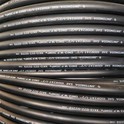
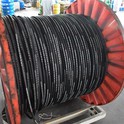
As a leading supplier of Rubber Hose 4SP, I often encounter inquiries about various technical specifications of our products. One of the most frequently asked questions is about the elongation at break of Rubber Hose 4SP. In this blog post, I will delve into what the elongation at break means, its significance for Rubber Hose 4SP, and how it impacts the performance and applications of our hoses.
Understanding Elongation at Break
Elongation at break is a fundamental mechanical property that measures the maximum amount a material can stretch before it fractures or breaks. It is expressed as a percentage of the original length of the material. For Rubber Hose 4SP, this parameter is crucial as it reflects the hose's ability to withstand tensile forces without failing.
When a Rubber Hose 4SP is in use, it may be subjected to various types of stress, including stretching, bending, and torsion. The elongation at break indicates how much the hose can stretch under these conditions before it reaches its limit and breaks. A higher elongation at break generally means that the hose is more flexible and can tolerate greater deformation without rupturing.


Factors Affecting the Elongation at Break of Rubber Hose 4SP
Several factors can influence the elongation at break of Rubber Hose 4SP. These include the type of rubber compound used, the reinforcement structure, and the manufacturing process.
- Rubber Compound: The choice of rubber compound plays a significant role in determining the elongation at break. Different rubber materials have different mechanical properties, and some are more elastic than others. For example, natural rubber is known for its high elasticity and excellent elongation at break, while synthetic rubbers may offer different performance characteristics depending on their chemical composition. At our company, we carefully select the rubber compounds for our Rubber Hose 4SP to ensure optimal performance and durability.
- Reinforcement Structure: The reinforcement structure of the hose also affects its elongation at break. Rubber Hose 4SP typically consists of an inner tube, reinforcement layers, and an outer cover. The reinforcement layers, which are usually made of high-strength steel wire or synthetic fibers, provide the hose with strength and support. The design and arrangement of the reinforcement layers can influence how the hose responds to tensile forces. A well-designed reinforcement structure can enhance the hose's elongation at break and improve its overall performance.
- Manufacturing Process: The manufacturing process can also have an impact on the elongation at break of Rubber Hose 4SP. Proper manufacturing techniques, such as precise extrusion, vulcanization, and quality control, are essential for ensuring the consistency and quality of the hose. Any defects or inconsistencies in the manufacturing process can weaken the hose and reduce its elongation at break. At our facility, we use advanced manufacturing equipment and strict quality control measures to produce high-quality Rubber Hose 4SP with consistent performance.
Significance of Elongation at Break for Rubber Hose 4SP Applications
The elongation at break of Rubber Hose 4SP is of great importance in various applications. Here are some examples:
- Hydraulic Systems: In hydraulic systems, Rubber Hose 4SP is commonly used to transmit high-pressure fluids. During operation, the hose may be subjected to stretching and bending as the hydraulic cylinders move. A hose with a high elongation at break can better accommodate these movements without breaking, ensuring the reliable operation of the hydraulic system. This is particularly important in applications where the hose needs to withstand repeated cycles of stretching and compression, such as in construction equipment, agricultural machinery, and industrial automation systems.
- Mobile Equipment: Mobile equipment, such as forklifts, cranes, and excavators, often uses Rubber Hose 4SP to connect different hydraulic components. These hoses are exposed to harsh working conditions, including vibration, shock, and extreme temperatures. A hose with good elongation at break can better withstand these conditions and prevent premature failure. It can also reduce the risk of leaks and spills, which can be dangerous and costly in mobile equipment applications.
- Industrial Applications: In industrial applications, Rubber Hose 4SP may be used for conveying various fluids, such as oil, water, and chemicals. The elongation at break of the hose is important to ensure that it can handle the movement and stress associated with the fluid transfer process. For example, in a chemical processing plant, the hose may need to stretch and bend as it is connected to different tanks and pipes. A hose with a high elongation at break can prevent damage to the hose and ensure the safe and efficient transfer of fluids.
Comparing Elongation at Break with Other Rubber Hoses
To better understand the significance of the elongation at break of Rubber Hose 4SP, it is useful to compare it with other types of rubber hoses. For example, Rubber Hose EN853, Rubber Hose 2SC, and Rubber Hose 1SN are also commonly used in hydraulic applications.
Each type of hose has its own specific performance characteristics, including elongation at break. Generally, Rubber Hose 4SP is designed to have a relatively high elongation at break compared to some other hoses, which makes it suitable for applications where flexibility and durability are important. However, the specific requirements of an application will determine the most appropriate type of hose to use.
Ensuring Optimal Elongation at Break in Our Rubber Hose 4SP
As a supplier of Rubber Hose 4SP, we are committed to providing our customers with high-quality products that meet or exceed their expectations. To ensure optimal elongation at break in our hoses, we take the following steps:
- Quality Control: We have a strict quality control system in place to monitor every stage of the manufacturing process. From raw material inspection to final product testing, we ensure that our hoses meet the highest quality standards. Our quality control team conducts regular tests on the elongation at break and other mechanical properties of the hoses to ensure consistency and reliability.
- Research and Development: We invest in research and development to continuously improve the performance of our Rubber Hose 4SP. Our engineers are constantly exploring new materials and manufacturing techniques to enhance the elongation at break and other properties of the hoses. By staying at the forefront of technological advancements, we can offer our customers the best possible products.
- Customer Support: We provide comprehensive customer support to help our customers select the right hose for their specific applications. Our technical experts are available to answer any questions and provide guidance on hose installation, maintenance, and usage. We also offer customized solutions to meet the unique requirements of our customers.
Conclusion
The elongation at break of Rubber Hose 4SP is a critical parameter that affects its performance and suitability for various applications. Understanding this property and its influencing factors is essential for selecting the right hose and ensuring its reliable operation. At our company, we are dedicated to producing high-quality Rubber Hose 4SP with excellent elongation at break and other mechanical properties.
If you are in need of Rubber Hose 4SP for your application, we invite you to contact us for more information. Our team of experts will be happy to assist you in selecting the right hose and providing you with a competitive quote. We look forward to the opportunity to work with you and meet your rubber hose needs.
References
- ASTM D412 - Standard Test Methods for Vulcanized Rubber and Thermoplastic Elastomers - Tension
- ISO 1402 - Rubber and plastics hoses and hose assemblies - Vocabulary