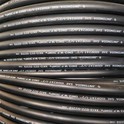
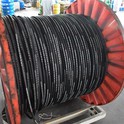
As a supplier of Rubber Hose 4SH, I understand the critical importance of detecting internal damage in these hoses. Rubber Hose 4SH is widely used in various hydraulic systems, where its integrity directly impacts the safety and efficiency of the entire operation. In this blog, I'll share some effective methods for detecting internal damage in Rubber Hose 4SH, drawing on my experience in the industry.
Visual Inspection
The first step in detecting internal damage is a thorough visual inspection. Although this method mainly focuses on the external appearance, it can still provide some clues about potential internal issues. Check the outer cover of the hose for any signs of cuts, abrasions, blisters, or bulges. These external damages could indicate internal problems such as reinforcement layer damage or fluid leakage.
Look for any discoloration on the hose surface. Unusual colors may suggest chemical reactions inside the hose, which could be a sign of fluid contamination or degradation of the hose material. Pay attention to the hose ends, where leaks often occur. Loose fittings, corrosion, or signs of seepage can all point to internal damage.
However, it's important to note that visual inspection has its limitations. Some internal damages may not be visible from the outside, especially those occurring deep within the hose structure. Therefore, additional testing methods are often required.
Pressure Testing
Pressure testing is a commonly used method to detect internal damage in Rubber Hose 4SH. This test involves subjecting the hose to a specified pressure and monitoring its performance. There are two main types of pressure tests: hydrostatic testing and pneumatic testing.
Hydrostatic Testing
Hydrostatic testing uses water as the testing medium. The hose is filled with water and then pressurized to a predetermined level. The pressure is maintained for a certain period, usually 5 to 10 minutes. During this time, any internal damage, such as leaks or weak spots, will cause a drop in pressure.
To perform a hydrostatic test, you'll need a pressure testing pump, a pressure gauge, and a suitable test rig. Connect the hose to the test rig and fill it with water. Gradually increase the pressure to the specified level and monitor the pressure gauge. If the pressure drops significantly, it indicates the presence of internal damage.
Hydrostatic testing is a reliable method for detecting leaks and weak points in the hose. It can also help identify any potential issues with the hose's pressure - bearing capacity. However, it requires a relatively large amount of water and proper drainage facilities.
Pneumatic Testing
Pneumatic testing uses compressed air as the testing medium. Similar to hydrostatic testing, the hose is pressurized to a specific level, and any pressure drop is monitored. Pneumatic testing is often preferred when water is not a suitable testing medium, such as in applications where water contamination is a concern.

However, pneumatic testing has some safety risks. Compressed air can cause an explosion if there is a sudden rupture in the hose. Therefore, strict safety precautions must be taken during pneumatic testing, such as using appropriate safety barriers and pressure relief valves.

Ultrasonic Testing
Ultrasonic testing is a non - destructive testing method that can detect internal damage in Rubber Hose 4SH without causing any harm to the hose. This method uses high - frequency sound waves to detect changes in the internal structure of the hose.

When an ultrasonic wave is transmitted into the hose, it will reflect off any internal defects, such as cracks or delaminations. By analyzing the reflected waves, technicians can determine the location and size of the defects. Ultrasonic testing is particularly useful for detecting small, hidden defects that may not be detected by other methods.
To perform ultrasonic testing, a specialized ultrasonic testing device is required. The device consists of a transducer that emits and receives ultrasonic waves. The transducer is placed on the surface of the hose, and the test results are displayed on a monitor.
X - ray Testing
X - ray testing is another non - destructive testing method that can provide detailed information about the internal structure of Rubber Hose 4SH. This method uses X - rays to penetrate the hose and create an image of its internal components.
X - ray testing can detect a wide range of internal defects, including broken wires in the reinforcement layer, foreign objects inside the hose, and delaminations between different layers. It provides a clear and accurate view of the hose's internal condition, allowing for precise identification and evaluation of damage.
However, X - ray testing requires specialized equipment and trained operators. It also involves exposure to radiation, so strict safety measures must be taken to protect the operators and the environment.
Acoustic Emission Testing
Acoustic emission testing is a technique that monitors the acoustic signals generated by a material under stress. When a Rubber Hose 4SH is subjected to pressure or other external forces, internal damage can cause the material to emit acoustic waves.
By placing acoustic sensors on the surface of the hose, these acoustic signals can be detected and analyzed. Changes in the acoustic emission patterns can indicate the presence and development of internal damage. Acoustic emission testing is a real - time monitoring method that can detect damage at an early stage, allowing for timely maintenance and replacement.
Importance of Regular Inspections
Regular inspections of Rubber Hose 4SH are crucial for ensuring its safe and reliable operation. Internal damage can occur gradually over time due to factors such as high pressure, temperature changes, chemical exposure, and mechanical stress. By conducting regular inspections using the methods mentioned above, potential problems can be identified and addressed before they lead to serious failures.
In addition to detecting internal damage, regular inspections can also help extend the service life of the hoses. By replacing damaged hoses in a timely manner, you can prevent further damage to the hydraulic system and avoid costly downtime.
Conclusion
Detecting internal damage in Rubber Hose 4SH is essential for maintaining the safety and efficiency of hydraulic systems. Visual inspection, pressure testing, ultrasonic testing, X - ray testing, and acoustic emission testing are all effective methods for detecting internal damage. Each method has its own advantages and limitations, and a combination of these methods may be required for a comprehensive inspection.
As a supplier of Rubber Hose 4SH, I am committed to providing high - quality products and reliable technical support. If you are interested in learning more about Rubber Hose 4SH or need help with detecting internal damage, please feel free to contact me for further discussions and procurement opportunities. You may also want to explore other related products such as Rubber Hose EN857, Rubber Hose EN856, and Rubber Hose 1SC.
References
- "Hydraulic Hose Handbook" - A comprehensive guide on hydraulic hoses, including testing methods and maintenance.
- Industry standards related to hydraulic hoses, such as ISO and ASTM standards, which provide guidelines on testing and quality control.
- Technical papers and research articles on non - destructive testing methods for rubber hoses.