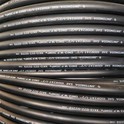
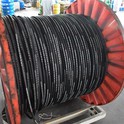
Is a 3/8 Rubber Hose suitable for saltwater applications?
Hey there! I'm a supplier of 3/8 rubber hoses, and I often get asked whether our 3 8 Rubber Hose is a good fit for saltwater applications. Well, let's dive right into it and find out.
First off, let's talk about what makes saltwater different from regular water. Saltwater contains a significant amount of dissolved salts, mainly sodium chloride. These salts can be pretty corrosive over time, and they can cause damage to a lot of materials. So, when we're thinking about using a 3/8 rubber hose in saltwater, we've got to consider how the rubber will hold up against this corrosive environment.
Most rubber hoses are made from different types of rubber compounds, and some are more resistant to saltwater than others. For instance, neoprene rubber is known for its good resistance to chemicals, including saltwater. It forms a protective barrier that helps prevent the salt from eating away at the hose material. If our 3/8 rubber hose is made from neoprene or a similar salt - resistant rubber compound, it's got a better chance of lasting in a saltwater application.
But it's not just about the rubber type. The construction of the hose also matters. A well - constructed 3/8 rubber hose will have multiple layers. There's usually an inner tube that comes into direct contact with the saltwater, a reinforcement layer to give the hose strength, and an outer cover for protection. The inner tube should be made of a material that can withstand the saltwater without degrading quickly. And the outer cover needs to be tough enough to protect the inner layers from abrasion and other external factors.


Now, let's look at some of the common saltwater applications where a 3/8 rubber hose might be used. One of the most obvious ones is in marine environments, like on boats. You might use the hose for things like bilge pumping, where you're removing water that has collected in the bottom of the boat. The water in the bilge can often be saltwater, so the hose needs to be able to handle it. Another application could be in aquariums that use saltwater. You might use the hose for water circulation or filtration systems.
However, there are some challenges. Even if the rubber is salt - resistant, continuous exposure to saltwater can still take a toll. Over time, the salt can start to break down the rubber's molecular structure, making it brittle and more prone to cracking. And if the hose is constantly bending and flexing, which is common in many applications, the stress can exacerbate the damage.
To give you an idea of how long a 3/8 rubber hose might last in saltwater, it really depends on a few factors. If the hose is used in a relatively calm saltwater environment, with minimal exposure to sunlight (which can also damage rubber) and is properly maintained, it could last for several years. But if it's in a harsh environment, like in the open ocean where the water is constantly churning and there's a lot of salt spray, the lifespan might be significantly shorter.
Maintenance is key when using a 3/8 rubber hose in saltwater applications. After each use, it's a good idea to rinse the hose thoroughly with fresh water. This helps remove the salt that has accumulated on the surface of the hose. You should also inspect the hose regularly for any signs of wear, such as cracks or leaks. If you notice any issues early on, you can take steps to repair or replace the hose before it fails completely.
Now, let's talk about our product range. As a supplier, we offer a variety of 3 8 Rubber Hose options that are designed with saltwater applications in mind. Our hoses are made from high - quality rubber compounds that are tested for saltwater resistance. We also pay close attention to the construction details to ensure that the hoses are strong and durable.
In addition to our 3/8 rubber hoses, we also have related products like Hyd Hose Assy and Hydraulic Hose. These products can be used in a wide range of applications, and some of them can also be suitable for saltwater environments, depending on the specific requirements.
If you're in the market for a 3/8 rubber hose for a saltwater application, we're here to help. We can provide you with all the information you need about our products, including their saltwater resistance, construction, and expected lifespan. Our team of experts can also offer advice on how to properly install and maintain the hose to get the most out of it.
So, to sum it up, a 3/8 rubber hose can be suitable for saltwater applications, but it depends on the rubber type, construction, and how well it's maintained. If you're interested in learning more about our products or have any questions about using a 3/8 rubber hose in saltwater, don't hesitate to reach out. We're ready to have a chat and help you find the right solution for your needs.
References
- Rubber Manufacturers Association. (20XX). Guide to Rubber Hose Applications.
- Marine Engineering Handbook. (20XX). A comprehensive resource on marine equipment and materials.