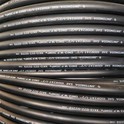
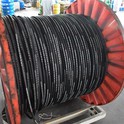
When dealing with hydraulic systems, the choice of rubber hoses plays a crucial role in ensuring the system's efficiency and safety. One such widely used standard in the industry is Rubber Hose EN853. As a supplier of Rubber Hose EN853, I often encounter inquiries about its resistance to high temperatures. In this blog, we will delve into the science behind the high - temperature resistance of Rubber Hose EN853, exploring its composition, performance under heat, and how it compares to other types of rubber hoses.
Composition of Rubber Hose EN853
Rubber Hose EN853 is designed to meet specific European standards for hydraulic applications. It typically consists of three main components: an inner tube, reinforcement layers, and an outer cover. The inner tube is usually made of synthetic rubber, which is in direct contact with the hydraulic fluid. This rubber material is selected for its compatibility with various hydraulic fluids, such as mineral oil, water - glycol, and synthetic hydraulic fluids.
The reinforcement layers are responsible for providing the hose with the necessary strength to withstand high pressures. These layers are often made of steel wire braid or spiral. The number of reinforcement layers can vary depending on the type of EN853 hose, such as 1SN, 2SN, 4SP, etc. [Insert hyperlink: Rubber Hose 1SN, Rubber Hose 4SP]
The outer cover serves as a protective layer, shielding the internal components from environmental factors such as abrasion, ozone, and sunlight. It is also made of rubber, and different rubber compounds can be used to enhance the hose's performance in different environments.
Factors Affecting High - Temperature Resistance
The high - temperature resistance of Rubber Hose EN853 is influenced by several factors related to its composition and design.
Rubber Compounds
The type of rubber used in the inner tube and outer cover is a significant determinant of the hose's high - temperature performance. For example, nitrile rubber (NBR) is commonly used in hose inner tubes because of its good resistance to oil and moderate temperature range. However, it has limitations when it comes to extremely high temperatures. On the other hand, fluorocarbon rubber (FKM) or silicone rubber offers much better high - temperature resistance. FKM can withstand temperatures up to around 200 - 230°C (392 - 446°F), while silicone rubber can handle temperatures from - 60°C to 230°C (- 76°F to 446°F).
Reinforcement Materials
The reinforcement layers also play a role in high - temperature resistance. Steel wire, which is a common reinforcement material, has good mechanical strength but can be affected by thermal expansion and contraction. At high temperatures, the steel wire may expand, causing stress on the rubber layers. To mitigate this, some hoses use heat - treated steel wire or alternative reinforcement materials that are more stable at high temperatures.
Hose Design
The overall design of the hose, including the thickness of the rubber layers and the arrangement of the reinforcement layers, can impact its high - temperature performance. A thicker rubber layer can provide better insulation and protection against heat transfer, while an optimal arrangement of reinforcement layers can help maintain the hose's structural integrity at high temperatures.
Performance of Rubber Hose EN853 at High Temperatures
Under normal operating conditions, Rubber Hose EN853 is designed to handle a certain temperature range. Most standard EN853 hoses can operate at temperatures between - 40°C to 100°C (- 40°F to 212°F). When the temperature exceeds this range, the hose may experience several changes.
At moderately high temperatures (up to around 120 - 150°C or 248 - 302°F), the rubber may start to lose some of its elasticity. This can lead to an increase in the hose's stiffness, which may affect its flexibility and the ability to absorb vibrations in the hydraulic system. The rubber may also become more prone to cracking and abrasion, reducing its service life.
In extreme high - temperature conditions (above 150°C or 302°F), the rubber can undergo thermal degradation. The chemical bonds in the rubber break down, causing the rubber to harden, become brittle, and eventually fail. The reinforcement layers can also be affected by the high temperatures, leading to a loss of strength and potential separation from the rubber layers.
However, if the Rubber Hose EN853 is specifically designed for high - temperature applications, with the use of high - temperature - resistant rubber compounds and appropriate reinforcement materials, it can perform well at elevated temperatures. For example, some specialized EN853 hoses can operate continuously at temperatures up to 150°C (302°F) or even higher for short periods.
Comparison with Other Rubber Hoses
When comparing Rubber Hose EN853 with other types of rubber hoses in terms of high - temperature resistance, it is important to consider the specific requirements of the application.
[Insert hyperlink: Rubber Hose 1SN] Rubber Hose 1SN, which is a single - wire braid hydraulic hose, generally has similar temperature resistance characteristics as standard EN853 hoses. It is suitable for low - to - medium - pressure applications and can handle the typical temperature range of - 40°C to 100°C (- 40°F to 212°F). However, if special high - temperature rubber compounds are used, it can also tolerate moderately elevated temperatures.
[Insert hyperlink: Rubber Hose 4SP] Rubber Hose 4SP, which is a four - wire spiral hydraulic hose, often has better pressure - handling capabilities due to its spiral reinforcement. In terms of high - temperature resistance, it depends on the rubber compounds and reinforcement materials used. Similar to EN853, it can be designed to withstand high temperatures if the right components are chosen.
Importance of High - Temperature Resistance in Hydraulic Systems
In hydraulic systems, high temperatures can occur due to various reasons, such as high - pressure operation, long - term continuous use, or exposure to hot environments. Ensuring that the rubber hoses in these systems can resist high temperatures is crucial for several reasons.
First, high - temperature - resistant hoses can prevent system failures. If a hose fails due to thermal degradation, it can lead to leaks of hydraulic fluid, which not only reduces the system's efficiency but can also pose safety hazards, such as fire risks if the fluid is flammable.
Second, it can extend the service life of the hydraulic system. Hoses that can withstand high temperatures will require less frequent replacement, reducing maintenance costs and downtime.
Finally, in some industries, such as aerospace, automotive, and manufacturing, where hydraulic systems operate in demanding environments, the use of high - temperature - resistant hoses is a requirement for meeting safety and performance standards.
Selecting the Right Rubber Hose EN853 for High - Temperature Applications
As a supplier of [Insert hyperlink: Rubber Hose EN853], I recommend the following steps when selecting a hose for high - temperature applications.


- Understand the Application Requirements: Determine the maximum temperature that the hose will be exposed to, as well as the duration of exposure. Consider other factors such as the type of hydraulic fluid, pressure requirements, and environmental conditions.
- Choose the Right Rubber Compounds: Select hoses with rubber compounds that are specifically designed for high - temperature applications, such as FKM or silicone rubber.
- Check the Reinforcement Materials: Ensure that the reinforcement materials can withstand the high temperatures without significant loss of strength.
- Verify the Hose Certification: Look for hoses that are certified to meet relevant industry standards for high - temperature performance.
Conclusion
In conclusion, Rubber Hose EN853 can have varying degrees of high - temperature resistance depending on its composition, design, and the specific requirements of the application. While standard EN853 hoses can handle a typical temperature range of - 40°C to 100°C (- 40°F to 212°F), specialized versions can be designed to withstand much higher temperatures. As a supplier, I am committed to providing high - quality Rubber Hose EN853 that meets the diverse needs of our customers, including those with high - temperature applications.
If you are in the market for Rubber Hose EN853 or have questions about its high - temperature resistance, I invite you to reach out for a detailed discussion and procurement negotiation. Our team of experts is ready to assist you in finding the most suitable solution for your hydraulic system.
References
- ISO 18752:2017 - Hydraulic fluid power -- Rubber hoses and hose assemblies -- Specification for four - wire braid type.
- EN 853:2016 - Rubber and plastics hoses and hose assemblies for hydraulic applications -- Specification for four - wire braid types.
- Handbook of Elastomers, Second Edition, Edited by Ian Franta.