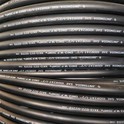
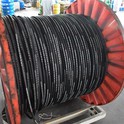
Flex fatigue is a crucial performance indicator for rubber hoses, especially those used in demanding hydraulic applications like the Rubber Hose EN853. As a supplier of Rubber Hose EN853, I have witnessed firsthand the importance of understanding the flex fatigue properties of these hoses. In this blog, we will delve into the flex fatigue characteristics of Rubber Hose EN853, exploring what it means, why it matters, and how it impacts the overall performance of the hoses.
Understanding Flex Fatigue in Rubber Hoses
Flex fatigue refers to the deterioration of a rubber hose due to repeated bending and flexing. When a rubber hose is subjected to cyclic flexing, it experiences stress and strain that can cause micro - cracks to form in the rubber material. Over time, these micro - cracks can grow and propagate, leading to the failure of the hose.
The flex fatigue properties of a rubber hose are determined by several factors, including the type of rubber compound used, the reinforcement structure, and the manufacturing process. For Rubber Hose EN853, which is designed for hydraulic applications, these factors play a significant role in ensuring its long - term performance under flexing conditions.
Factors Affecting Flex Fatigue in Rubber Hose EN853
Rubber Compound
The rubber compound used in the construction of Rubber Hose EN853 is a critical factor in determining its flex fatigue resistance. Different rubber materials have different mechanical properties, such as elasticity, hardness, and tear resistance. For example, synthetic rubbers like nitrile rubber (NBR) are commonly used in hydraulic hoses due to their excellent oil resistance and good flex fatigue properties.
NBR has a high degree of elasticity, which allows it to withstand repeated flexing without losing its shape or integrity. It also has good tear resistance, which helps prevent the growth of micro - cracks during flexing. However, the formulation of the rubber compound, including the addition of fillers, plasticizers, and antioxidants, can also affect its flex fatigue performance. A well - formulated rubber compound will have a balanced combination of properties that enhance its resistance to flex fatigue.
Reinforcement Structure
The reinforcement structure of Rubber Hose EN853 provides the hose with strength and pressure resistance. Common reinforcement materials include braided or spiraled steel wires. The type and arrangement of the reinforcement can significantly impact the hose's flex fatigue properties.
Braided reinforcement offers good flexibility and is suitable for applications where the hose needs to be bent frequently. The braided wires distribute the stress evenly across the hose, reducing the concentration of stress at any single point. On the other hand, spiraled reinforcement provides higher pressure resistance but may be less flexible than braided reinforcement. However, modern manufacturing techniques have allowed for the development of spiraled hoses with improved flex fatigue performance.
Manufacturing Process
The manufacturing process of Rubber Hose EN853 also affects its flex fatigue properties. Proper vulcanization is essential for ensuring the optimal cross - linking of the rubber molecules, which improves the hose's mechanical properties. Inadequate vulcanization can result in a weaker rubber structure that is more prone to flex fatigue.
Additionally, the precision of the manufacturing process in terms of the alignment of the reinforcement and the thickness of the rubber layers can also impact the hose's performance. A well - manufactured hose will have a uniform structure, which helps distribute the stress evenly during flexing.
Testing Flex Fatigue of Rubber Hose EN853
To ensure the quality and performance of Rubber Hose EN853, various testing methods are used to evaluate its flex fatigue properties. One common test method is the flexing test, where the hose is subjected to a specified number of flexing cycles under controlled conditions.
During the flexing test, the hose is bent at a specific radius and angle, and the frequency of the flexing is also regulated. The test is typically carried out until the hose fails or reaches a predefined level of damage. The results of the flexing test can provide valuable information about the hose's flex fatigue life, which is an important parameter for determining its suitability for different applications.
Another test method is the impulse test, which simulates the pressure fluctuations that the hose may experience in real - world applications. The hose is subjected to repeated pressure impulses while being flexed, which can accelerate the development of flex fatigue. The impulse test helps to identify any potential weaknesses in the hose's structure and ensures that it can withstand the dynamic conditions of hydraulic systems.


Importance of Flex Fatigue Properties in Applications
In hydraulic systems, Rubber Hose EN853 is often used in applications where it needs to be bent and flexed frequently. For example, in construction equipment, agricultural machinery, and industrial automation systems, the hoses are constantly moving and bending as the equipment operates.
Good flex fatigue properties are essential in these applications for several reasons. Firstly, it ensures the reliability of the hydraulic system. A hose with poor flex fatigue resistance is more likely to fail prematurely, which can lead to system downtime, costly repairs, and potential safety hazards.
Secondly, it extends the service life of the hose. By withstanding repeated flexing without significant damage, the hose can be used for a longer period, reducing the need for frequent replacements. This not only saves costs but also improves the overall efficiency of the hydraulic system.
Comparing with Other Rubber Hoses
When comparing Rubber Hose EN853 with other rubber hoses such as Rubber Hose EN856 and Rubber Hose 2SC, the flex fatigue properties can vary. Each type of hose is designed for specific applications, and their flex fatigue performance is tailored to meet the requirements of those applications.
Rubber Hose EN856, for example, is also used in hydraulic applications but may have different rubber compounds and reinforcement structures compared to Rubber Hose EN853. This can result in differences in their flex fatigue resistance. Similarly, Rubber Hose 2SC is designed for high - pressure applications and may have a different balance of properties, including flex fatigue performance.
Our Role as a Supplier
As a supplier of Rubber Hose EN853, we understand the importance of providing high - quality hoses with excellent flex fatigue properties. We work closely with our customers to understand their specific application requirements and recommend the most suitable hoses.
We ensure that our Rubber Hose EN853 is manufactured using the highest quality materials and the latest manufacturing techniques. Our hoses undergo rigorous testing to meet or exceed the relevant industry standards for flex fatigue performance. We also offer technical support and after - sales service to help our customers get the most out of our products.
Conclusion
The flex fatigue properties of Rubber Hose EN853 are crucial for its performance in hydraulic applications. The rubber compound, reinforcement structure, and manufacturing process all play important roles in determining its resistance to flex fatigue. By understanding these factors and conducting proper testing, we can ensure that the hoses meet the demanding requirements of various applications.
If you are in need of high - quality Rubber Hose EN853 with excellent flex fatigue properties, we are here to help. Contact us to discuss your specific needs and explore how our products can meet your requirements. Our team of experts is ready to assist you in finding the best solution for your hydraulic systems.
References
- "Handbook of Rubber Technology" by Maurice Morton
- "Hydraulic Hose and Fittings: Design, Selection, and Application" by Thomas J. Gillespie