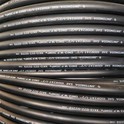
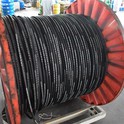
Hey there! As a supplier of Hyd Hose Assy, I've been diving deep into the nitty - gritty of these awesome hydraulic hose assemblies. Let's talk about what makes the flow characteristics of a Hyd Hose Assy so important and how they work.
First off, flow rate is a big deal. Simply put, it's the volume of fluid that can pass through the hose assembly in a given amount of time, usually measured in gallons per minute (GPM) or liters per minute (LPM). A high - flow Hyd Hose Assy is super crucial in systems where a large quantity of hydraulic fluid needs to be transferred quickly. For example, in heavy - duty construction equipment, like excavators, high - flow hoses ensure that the hydraulic cylinders can extend and retract rapidly, allowing for efficient operation of the machinery.
The inner diameter of the hose plays a major role in determining the flow rate. A larger inner diameter means less resistance to the fluid flow, which in turn allows for a higher flow rate. But it's not as simple as just choosing the biggest inner diameter possible. You also have to consider the pressure requirements of the system. If the pressure is too high and the hose is too large, it can cause issues like excessive fluid turbulence and even damage to the hose.
Speaking of pressure, it's another key factor in the flow characteristics of a Hyd Hose Assy. Pressure drop occurs as the fluid moves through the hose. This is because of the friction between the fluid and the inner wall of the hose, as well as any bends or fittings in the assembly. A high - quality Hyd Hose Assy is designed to minimize pressure drop. We want the pressure at the outlet of the hose to be as close as possible to the pressure at the inlet, so that the hydraulic system can operate at its optimal efficiency.
The material of the hose also affects the flow characteristics. Hose materials need to be resistant to the hydraulic fluid they're transporting, as well as durable enough to withstand the pressure and temperature conditions of the system. For instance, rubber is a popular choice for hydraulic hoses because it's flexible, can handle a wide range of pressures and temperatures, and has good chemical resistance. You can check out our Hydraulic Hose DIN EN856 and Hydraulic Hose DIN EN857, which are made of high - quality rubber and offer excellent performance in terms of flow and pressure resistance.
Bends and elbows in the hose assembly can have a significant impact on the flow. When the fluid has to change direction suddenly, it creates turbulence, which increases the pressure drop. To minimize this, we try to use smooth - bend hoses. These hoses are designed to allow the fluid to change direction more gradually, reducing turbulence and pressure drop.
Now, let's talk about viscosity of the hydraulic fluid. Viscosity is a measure of a fluid's resistance to flow. A fluid with high viscosity, like honey, is thick and flows slowly. In a hydraulic system, the viscosity of the fluid should be within a certain range. If the viscosity is too high, it can cause high pressure drop and slow flow rate. On the other hand, if the viscosity is too low, the fluid may not provide enough lubrication to the system components, leading to increased wear and tear. Our JINTONGDA Rubber Hose 15m is designed to work well with a wide range of hydraulic fluid viscosities, ensuring smooth and efficient flow.
Temperature also influences the flow characteristics. As the temperature increases, the viscosity of the hydraulic fluid usually decreases. This can lead to changes in the flow rate and pressure drop. At high temperatures, the hose material also needs to maintain its integrity. That's why we use specialized rubber compounds and reinforcement layers in our Hyd Hose Assy to ensure that they can perform well in a variety of temperature conditions.
Another aspect to consider is the length of the hose. The longer the hose, the higher the pressure drop due to the increased friction between the fluid and the hose wall. So, when designing a hydraulic system, it's important to keep the hose length as short as possible while still meeting the spatial requirements of the equipment.


In some applications, pulsation can be an issue. Pulsation is the rapid change in pressure within the hydraulic system, which can cause vibrations and noise. A well - designed Hyd Hose Assy can dampen these pulsations. We use techniques like adding special layers or using flexible materials to absorb and reduce the impact of pulsations, ensuring a more stable flow within the system.
In conclusion, understanding the flow characteristics of a Hyd Hose Assy is crucial for the proper functioning of any hydraulic system. Whether you're working on a small - scale industrial project or heavy - duty construction machinery, the right Hyd Hose Assy can make a world of difference.
If you're in the market for high - quality Hyd Hose Assy, feel free to get in touch with us for a detailed discussion about your needs. We can offer you the best solutions tailored to your specific hydraulic system requirements. Let's work together to make your hydraulic operations more efficient and reliable.
References
- Fluid Power Handbook. This comprehensive guide provides in - depth knowledge about hydraulic systems and hose assemblies.
- Hydraulic Component Manufacturing Standards. Industry standards that cover the design and performance requirements of Hyd Hose Assy.