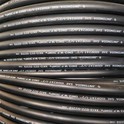
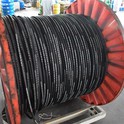
As a trusted supplier of RUBBER Hose SAE R16, I am often asked about the compression resistance of this particular type of hose. In this blog post, I will delve into the details of the compression resistance of RUBBER Hose SAE R16, explaining what it means, why it matters, and how it compares to other types of rubber hoses.
Understanding Compression Resistance
Compression resistance refers to a hose's ability to withstand external pressure without collapsing or deforming. In hydraulic systems, hoses are often subjected to high pressures, both internally and externally. Internal pressure is generated by the fluid flowing through the hose, while external pressure can come from various sources, such as mechanical forces or environmental factors.
A hose with good compression resistance can maintain its shape and integrity under pressure, ensuring a consistent flow of fluid and preventing leaks or failures. This is crucial for the safe and efficient operation of hydraulic systems, which are used in a wide range of applications, including construction, agriculture, manufacturing, and transportation.
Factors Affecting Compression Resistance of RUBBER Hose SAE R16
Several factors contribute to the compression resistance of RUBBER Hose SAE R16. These include the hose's construction, materials, and design.
Construction
RUBBER Hose SAE R16 is a multi - layer hose typically consisting of an inner tube, reinforcement layers, and an outer cover. The inner tube is usually made of synthetic rubber, which provides a smooth surface for fluid flow and chemical resistance. The reinforcement layers, often made of high - strength steel wire or synthetic fibers, are responsible for the hose's strength and pressure - bearing capacity. The outer cover protects the hose from environmental factors such as abrasion, weathering, and chemicals.
The way these layers are constructed and bonded together plays a significant role in the hose's compression resistance. A well - constructed hose with proper bonding between the layers can distribute the pressure evenly, reducing the risk of collapse or deformation.
Materials
The materials used in the construction of RUBBER Hose SAE R16 also affect its compression resistance. High - quality synthetic rubbers, such as nitrile butadiene rubber (NBR) or ethylene propylene diene monomer (EPDM), are commonly used for the inner tube and outer cover. These rubbers offer excellent flexibility, durability, and chemical resistance.
The reinforcement materials, such as steel wire or synthetic fibers, provide the necessary strength to withstand high pressures. Steel wire reinforcement is known for its high tensile strength and is suitable for applications requiring high - pressure resistance. Synthetic fiber reinforcement, on the other hand, offers good flexibility and is often used in applications where weight is a concern.
Design
The design of RUBBER Hose SAE R16, including its diameter, wall thickness, and bend radius, can also impact its compression resistance. A larger diameter hose may have a lower compression resistance compared to a smaller diameter hose, as the pressure is distributed over a larger area. Similarly, a hose with a thicker wall can generally withstand higher pressures than a hose with a thinner wall.
The bend radius of the hose is also important. A sharp bend can cause the hose to kink or collapse, reducing its compression resistance. Therefore, it is important to choose a hose with an appropriate bend radius for the application.
Compression Resistance Testing
To ensure the quality and performance of RUBBER Hose SAE R16, compression resistance testing is carried out. These tests are typically conducted in accordance with industry standards, such as those set by the Society of Automotive Engineers (SAE).
During compression resistance testing, the hose is subjected to a specified external pressure for a certain period of time. The hose is then inspected for any signs of collapse, deformation, or leakage. If the hose passes the test, it means that it meets the required compression resistance standards.
Comparison with Other Rubber Hoses
When comparing the compression resistance of RUBBER Hose SAE R16 with other types of rubber hoses, such as RUBBER Hose SAE R2AT and RUBBER Hose SAE R1AT, it is important to consider the specific requirements of the application.
RUBBER Hose SAE R16 is designed for high - pressure applications and generally has a higher compression resistance compared to some other types of hoses. However, RUBBER Hose SAE R2AT is also a high - pressure hose with good compression resistance, and it may be more suitable for applications where a different type of reinforcement or flexibility is required. RUBBER Hose SAE R1AT is often used in lower - pressure applications and may have a lower compression resistance compared to R16.
Importance of Compression Resistance in Applications
The compression resistance of RUBBER Hose SAE R16 is of utmost importance in various applications. In construction equipment, such as excavators and loaders, hydraulic hoses are subjected to high pressures and mechanical stresses. A hose with poor compression resistance can lead to leaks, which can cause hydraulic fluid to spill, resulting in environmental pollution and potential safety hazards.
In agricultural machinery, such as tractors and combines, hydraulic hoses are used to operate various functions, such as steering, lifting, and braking. A hose failure due to low compression resistance can disrupt the operation of the machinery, leading to downtime and reduced productivity.
In manufacturing and industrial applications, hydraulic systems are used for precise control of machinery. A reliable hose with good compression resistance ensures the accurate and consistent operation of these systems, reducing the risk of production errors and equipment damage.
Our Offerings as a Supplier
As a supplier of RUBBER Hose SAE R16, we are committed to providing high - quality hoses with excellent compression resistance. We use the latest manufacturing techniques and high - quality materials to ensure that our hoses meet or exceed industry standards.
Our RUBBER Hose SAE R16 is available in a variety of sizes and configurations to meet the specific needs of different applications. We also offer Durable Hydraulic Rubber Hose options that are designed to withstand harsh environments and heavy - duty use.


Contact Us for Procurement
If you are in the market for RUBBER Hose SAE R16 or other hydraulic hoses, we invite you to contact us for procurement. Our team of experts can help you select the right hose for your application based on your specific requirements. We offer competitive pricing, fast delivery, and excellent customer service. Whether you need a small quantity for a repair job or a large order for a new project, we are here to meet your needs.
References
- Society of Automotive Engineers (SAE) standards for hydraulic hoses.
- Technical literature on rubber hose materials and construction.
- Industry reports on hydraulic system applications and requirements.