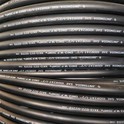
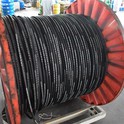
The dielectric constant, also known as relative permittivity, is a fundamental property of materials that describes their ability to store electrical energy in an electric field. In the context of rubber hoses, particularly the Rubber Hose 2SN, understanding the dielectric constant is crucial for various applications, especially those involving electrical insulation or electromagnetic interactions. As a supplier of Rubber Hose 2SN, I am often asked about the dielectric constant of this specific type of hose. In this blog post, I will delve into what the dielectric constant of Rubber Hose 2SN is, why it matters, and how it impacts its performance.
What is the Dielectric Constant?
Before we discuss the dielectric constant of Rubber Hose 2SN, let's first understand what the dielectric constant is. The dielectric constant (εr) is a dimensionless quantity that represents the ratio of the permittivity of a material (ε) to the permittivity of free space (ε0). Mathematically, it is expressed as:
εr = ε / ε0
The permittivity of a material is a measure of how much electric flux can be stored in the material per unit electric field. Free space has a permittivity of ε0 = 8.854 x 10^-12 F/m. A material with a high dielectric constant can store more electrical energy in an electric field compared to a material with a low dielectric constant.

Dielectric Constant of Rubber Hose 2SN
Rubber Hose 2SN is a type of hydraulic hose designed to meet the requirements of SAE J517 standards. It is commonly used in hydraulic systems for various applications, including construction equipment, agricultural machinery, and industrial machinery. The dielectric constant of Rubber Hose 2SN depends on several factors, including the type of rubber used, the additives present, and the operating conditions.
Typically, the dielectric constant of rubber materials ranges from 2 to 7. For Rubber Hose 2SN, the dielectric constant is usually in the range of 3 to 5. This value indicates that Rubber Hose 2SN can store a moderate amount of electrical energy in an electric field. The specific dielectric constant of a particular Rubber Hose 2SN product may vary depending on the manufacturer and the specific formulation of the rubber compound.
Importance of the Dielectric Constant in Rubber Hose 2SN
The dielectric constant of Rubber Hose 2SN plays a crucial role in its performance, especially in applications where electrical insulation is required. Here are some key reasons why the dielectric constant is important:
- Electrical Insulation: In hydraulic systems, Rubber Hose 2SN may be exposed to electrical fields, either from nearby electrical equipment or from the operation of the hydraulic system itself. A high dielectric constant ensures that the hose can effectively insulate against electrical currents, preventing electrical leakage and reducing the risk of electrical hazards.
- Capacitive Coupling: The dielectric constant also affects the capacitive coupling between the hose and other components in the hydraulic system. Capacitive coupling can cause interference and signal distortion, especially in systems that rely on electrical signals for control or monitoring. By controlling the dielectric constant of the hose, it is possible to minimize capacitive coupling and improve the overall performance of the system.
- Electromagnetic Compatibility (EMC): In modern hydraulic systems, electromagnetic compatibility is becoming increasingly important. The dielectric constant of Rubber Hose 2SN can influence its electromagnetic behavior, including its ability to radiate or absorb electromagnetic waves. A low dielectric constant can help reduce electromagnetic interference (EMI) and ensure that the hose complies with EMC standards.
Factors Affecting the Dielectric Constant of Rubber Hose 2SN
As mentioned earlier, the dielectric constant of Rubber Hose 2SN is influenced by several factors. Here are some of the key factors that can affect the dielectric constant:
- Type of Rubber: Different types of rubber have different dielectric constants. For example, natural rubber typically has a lower dielectric constant compared to synthetic rubbers such as neoprene or nitrile rubber. The choice of rubber material can therefore have a significant impact on the dielectric constant of the hose.
- Additives: Rubber compounds often contain additives to improve their performance, such as antioxidants, fillers, and plasticizers. These additives can also affect the dielectric constant of the rubber. For example, fillers such as carbon black can increase the dielectric constant of the rubber, while plasticizers can decrease it.
- Temperature: The dielectric constant of rubber is temperature-dependent. As the temperature increases, the dielectric constant of rubber generally decreases. This is because the mobility of the polymer chains in the rubber increases with temperature, which reduces the ability of the rubber to store electrical energy.
- Frequency: The dielectric constant of rubber also varies with frequency. At low frequencies, the dielectric constant is relatively constant, but at high frequencies, it can decrease due to the relaxation of the polymer chains in the rubber.
Measuring the Dielectric Constant of Rubber Hose 2SN
Measuring the dielectric constant of Rubber Hose 2SN requires specialized equipment and techniques. One common method is to use a capacitance meter to measure the capacitance of the hose. The dielectric constant can then be calculated using the following formula:
εr = C / C0
where C is the capacitance of the hose and C0 is the capacitance of the same hose filled with air or a vacuum.

Another method is to use a dielectric spectrometer, which measures the complex permittivity of the material as a function of frequency. The dielectric constant can be obtained from the real part of the complex permittivity.
Applications of Rubber Hose 2SN with Consideration of Dielectric Constant
Rubber Hose 2SN is widely used in various applications where its dielectric constant needs to be considered. Here are some examples:
- Hydraulic Systems in Electrical Environments: In industrial settings where hydraulic systems are located near electrical equipment, such as power plants or manufacturing facilities, the dielectric constant of Rubber Hose 2SN is important to ensure electrical safety. The hose must be able to withstand electrical fields without conducting electricity, preventing electrical shocks and short circuits.
- Electro-Hydraulic Control Systems: In electro-hydraulic control systems, where electrical signals are used to control the operation of hydraulic actuators, the dielectric constant of the hose can affect the performance of the system. A stable dielectric constant is required to ensure accurate signal transmission and reliable operation of the system.
- Medical Equipment: In medical equipment, such as hydraulic pumps and actuators, the dielectric constant of Rubber Hose 2SN is important to ensure electrical insulation and prevent electromagnetic interference. The hose must comply with strict safety standards to ensure the safety of patients and medical staff.
Our Offerings as a Rubber Hose 2SN Supplier
As a leading supplier of Rubber Hose 2SN, we understand the importance of the dielectric constant and its impact on the performance of the hose. We offer a wide range of Rubber Hose 2SN products with different dielectric constants to meet the specific requirements of our customers. Our hoses are made from high-quality rubber materials and are carefully formulated to ensure consistent dielectric properties.
In addition to Rubber Hose 2SN, we also offer other types of hydraulic hoses, such as the Durable Hydraulic Rubber Hose and the RUBBER Hose SAE R9. Our products are designed to meet the highest standards of quality and performance, and we are committed to providing our customers with the best possible service.
Contact Us for Rubber Hose 2SN Procurement
If you are interested in purchasing Rubber Hose 2SN or have any questions about the dielectric constant or other properties of our products, please do not hesitate to contact us. Our team of experts is available to provide you with detailed information and technical support. We look forward to working with you and meeting your hydraulic hose needs.
References
- "Electrical Properties of Polymers" by R. A. Weiss and C. K. Ober
- "Handbook of Elastomers" edited by A. K. Bhowmick and H. L. Stephens
- "SAE J517 - Hydraulic Hose Assemblies" published by the Society of Automotive Engineers