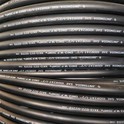
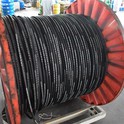
As a reputable supplier of RUBBER Hose SAE R13, I am often asked about the flow capacity of this particular type of hose. Understanding the flow capacity is crucial for various applications, especially in the hydraulic systems where RUBBER Hose SAE R13 is commonly used. In this blog post, I will delve into the concept of flow capacity, factors that affect it, and how it relates to RUBBER Hose SAE R13.
What is Flow Capacity?
Flow capacity refers to the maximum volume of fluid that can pass through a hose within a given period. It is typically measured in gallons per minute (GPM) or liters per minute (LPM). The flow capacity of a hose is a critical parameter as it determines the efficiency and performance of the hydraulic system. If the flow capacity of the hose is too low, it can lead to pressure drops, reduced system performance, and even damage to the components. On the other hand, if the flow capacity is too high, it may result in unnecessary costs and inefficiencies.
Factors Affecting the Flow Capacity of RUBBER Hose SAE R13
Several factors influence the flow capacity of RUBBER Hose SAE R13. These factors need to be considered when selecting the appropriate hose for a specific application.
Hose Size
The internal diameter (ID) of the hose is one of the most significant factors affecting flow capacity. Generally, a larger ID allows for a higher flow rate. For RUBBER Hose SAE R13, the ID can vary depending on the specific size and configuration. As the ID increases, the cross - sectional area of the hose through which the fluid can flow also increases, resulting in a higher flow capacity. For example, a hose with a larger ID can accommodate more fluid per unit of time compared to a hose with a smaller ID.
Fluid Viscosity
The viscosity of the fluid being transported through the hose plays a crucial role in determining the flow capacity. Viscosity is a measure of a fluid's resistance to flow. Fluids with high viscosity, such as thick oils, flow more slowly than fluids with low viscosity, like water. When using RUBBER Hose SAE R13 to transport high - viscosity fluids, the flow capacity will be lower compared to when transporting low - viscosity fluids. This is because the high - viscosity fluid experiences more resistance as it moves through the hose, reducing the overall flow rate.
Pressure
The pressure within the hydraulic system also affects the flow capacity of RUBBER Hose SAE R13. Higher pressures can force the fluid through the hose at a faster rate, increasing the flow capacity. However, there are limits to how much pressure a hose can withstand. RUBBER Hose SAE R13 is designed to operate within a specific pressure range. Exceeding this pressure range can lead to hose failure, such as bursting or leaking, which can be dangerous and costly. Therefore, it is essential to ensure that the pressure in the system is within the rated pressure of the hose.
Hose Length
The length of the hose is another factor that impacts flow capacity. Longer hoses create more resistance to fluid flow compared to shorter hoses. As the fluid travels through a longer hose, it experiences more friction against the inner walls of the hose, which reduces the flow rate. When using RUBBER Hose SAE R13, it is important to consider the length of the hose required for the application. If a long hose is necessary, it may be necessary to select a hose with a larger ID to maintain an adequate flow capacity.
Calculating the Flow Capacity of RUBBER Hose SAE R13
Calculating the exact flow capacity of RUBBER Hose SAE R13 can be complex as it involves considering multiple factors. However, there are some general guidelines and equations that can be used to estimate the flow capacity.
One of the most commonly used equations for calculating flow rate is the Poiseuille's law, which is applicable for laminar flow (smooth, non - turbulent flow) of a viscous fluid through a cylindrical pipe (or hose in this case). The equation is given by:
[Q=\frac{\pi R^{4}\Delta P}{8\mu L}]


where (Q) is the volumetric flow rate, (R) is the radius of the hose, (\Delta P) is the pressure difference across the ends of the hose, (\mu) is the dynamic viscosity of the fluid, and (L) is the length of the hose.
In real - world applications, the flow of fluid through RUBBER Hose SAE R13 may not always be laminar. Turbulent flow can occur, especially at higher flow rates or with fluids of lower viscosity. In such cases, more complex equations and empirical data are required to accurately calculate the flow capacity.
Most manufacturers of RUBBER Hose SAE R13 provide flow capacity charts that take into account the hose size, pressure, and fluid viscosity. These charts can be used as a reference to select the appropriate hose for a specific application.
Importance of Selecting the Right Flow Capacity for RUBBER Hose SAE R13
Selecting the right flow capacity for RUBBER Hose SAE R13 is essential for the proper functioning of the hydraulic system. If the flow capacity is too low, the system may not be able to operate at its full potential. For example, in a hydraulic lift system, a low - flow capacity hose may result in slow lifting speeds or the inability to lift heavy loads. This can lead to decreased productivity and increased downtime.
On the other hand, if the flow capacity is too high, it can lead to unnecessary costs. A hose with a higher flow capacity than required may be more expensive, and it may also require larger and more powerful pumps to operate. Additionally, a hose with excessive flow capacity may cause the fluid to flow too quickly, leading to increased wear and tear on the components of the system.
Comparing RUBBER Hose SAE R13 with Other SAE Hoses
When considering the flow capacity, it is also interesting to compare RUBBER Hose SAE R13 with other similar SAE hoses, such as RUBBER Hose SAE R12 and RUBBER Hose SAE R16.
RUBBER Hose SAE R12 is designed for medium - pressure hydraulic applications. It generally has a lower pressure rating compared to RUBBER Hose SAE R13. In terms of flow capacity, RUBBER Hose SAE R12 may have a lower flow capacity for the same hose size due to its construction and intended use.
RUBBER Hose SAE R16, on the other hand, is designed for high - pressure hydraulic applications. It has a higher pressure rating than both RUBBER Hose SAE R12 and R13. The flow capacity of RUBBER Hose SAE R16 can vary depending on the size and configuration, but it is often designed to handle higher flow rates at high pressures compared to RUBBER Hose SAE R13.
Conclusion
In conclusion, the flow capacity of RUBBER Hose SAE R13 is a critical parameter that depends on several factors, including hose size, fluid viscosity, pressure, and hose length. Understanding these factors and accurately calculating or estimating the flow capacity is essential for selecting the right hose for a specific hydraulic application.
As a supplier of RUBBER Hose SAE R13, I am committed to providing high - quality hoses that meet the specific requirements of our customers. If you are in the market for RUBBER Hose SAE R13 and need assistance in determining the appropriate flow capacity for your application, please do not hesitate to contact us. We have a team of experts who can help you select the right hose and ensure that your hydraulic system operates efficiently and effectively.
References
- Fluid Mechanics textbooks, such as "Fluid Mechanics" by Frank M. White.
- Manufacturer's technical documentation for RUBBER Hose SAE R13.