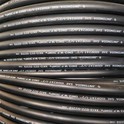
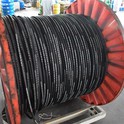
Hey there! As a supplier of colored rubber hoses, I often get asked about the minimum bending radius of these hoses. It's a crucial question, especially for those who use our hoses in various applications. So, let's dive right in and explore what this minimum bending radius is all about.
First off, what exactly is the minimum bending radius? Well, it's the smallest radius that a hose can be bent without causing any significant damage to its structure or performance. When a hose is bent beyond its minimum bending radius, a bunch of bad things can happen. For instance, the inner tube of the hose might get kinked. This kinking restricts the flow of whatever is being transported through the hose, whether it's air, water, or some other fluid. It can also lead to premature wear and tear of the hose, reducing its lifespan and increasing the chances of leaks.
Now, the minimum bending radius of colored rubber hoses isn't a fixed number. It depends on several factors. One of the main factors is the hose's diameter. Generally speaking, the larger the diameter of the hose, the larger the minimum bending radius. This is because a bigger hose has more material and a larger cross - sectional area, so it needs more space to bend without getting damaged. For example, a small - diameter colored rubber hose used in a home garden might have a relatively small minimum bending radius, maybe a few inches. On the other hand, a large - diameter hose used in an industrial setting could have a minimum bending radius of several feet.
The construction of the hose also plays a big role. Hoses with multiple layers or reinforced structures tend to have different minimum bending radii compared to single - layer hoses. Reinforced hoses, which are often used in high - pressure applications, are designed to be more durable. However, they might have a larger minimum bending radius because the reinforcement materials can make the hose stiffer. For example, a hose with a braided or spiral - wound reinforcement will be less flexible than a simple, non - reinforced hose.
The type of rubber used in the hose is another important factor. Different types of rubber have different levels of flexibility. Some rubbers are naturally more elastic and can be bent to a smaller radius without damage. For example, silicone rubber is known for its high flexibility and can often withstand smaller bending radii compared to other types of rubber like neoprene or nitrile.
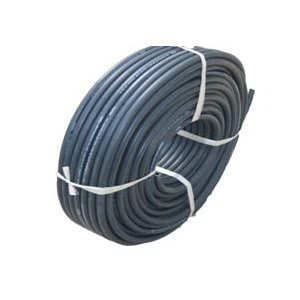

So, how do we determine the minimum bending radius for our colored rubber hoses? Well, at our company, we conduct a series of tests. We use specialized equipment to bend the hoses at different radii and then measure the impact on the hose's performance. We check for things like changes in flow rate, pressure drop, and signs of damage to the inner and outer layers of the hose. Based on these tests, we can establish the minimum bending radius for each type and size of our colored rubber hoses.
It's really important for our customers to know the minimum bending radius of the hoses they're using. If they bend the hose beyond this limit, it can lead to all sorts of problems. For example, in an industrial application where a hose is used to transfer chemicals, a kinked hose can cause the chemical to spill, which is not only a waste of resources but also a safety hazard. In a home setting, a kinked garden hose can reduce the water pressure, making it difficult to water plants effectively.
When it comes to using our colored rubber hoses, there are some best practices to keep in mind. First, always make sure to check the minimum bending radius specified for the hose you're using. If you need to bend the hose, try to do it gradually and avoid sharp bends. If possible, use hose guides or clamps to help maintain the proper bending radius.
Now, let's talk a bit about the products that go hand - in - hand with our colored rubber hoses. We offer a range of accessories to make the use of our hoses more efficient and reliable. For example, we have Low Pressure Hose Crimping Machine. This machine is great for securely attaching fittings to our hoses. It ensures a tight and leak - free connection, which is essential for the proper functioning of the hose.
Another useful product is the Low Pressure Breathing Air Hose. This hose is designed specifically for applications where clean and breathable air needs to be transported. It's made from high - quality materials that are safe for breathing air and has a proper minimum bending radius to ensure a continuous and unobstructed flow of air.
We also have Low Pressure Hose Fittings. These fittings come in various shapes and sizes and are used to connect our colored rubber hoses to different equipment. They're designed to fit perfectly with our hoses and maintain the integrity of the system.
If you're in the market for colored rubber hoses or any of the related products I've mentioned, we'd love to hear from you. Whether you're a small - scale user for home projects or a large - scale industrial client, we have the right solutions for you. Our team of experts can help you choose the right hose with the appropriate minimum bending radius for your specific application. So, don't hesitate to reach out and start a conversation about your requirements. We're here to provide you with the best products and support.
References:
- Industry standards and guidelines for rubber hoses
- Internal testing reports from our company on colored rubber hoses
- Technical literature on rubber materials and their properties