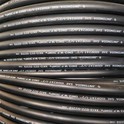
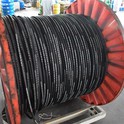
Hey there! As a supplier of Rubber Hose EN856, I often get asked about the static charge dissipation ability of these hoses. So, I thought I'd dive into this topic and share some insights.
What's Static Charge and Why Does It Matter?
First off, let's talk about static charge. Static electricity is basically an imbalance of electric charges within or on the surface of a material. When two materials come into contact and then separate, electrons can transfer from one to the other. This creates a build - up of static charge.
In the context of rubber hoses, static charge build - up can be a real problem. If there's a high enough static charge, it can lead to electrical discharges, like sparks. In industrial settings where there might be flammable gases, vapors, or dust, these sparks can trigger explosions or fires. So, having a hose that can dissipate static charge is super important for safety.
How Does Rubber Hose EN856 Handle Static Charge?
Rubber Hose EN856 is designed with specific features to deal with static charge. The key lies in the materials used and the construction of the hose.


Conductive Materials
Many Rubber Hose EN856 models use conductive rubber compounds. These compounds have a certain level of electrical conductivity, which allows the static charge to flow through the hose rather than build up. The conductive particles in the rubber act as pathways for the electrons, enabling them to move freely and dissipate the charge.
Grounding
Another way these hoses deal with static charge is through grounding. When the hose is properly connected to a grounded system, the static charge can be safely transferred to the ground. This is like providing an escape route for the excess electrons, preventing them from accumulating and causing problems.
Testing the Static Charge Dissipation Ability
To ensure that Rubber Hose EN856 meets the required safety standards, it undergoes rigorous testing.
Surface Resistance Testing
One common test is to measure the surface resistance of the hose. A low surface resistance indicates that the hose can effectively conduct electricity and dissipate static charge. The test involves applying a known voltage across the surface of the hose and measuring the resulting current. Based on Ohm's law (V = IR), the resistance can be calculated.
Charge Decay Testing
Charge decay testing is another important test. In this test, a static charge is applied to the hose, and then the time it takes for the charge to decay to a certain level is measured. A shorter charge decay time means that the hose can dissipate the static charge quickly.
Comparison with Other Rubber Hoses
It's also interesting to compare the static charge dissipation ability of Rubber Hose EN856 with other types of rubber hoses, like Rubber Hose EN857, Rubber Hose 1SN, and Rubber Hose EN853.
Each of these hoses has its own design and intended applications. While they all might have some level of static charge dissipation ability, the specific features and performance can vary. For example, Rubber Hose EN856 might be better suited for applications where there's a higher risk of static charge build - up due to its enhanced conductive properties.
Real - World Applications
The static charge dissipation ability of Rubber Hose EN856 makes it ideal for a variety of real - world applications.
Chemical Industry
In the chemical industry, there are often flammable chemicals and solvents. A hose with good static charge dissipation can prevent static sparks from igniting these substances, ensuring the safety of the workers and the facility.
Oil and Gas Industry
In the oil and gas sector, hoses are used for transferring fuels and other flammable liquids. The ability to dissipate static charge is crucial to prevent explosions during the transfer process.
Factors Affecting Static Charge Dissipation
There are several factors that can affect the static charge dissipation ability of Rubber Hose EN856.
Temperature
Temperature can have a significant impact. At higher temperatures, the conductivity of the rubber can change, which might affect how well the hose can dissipate static charge. In general, as the temperature increases, the resistance of the rubber might decrease, leading to better conductivity.
Humidity
Humidity also plays a role. Higher humidity levels can help to dissipate static charge more effectively because water in the air can act as a conductor. In dry environments, static charge build - up is more likely, so the performance of the hose might be more critical.
Hose Age and Wear
Over time, the hose can experience wear and tear. This can damage the conductive properties of the rubber, reducing its ability to dissipate static charge. Regular inspection and replacement of hoses are important to maintain safety.
Maintaining the Static Charge Dissipation Ability
To keep the static charge dissipation ability of Rubber Hose EN856 in top shape, proper maintenance is essential.
Regular Inspection
Inspect the hoses regularly for any signs of damage, such as cracks or abrasions. These can affect the conductive properties of the hose and reduce its ability to dissipate static charge.
Cleaning
Keep the hoses clean. Dirt and debris on the surface of the hose can act as insulators, preventing the static charge from dissipating properly. Use a mild cleaning solution and a soft cloth to clean the hoses.
Conclusion
The static charge dissipation ability of Rubber Hose EN856 is a crucial feature that makes it a reliable choice for many industrial applications. By using conductive materials, proper grounding, and undergoing strict testing, these hoses can effectively prevent static charge build - up and reduce the risk of explosions and fires.
If you're in the market for high - quality Rubber Hose EN856 with excellent static charge dissipation ability, I'd love to talk to you. Whether you're in the chemical, oil and gas, or any other industry that requires safe and reliable hoses, I can provide you with the right solutions. Get in touch with me to start a conversation about your specific needs and how we can work together.
References
- Industrial Safety Handbook: Static Electricity and Its Hazards
- Rubber Hose Standards and Testing Guidelines