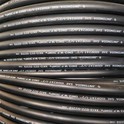
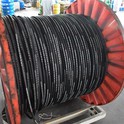
Hey there! As a supplier of Rubber Hose 4SH, I often get asked about the outer layer material of these hoses. So, I thought I'd take some time to break it down for you.
First off, let's talk a bit about what Rubber Hose 4SH is. It's a high - pressure hydraulic hose designed for some pretty tough applications. You can find out more about it on our Rubber Hose 4SH page. It's similar in some ways to Rubber Hose 1SN and Rubber Hose 4SP, but each has its own unique features and uses.
Now, onto the main topic: the outer layer material of Rubber Hose 4SH. The outer layer is super important as it protects the inner parts of the hose from all sorts of external factors.
One of the most common materials used for the outer layer is synthetic rubber. Synthetic rubber offers a bunch of great benefits. For starters, it's highly resistant to abrasion. In industrial settings, hoses often rub against other equipment, sharp edges, or rough surfaces. If the outer layer isn't abrasion - resistant, it can quickly wear down, exposing the inner layers and leading to hose failure. Synthetic rubber can withstand a lot of rubbing and scraping, which means a longer lifespan for the hose.
It's also resistant to oil and chemicals. In hydraulic systems, the hoses are often in contact with hydraulic fluids, which are basically oils. If the outer layer isn't oil - resistant, the oil can seep into the rubber, causing it to swell, soften, and eventually lose its integrity. Chemicals can also be present in industrial environments, and synthetic rubber can stand up to them, ensuring that the hose remains in good condition.
Another great thing about synthetic rubber is its weather resistance. Whether it's scorching heat, freezing cold, or heavy rain, synthetic rubber can handle it. In outdoor applications, hoses are exposed to all kinds of weather conditions. UV rays from the sun can break down some materials over time, but synthetic rubber has good UV resistance. It won't crack or become brittle easily, even after long - term exposure to sunlight.
There are different types of synthetic rubber that can be used for the outer layer of Rubber Hose 4SH. One popular type is Neoprene. Neoprene is known for its excellent resistance to ozone. Ozone is a gas that can be present in the atmosphere, especially in areas with high levels of pollution or near electrical equipment. Ozone can cause rubber to crack and deteriorate, but Neoprene can resist its effects. It also has good flame - resistance properties, which can be crucial in some industrial settings where there's a risk of fire.
Nitrile rubber is another option. It has great oil resistance, even better than some other types of synthetic rubber. This makes it ideal for hoses that are constantly in contact with hydraulic oils. Nitrile rubber also has good mechanical properties, such as high tensile strength and tear resistance. This means it can handle a lot of stress and strain without breaking.
Sometimes, the outer layer may also be made of a blend of different rubbers. Blending can combine the best properties of each rubber type. For example, a blend of Neoprene and nitrile rubber can offer both good ozone resistance and excellent oil resistance. This way, the hose can be more versatile and suitable for a wider range of applications.
The thickness of the outer layer also matters. A thicker outer layer generally provides more protection, but it also adds to the weight and cost of the hose. So, there's a balance to be struck. Manufacturers usually determine the appropriate thickness based on the intended application of the hose. For hoses that are going to be used in very harsh environments, a thicker outer layer might be necessary. On the other hand, for less demanding applications, a thinner outer layer can still do the job while keeping the cost down.
When it comes to the manufacturing process of the outer layer, it's usually extruded onto the inner layers of the hose. Extrusion is a process where the rubber material is forced through a die to create the desired shape of the outer layer. This ensures a uniform thickness and a smooth surface finish. After extrusion, the hose may go through a vulcanization process. Vulcanization is like a curing process that makes the rubber stronger and more stable. It cross - links the rubber molecules, giving it better mechanical properties and resistance to heat and chemicals.
In addition to the material itself, the outer layer may also have some special features. Some hoses have a smooth outer surface, which can reduce friction when the hose is moving or being installed. Others may have a ribbed or corrugated surface. A ribbed surface can increase the flexibility of the hose, making it easier to bend and maneuver in tight spaces. It can also provide better grip, which is useful when handling the hose.
Now, you might be wondering how to choose the right Rubber Hose 4SH based on the outer layer material. Well, it depends on your specific application. If you're working in an environment with a lot of oil and chemicals, a hose with a nitrile - based outer layer would be a good choice. If weather and ozone are major concerns, a Neoprene or a blend with Neoprene would be better.
If you're in the market for Rubber Hose 4SH, and you have questions about the outer layer material or any other aspect of the hose, don't hesitate to reach out. We're here to help you find the perfect hose for your needs. Whether it's for a small - scale project or a large - scale industrial operation, we can provide you with high - quality Rubber Hose 4SH.


Contact us for more information and let's start a conversation about your hose requirements. We can offer advice on the best outer layer material for your specific situation and help you get the most out of your hydraulic system.
References
- Industry standards on hydraulic hoses
- Manufacturer's specifications for Rubber Hose 4SH
- Research on synthetic rubber properties and applications