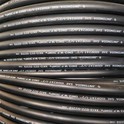
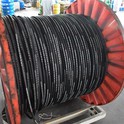
The thermal expansion coefficient of materials is a crucial parameter, especially when it comes to industrial components like rubber hoses. As a supplier of Rubber Hose EN857, I often encounter inquiries about the thermal expansion coefficient of these hoses. In this blog, we will delve into what the thermal expansion coefficient of Rubber Hose EN857 is, its significance, and how it impacts the performance of the hoses.


Understanding the Thermal Expansion Coefficient
The thermal expansion coefficient is a measure of how much a material expands or contracts when its temperature changes. It is usually expressed as the fractional change in length or volume per degree change in temperature. For linear expansion, the coefficient is denoted as α (alpha), and for volumetric expansion, it is denoted as β (beta). The relationship between the linear and volumetric expansion coefficients for isotropic materials is β = 3α.
In the context of rubber hoses, the thermal expansion coefficient is essential because rubber is a polymer material that can be significantly affected by temperature variations. When the temperature rises, the rubber molecules gain energy and start to move more freely, causing the material to expand. Conversely, when the temperature drops, the molecules lose energy and move closer together, resulting in contraction.
Thermal Expansion Coefficient of Rubber Hose EN857
Rubber Hose EN857 is a type of hydraulic hose that is widely used in various industrial applications. The thermal expansion coefficient of Rubber Hose EN857 can vary depending on several factors, including the type of rubber compound used, the reinforcement materials, and the manufacturing process.
Typically, the linear thermal expansion coefficient of rubber materials ranges from approximately 60 × 10⁻⁶ /°C to 200 × 10⁻⁶ /°C. For Rubber Hose EN857, the value usually falls within this range. However, it's important to note that this is a general estimate, and the actual coefficient may differ based on the specific product.
The type of rubber compound plays a significant role in determining the thermal expansion coefficient. For example, natural rubber (NR) has a relatively high thermal expansion coefficient compared to synthetic rubbers like nitrile rubber (NBR) or ethylene propylene diene monomer (EPDM). Reinforcement materials, such as steel wire or textile fibers, can also influence the overall expansion behavior of the hose. The steel wire reinforcement in Rubber Hose EN857 has a much lower thermal expansion coefficient than rubber, which can help to limit the overall expansion of the hose.
Significance of the Thermal Expansion Coefficient in Rubber Hose EN857
The thermal expansion coefficient of Rubber Hose EN857 has several important implications for its performance and application:
1. Installation and Fitting
During installation, it is crucial to consider the potential expansion and contraction of the hose due to temperature changes. If the hose is installed in a confined space without allowing for sufficient expansion room, it may experience excessive stress when the temperature rises, leading to premature failure. Proper installation practices, such as leaving enough slack in the hose or using expansion loops, can help to accommodate the thermal expansion.
2. System Performance
In hydraulic systems, the expansion and contraction of Rubber Hose EN857 can affect the overall performance of the system. For example, if the hose expands too much at high temperatures, it may cause a decrease in the pressure rating of the system, leading to potential leaks or reduced efficiency. On the other hand, excessive contraction at low temperatures can increase the pressure in the system, which may also damage the components.
3. Compatibility with Other Components
When using Rubber Hose EN857 in a system, it is important to ensure that the thermal expansion characteristics of the hose are compatible with other components in the system. For example, if the hose is connected to metal fittings, the difference in the thermal expansion coefficients between the rubber and the metal can cause stress at the connection points, which may lead to leakage or failure over time.
Comparison with Other Rubber Hoses
To better understand the thermal expansion behavior of Rubber Hose EN857, it is useful to compare it with other types of rubber hoses. For instance, Rubber Hose EN856 and Rubber Hose EN853 are also commonly used hydraulic hoses.
The thermal expansion coefficients of these hoses may be similar to that of Rubber Hose EN857, but they can also vary depending on the specific design and materials used. Rubber Hose 4SH, which is designed for high-pressure applications, may have different thermal expansion characteristics due to its unique reinforcement structure and rubber compound.
Managing Thermal Expansion in Rubber Hose EN857
To ensure the reliable performance of Rubber Hose EN857 in various temperature conditions, several measures can be taken to manage thermal expansion:
1. Material Selection
Choosing the right rubber compound and reinforcement materials can help to control the thermal expansion of the hose. For applications where temperature variations are significant, synthetic rubbers with lower thermal expansion coefficients may be preferred.
2. Design Considerations
In the design of the hydraulic system, proper allowance should be made for the thermal expansion of the hose. This may include using flexible connectors, expansion loops, or mounting the hose in a way that allows for free movement.
3. Temperature Monitoring
Regularly monitoring the temperature of the hydraulic system can help to detect any abnormal temperature changes that may affect the performance of the hose. If necessary, appropriate measures can be taken to adjust the operating conditions or replace the hose.
Conclusion
The thermal expansion coefficient of Rubber Hose EN857 is an important parameter that affects its performance, installation, and compatibility with other components in a hydraulic system. As a supplier of Rubber Hose EN857, we understand the significance of this parameter and strive to provide high-quality hoses with consistent thermal expansion characteristics.
If you are in the market for Rubber Hose EN857 or have any questions about its thermal expansion behavior, please feel free to contact us for more information. We are committed to providing you with the best products and solutions to meet your specific needs.
References
- ASTM D696 - Standard Test Method for Coefficient of Linear Thermal Expansion of Plastics Between -30°C and 30°C With a Vitreous Silica Dilatometer.
- ISO 188 - Rubber, Vulcanized or Thermoplastic - Accelerated Aging and Heat Resistance Tests.