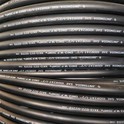
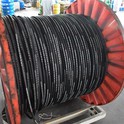
As a well - established supplier of RUBBER Hose SAE R13, I often encounter inquiries from clients about the weight per unit length of this product. Understanding the weight of the hose is crucial for various applications, including installation planning, transportation, and overall system design. In this blog, I'll delve into the factors that influence the weight of RUBBER Hose SAE R13 per unit length and provide some general guidelines.
Factors Affecting the Weight of RUBBER Hose SAE R13
Inner Tube Material
The inner tube of the RUBBER Hose SAE R13 is designed to come into direct contact with the fluid being conveyed. Different rubber compounds are used for the inner tube, and each has a distinct density. For example, nitrile rubber, which is commonly used for its oil - resistance properties, has a different density compared to EPDM rubber, which is known for its resistance to weather and ozone. A heavier rubber compound will result in a higher weight per unit length of the hose.
Reinforcement Layers
RUBBER Hose SAE R13 typically has multiple reinforcement layers. These layers are usually made of materials like steel wire or synthetic fibers. Steel wire reinforcement provides high strength and durability but is relatively heavy. On the other hand, synthetic fibers such as aramid or polyester are lighter. The number of reinforcement layers also plays a significant role. A hose with more reinforcement layers will be heavier than one with fewer layers, as it offers greater pressure - resistance capabilities.
Outer Cover Material
The outer cover of the hose protects it from environmental factors such as abrasion, sunlight, and chemicals. Similar to the inner tube, different rubber compounds can be used for the outer cover. A thicker outer cover or a rubber compound with a higher density will increase the weight of the hose per unit length. For instance, a hose with a heavy - duty outer cover designed for harsh industrial environments will weigh more than one with a standard outer cover.
Hose Size
The diameter and wall thickness of the RUBBER Hose SAE R13 have a direct impact on its weight. A larger - diameter hose will generally be heavier because it requires more material for both the inner tube and the outer cover. Similarly, a hose with a thicker wall will weigh more as there is more rubber and reinforcement material present.
Calculating the Weight per Unit Length
Calculating the exact weight per unit length of RUBBER Hose SAE R13 can be complex due to the numerous factors involved. However, we can provide some general formulas and guidelines.
Let's assume the following:
- (W_{total}) is the total weight per unit length of the hose
- (W_{inner}) is the weight per unit length of the inner tube
- (W_{reinforcement}) is the weight per unit length of the reinforcement layers
- (W_{outer}) is the weight per unit length of the outer cover
The formula for the total weight per unit length is (W_{total}=W_{inner}+W_{reinforcement}+W_{outer})
To calculate (W_{inner}), we need to know the density of the inner tube rubber ((\rho_{inner})), the cross - sectional area of the inner tube ((A_{inner})), and the length ((L = 1) unit). (W_{inner}=\rho_{inner}\times A_{inner})
For the reinforcement layers, if we know the density of the reinforcement material ((\rho_{reinforcement})) and the volume of the reinforcement per unit length ((V_{reinforcement})), then (W_{reinforcement}=\rho_{reinforcement}\times V_{reinforcement})
The calculation for (W_{outer}) is similar to (W_{inner}), using the density of the outer cover rubber ((\rho_{outer})) and the cross - sectional area of the outer cover ((A_{outer})), so (W_{outer}=\rho_{outer}\times A_{outer})
In practice, we often rely on empirical data and testing to determine the weight per unit length of our RUBBER Hose SAE R13 products. We have a well - equipped testing facility where we measure the weight of hoses of different sizes and configurations to ensure accurate information for our clients.
Comparison with Other Hose Types
It's interesting to compare the weight of RUBBER Hose SAE R13 with other types of hoses in the SAE J517 standard, such as RUBBER Hose SAE R2AT, RUBBER Hose SAE R9, and RUBBER Hose SAE R16.


RUBBER Hose SAE R2AT is often used for medium - pressure hydraulic applications. It generally has a simpler construction with fewer reinforcement layers compared to RUBBER Hose SAE R13. As a result, it is typically lighter per unit length.
RUBBER Hose SAE R9 is a high - pressure thermoplastic hose. Thermoplastic materials are generally lighter than rubber, so this hose type may have a lower weight per unit length, especially when compared to RUBBER Hose SAE R13 with steel wire reinforcement.
RUBBER Hose SAE R16 is a high - pressure, multi - spiral steel wire reinforced hose. Similar to RUBBER Hose SAE R13, it has multiple reinforcement layers, but the specific design and materials may lead to differences in weight. In some cases, RUBBER Hose SAE R16 may be heavier due to its more robust construction for extremely high - pressure applications.
Importance of Knowing the Weight per Unit Length
Installation
When installing RUBBER Hose SAE R13, knowing the weight per unit length is essential for determining the support requirements. A heavier hose may require more frequent and stronger supports to prevent sagging and ensure proper alignment. This is particularly important in long - run installations or applications where the hose is subject to vibration.
Transportation
During transportation, the weight of the hose affects the shipping costs. A heavier hose will require more fuel to transport, and there may also be weight restrictions on trucks or other transportation vehicles. By accurately knowing the weight per unit length, clients can better plan their transportation logistics and manage costs.
System Design
In hydraulic or pneumatic systems, the weight of the hose can impact the overall performance. A heavier hose may add more inertia to the system, which can affect the response time of valves and other components. Designers need to consider the weight when sizing pumps and other equipment to ensure optimal system operation.
Conclusion
As a supplier of RUBBER Hose SAE R13, I understand the importance of providing accurate information about the weight per unit length of our products. The weight of the hose is influenced by multiple factors, including the inner tube material, reinforcement layers, outer cover material, and hose size. By understanding these factors, clients can make informed decisions about the suitability of RUBBER Hose SAE R13 for their specific applications.
If you are interested in purchasing RUBBER Hose SAE R13 or have any questions regarding its weight per unit length or other specifications, please feel free to contact us for further discussions and procurement negotiations. We are committed to providing high - quality products and excellent customer service.
References
- "Hydraulic Hose Design and Application Handbook"
- SAE J517 Standard Documentation