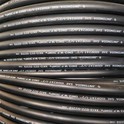
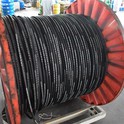
Hey there! I'm a supplier of low pressure hoses, and I've been in this business for quite a while. Today, I wanna talk about how flexible low pressure hoses are. It's a topic that many of my customers are interested in, and I think it's important to understand the ins and outs of hose flexibility.
First off, let's define what we mean by flexibility in the context of low pressure hoses. Flexibility refers to how easily a hose can be bent, twisted, or maneuvered without kinking or losing its shape. This is super important because in many applications, hoses need to be routed around obstacles, through tight spaces, or into awkward positions. If a hose isn't flexible enough, it can be a real pain to install and use.
So, how flexible are low pressure hoses? Well, it depends on a few factors. One of the main factors is the material the hose is made of. Different materials have different levels of flexibility. For example, rubber hoses are generally more flexible than PVC hoses. Rubber has a natural elasticity that allows it to bend and stretch without breaking, while PVC is a bit more rigid. However, PVC hoses are often lighter and more affordable, so they have their own advantages.
Another factor that affects flexibility is the hose's construction. Hoses can be made with different layers and reinforcements, which can impact their flexibility. For instance, a hose with multiple layers of reinforcement may be stronger but less flexible than a single-layer hose. On the other hand, a hose with a helical reinforcement may be more flexible than one with a braided reinforcement.
The size of the hose also plays a role in its flexibility. Generally speaking, smaller diameter hoses are more flexible than larger diameter hoses. This is because there is less material to bend and twist, so the hose can move more easily. However, larger diameter hoses are often needed for applications that require higher flow rates, so it's a trade-off.
Now, let's talk about some of the benefits of using flexible low pressure hoses. One of the biggest benefits is ease of installation. When a hose is flexible, it can be easily routed around obstacles and into tight spaces, which saves time and effort during installation. This can be especially important in applications where space is limited, such as in automotive or industrial settings.


Flexible hoses also tend to have a longer lifespan than rigid hoses. Because they can bend and move without kinking or breaking, they are less likely to develop cracks or leaks over time. This means that you won't have to replace the hose as often, which can save you money in the long run.
In addition, flexible hoses can reduce stress on the equipment they are connected to. When a hose is rigid, it can transfer vibrations and shocks from the equipment to the surrounding environment, which can cause damage to the equipment or other components. Flexible hoses, on the other hand, can absorb these vibrations and shocks, which helps to protect the equipment and extend its lifespan.
At our company, we offer a wide range of flexible low pressure hoses to meet the needs of our customers. Our Low Side Hose is a popular choice for many applications. It's made of high-quality rubber and has excellent flexibility, making it easy to install and use. Our Miflex Low Pressure Hose is another great option. It's lightweight and flexible, and it's available in a variety of sizes and colors.
We also offer a selection of Low Pressure Hose Fittings to ensure a secure and leak-free connection between the hose and the equipment. Our fittings are made of high-quality materials and are designed to work with our hoses, so you can be sure that you're getting a reliable and durable solution.
If you're in the market for flexible low pressure hoses, I encourage you to get in touch with us. We have a team of experts who can help you choose the right hose and fittings for your application, and we offer competitive pricing and fast delivery. Whether you're a small business or a large corporation, we can provide you with the products and services you need to get the job done.
In conclusion, flexibility is an important factor to consider when choosing low pressure hoses. By understanding the factors that affect flexibility and the benefits of using flexible hoses, you can make an informed decision and choose the right hose for your application. At our company, we're committed to providing our customers with high-quality, flexible low pressure hoses and fittings that meet their needs and exceed their expectations. So, don't hesitate to contact us today to learn more!
References:
- "Hose Materials and Their Properties." Industrial Hose Association.
- "Flexible Hoses: A Guide to Selection and Use." Fluid Power Journal.
- "The Benefits of Using Flexible Hoses in Industrial Applications." Manufacturing Today.