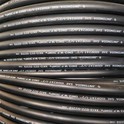
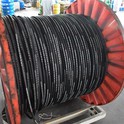
As a dedicated supplier of RUBBER Hose SAE R17, I've witnessed firsthand the dynamic evolution of this industry. The SAE R17 rubber hose is a critical component in various hydraulic systems, known for its high - pressure resistance and durability. In this blog, I'll delve into the current research and development directions for RUBBER Hose SAE R17.
1. Material Innovation
One of the primary R & D focuses for RUBBER Hose SAE R17 is material innovation. The traditional rubber materials used in these hoses have limitations in terms of temperature resistance, chemical compatibility, and abrasion resistance.
High - Temperature Resistant Materials
In many industrial applications, hydraulic systems operate under high - temperature conditions. For example, in heavy - duty construction equipment working in hot climates or in industrial furnaces, the hoses need to withstand extreme heat without losing their mechanical properties. Researchers are exploring new rubber compounds and additives that can enhance the high - temperature resistance of RUBBER Hose SAE R17. Silicone - based rubber blends are being investigated as they have excellent heat resistance. By incorporating specific fillers and cross - linking agents, these new materials can maintain their flexibility and strength at temperatures well above the capabilities of traditional rubber hoses.
Chemical - Resistant Materials
Hydraulic systems often come into contact with a variety of chemicals, such as hydraulic fluids, lubricants, and cleaning agents. To ensure the longevity of RUBBER Hose SAE R17, it's crucial to develop hoses that are resistant to these chemicals. Fluorocarbon rubbers are being considered for their superior chemical resistance. These materials can withstand exposure to aggressive chemicals without swelling, cracking, or degrading. However, fluorocarbon rubbers are relatively expensive, so R & D efforts are also focused on finding cost - effective ways to incorporate them into RUBBER Hose SAE R17 production, such as by using them in combination with other more affordable rubber materials.
Abrasion - Resistant Materials
In harsh working environments, RUBBER Hose SAE R17 may be subject to abrasion from contact with rough surfaces or moving parts. To improve abrasion resistance, new materials with enhanced hardness and toughness are being developed. Some manufacturers are experimenting with adding ceramic particles or aramid fibers to the rubber matrix. These additives can form a protective layer on the surface of the hose, reducing the wear and tear caused by abrasion.
2. Design Optimization
The design of RUBBER Hose SAE R17 also plays a crucial role in its performance. R & D efforts are centered around optimizing the internal and external structure of the hose to improve its flexibility, pressure resistance, and overall reliability.
Internal Structure Design
The internal structure of the hose, including the reinforcement layer and the inner tube, has a significant impact on its pressure - bearing capacity. New reinforcement layer designs are being explored to improve the hose's ability to withstand high - pressure hydraulic fluids. For example, some manufacturers are using spiral - wound reinforcement layers instead of the traditional braided layers. Spiral - wound reinforcement provides better axial and radial strength, allowing the hose to handle higher pressures without bursting. Additionally, the inner tube design is being optimized to reduce fluid friction and improve flow efficiency. Smooth - bore inner tubes are becoming more popular as they minimize pressure drops and reduce the risk of cavitation.
External Structure Design
The external structure of RUBBER Hose SAE R17 affects its durability and ease of installation. R & D is focused on developing hoses with more flexible outer covers that can bend easily without kinking. Some new designs feature a corrugated outer cover, which not only enhances flexibility but also provides additional protection against abrasion and environmental damage. Moreover, improvements in the coupling design are being made to ensure a secure and leak - free connection between the hose and the hydraulic system components.
3. Environmental Sustainability
In today's world, environmental sustainability is a key consideration in all industries, including the production of RUBBER Hose SAE R17.
Recyclable Materials
There is a growing demand for hoses made from recyclable materials. R & D teams are working on developing rubber compounds that can be easily recycled at the end of the hose's life cycle. By using recyclable materials, we can reduce the environmental impact of hose production and disposal. For example, some researchers are exploring the use of bio - based rubbers, which are derived from renewable resources such as natural rubber latex or synthetic rubbers made from plant - based monomers. These bio - based rubbers not only have the potential to be recycled but also reduce the reliance on fossil - fuel - based materials.

Energy - Efficient Manufacturing Processes
Manufacturing RUBBER Hose SAE R17 requires a significant amount of energy. To reduce the carbon footprint of the production process, R & D efforts are focused on developing energy - efficient manufacturing techniques. This includes optimizing the curing process, which is one of the most energy - intensive steps in hose production. New curing methods, such as microwave curing or infrared curing, are being investigated as they can reduce the curing time and energy consumption compared to traditional hot - air curing methods.
4. Integration with Smart Technologies
The integration of smart technologies into RUBBER Hose SAE R17 is an emerging research and development direction.

Sensor Integration
By integrating sensors into the hose, we can monitor its performance in real - time. For example, sensors can be used to measure the pressure, temperature, and strain of the hose. This data can be transmitted wirelessly to a monitoring system, allowing operators to detect potential problems before they lead to a failure. Early detection of issues such as over - pressure or excessive temperature can prevent costly downtime and equipment damage.

Predictive Maintenance
With the data collected from the sensors, predictive maintenance algorithms can be developed. These algorithms can analyze the data to predict when the hose needs to be replaced or maintained. By implementing predictive maintenance strategies, we can optimize the maintenance schedule, reduce maintenance costs, and improve the overall reliability of the hydraulic system.
Comparison with Related Products
When considering RUBBER Hose SAE R17, it's also important to compare it with related products such as [RUBBER Hose SAE R16](hydraulic - rubber - hose - sae - j517/rubber - hose - sae - r16.html), [Rubber Hose 2SN](hydraulic - rubber - hose - sae - j517/rubber - hose - 2sn.html), and [RUBBER Hose SAE R1AT](hydraulic - rubber - hose - sae - j517/rubber - hose - sae - r1at.html). Each of these hoses has its own unique characteristics and applications.
- RUBBER Hose SAE R16: This hose is typically used for medium - pressure hydraulic applications. It has a different reinforcement structure compared to SAE R17, which may result in different pressure - bearing capacities and flexibility. R16 hoses are often more cost - effective for applications where high - pressure performance is not the primary requirement.
- Rubber Hose 2SN: The 2SN hose is designed for high - pressure hydraulic systems. It has a higher pressure rating than SAE R17 in some cases. However, the 2SN hose may have different dimensions and installation requirements, so it's important to carefully consider the specific needs of the application when choosing between 2SN and SAE R17.
- RUBBER Hose SAE R1AT: This hose is known for its excellent flexibility and is often used in applications where the hose needs to be bent or routed in tight spaces. Compared to SAE R17, R1AT may have a lower pressure rating but offers better maneuverability.
Conclusion
The research and development directions for RUBBER Hose SAE R17 are diverse and exciting. From material innovation to design optimization, environmental sustainability, and integration with smart technologies, there are numerous opportunities to improve the performance and reliability of these hoses. As a supplier of RUBBER Hose SAE R17, I'm committed to staying at the forefront of these developments to provide our customers with the best - in - class products.
If you're interested in learning more about our RUBBER Hose SAE R17 products or have specific requirements for your hydraulic systems, we invite you to contact us for procurement and further discussions. We look forward to working with you to meet your needs.
References
- "Hydraulic Hose Technology Handbook", Industry Publishing Group
- Research papers on advanced rubber materials and hose design from academic journals such as the Journal of Rubber Research and the International Journal of Hydraulic Engineering.