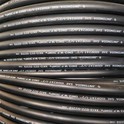
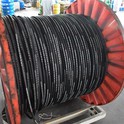
As a dedicated supplier of Rubber Hose 2SN, I've witnessed firsthand the crucial role this product plays in various industrial applications. One of the most significant performance characteristics of Rubber Hose 2SN is its torsion resistance. In this blog, I'll delve into what torsion resistance means for Rubber Hose 2SN, why it matters, and how it impacts the overall functionality of the hose.

Understanding Torsion Resistance
Torsion resistance refers to a material's ability to withstand twisting forces without undergoing permanent deformation or failure. In the context of Rubber Hose 2SN, it is the capacity of the hose to resist the rotational forces that can occur during installation, operation, or movement. When a hose is subjected to torsion, the internal and external layers of the hose experience stress, which can lead to damage if the hose does not have adequate torsion resistance.
The construction of Rubber Hose 2SN is designed to enhance its torsion resistance. Typically, it consists of an inner tube, reinforcement layers, and an outer cover. The inner tube is usually made of synthetic rubber, which provides a smooth surface for the fluid to flow through and resists the chemical and physical effects of the conveyed medium. The reinforcement layers, often made of high - strength steel wire braids or spirals, are the key to the hose's torsion resistance. These layers distribute the torsional stress evenly across the hose, preventing it from concentrating in one area and causing failure. The outer cover protects the reinforcement layers from environmental factors such as abrasion, weather, and chemicals.
Why Torsion Resistance Matters
1. Installation
During the installation process, Rubber Hose 2SN may need to be bent, twisted, or routed around obstacles. If the hose has poor torsion resistance, it can kink or twist out of shape, which not only makes the installation difficult but also reduces the internal diameter of the hose. A reduced internal diameter can restrict the flow of fluid, leading to increased pressure drop and decreased system efficiency. In some cases, a severely kinked hose may even cause a complete blockage, resulting in system failure.
2. Operation
In industrial applications, Rubber Hose 2SN is often used in dynamic systems where the hose is subject to continuous movement. For example, in hydraulic machinery, the hoses may be attached to moving parts such as cylinders or pumps. As these parts move, the hoses are likely to experience torsion. If the hose cannot withstand the torsional forces, the reinforcement layers may break, the inner tube may crack, or the outer cover may peel off. Any of these failures can lead to fluid leakage, which is not only a waste of resources but also a safety hazard, especially when dealing with high - pressure hydraulic fluids.
3. Long - term Durability
Hoses with good torsion resistance are more likely to have a longer service life. By resisting the effects of torsion, the hose can maintain its structural integrity over time. This means fewer replacements, reduced downtime for maintenance, and lower overall costs for the end - user.
Factors Affecting Torsion Resistance of Rubber Hose 2SN
1. Reinforcement Design
The type and arrangement of the reinforcement layers have a significant impact on the torsion resistance of the hose. For example, a hose with multiple layers of steel wire braids or spirals generally has better torsion resistance than a hose with a single layer. The angle at which the wires are braided or spiraled also affects the hose's ability to resist torsion. A proper braid or spiral angle can help distribute the torsional stress more effectively.
2. Rubber Compounds
The quality and properties of the rubber used in the inner tube and outer cover can influence the hose's torsion resistance. High - quality rubber compounds with good elasticity and strength can better withstand the stress caused by torsion. Additionally, the rubber should have good adhesion to the reinforcement layers to ensure that the entire structure of the hose works together to resist torsion.
3. Hose Diameter and Wall Thickness
The diameter and wall thickness of the hose also play a role in its torsion resistance. Generally, a thicker - walled hose is more resistant to torsion than a thinner - walled one. However, increasing the wall thickness also increases the weight and cost of the hose. The diameter of the hose affects the distribution of stress within the hose. A larger - diameter hose may experience more significant torsional stress, but proper design can still ensure good torsion resistance.
Comparison with Other Types of Rubber Hoses
To better understand the torsion resistance of Rubber Hose 2SN, it's useful to compare it with other types of rubber hoses, such as RUBBER Hose SAE R9, RUBBER Hose SAE R12, and RUBBER Hose SAE R2AT.
- RUBBER Hose SAE R9: This type of hose is often used for low - pressure applications. Compared to Rubber Hose 2SN, it may have lower torsion resistance because it is designed for less demanding environments. The reinforcement layers in SAE R9 hoses are typically less robust, which makes them more susceptible to torsional damage.
- RUBBER Hose SAE R12: SAE R12 hoses are designed for high - pressure applications. While they have good strength and pressure - resistance, their torsion resistance may vary depending on the specific design. In some cases, the focus on high - pressure performance may come at the expense of some torsion resistance. However, with proper reinforcement design, they can still offer reasonable torsion resistance.
- RUBBER Hose SAE R2AT: R2AT hoses are commonly used in medium - pressure hydraulic systems. They generally have a good balance between pressure resistance and flexibility. Their torsion resistance is comparable to Rubber Hose 2SN in some aspects, but the specific performance depends on the construction and materials used.
Testing and Assurance of Torsion Resistance
To ensure that our Rubber Hose 2SN meets the required torsion resistance standards, we conduct a series of rigorous tests. These tests include:

1. Torsion Testing
In the torsion test, the hose is fixed at both ends, and a rotational force is applied to one end. The test measures the amount of torsion the hose can withstand before it shows signs of damage, such as cracking, delamination, or loss of pressure - holding capacity.
2. Fatigue Testing
Fatigue testing involves subjecting the hose to repeated torsional cycles. This simulates the real - world conditions where the hose may be subject to continuous movement. By monitoring the hose's performance over a large number of cycles, we can determine its long - term torsion resistance and durability.
3. Quality Control
In addition to testing, we also implement strict quality control measures throughout the manufacturing process. We carefully select the raw materials, ensure proper manufacturing techniques, and conduct regular inspections to guarantee the consistency and quality of our Rubber Hose 2SN.
Conclusion
The torsion resistance of Rubber Hose 2SN is a critical factor that affects its performance, durability, and safety in various industrial applications. As a supplier, we are committed to providing high - quality Rubber Hose 2SN with excellent torsion resistance. Our hoses are designed and manufactured to meet the strictest standards, ensuring reliable performance in even the most demanding environments.
If you are in the market for Rubber Hose 2SN or have any questions about our products, we encourage you to contact us for a detailed discussion. We are here to help you find the best solution for your specific needs. Whether you are looking for a hose with exceptional torsion resistance or other performance characteristics, our team of experts is ready to assist you. Let's work together to ensure the success of your projects.
References
- "Handbook of Rubber Technology" by Morton M.
- "Hydraulic Hose Design and Application" by various industry experts.
- Technical standards and specifications related to Rubber Hose 2SN and other rubber hoses.