What is the maximum flow rate that RUBBER Hose SAE R17 can handle?
As a supplier of RUBBER Hose SAE R17, I've been frequently asked about the maximum flow rate this type of hose can handle. Understanding the flow rate capabilities of RUBBER Hose SAE R17 is crucial for various industrial applications, especially in hydraulic systems where the efficient transfer of fluids is essential.
Understanding RUBBER Hose SAE R17
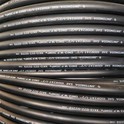
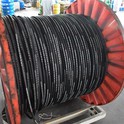
Before delving into the maximum flow rate, let's first understand what RUBBER Hose SAE R17 is. The SAE (Society of Automotive Engineers) has established standards for hydraulic rubber hoses, and the R17 designation refers to a specific type of hose. RUBBER Hose SAE R17 is a high - pressure hydraulic hose designed for use in severe service applications. It typically consists of an inner tube, reinforcement layers, and an outer cover. The inner tube is usually made of oil - resistant synthetic rubber, which is in direct contact with the fluid being transported. The reinforcement layers, often made of high - tensile steel wire, provide the hose with the strength to withstand high pressures. The outer cover is made of abrasion - resistant rubber to protect the hose from external damage.
Factors Affecting the Maximum Flow Rate
The maximum flow rate that RUBBER Hose SAE R17 can handle is influenced by several factors:
- Hose Size: One of the most significant factors is the inner diameter of the hose. A larger inner diameter allows for a greater volume of fluid to pass through the hose per unit of time. For example, a RUBBER Hose SAE R17 with a 1 - inch inner diameter will generally have a higher maximum flow rate than a hose with a 1/2 - inch inner diameter. The relationship between the inner diameter and the flow rate is not linear; as the inner diameter increases, the flow rate increases at a much faster rate.
- Fluid Viscosity: The viscosity of the fluid being transported also plays a crucial role. Viscosity is a measure of a fluid's resistance to flow. A highly viscous fluid, such as heavy oil, will flow more slowly through the hose compared to a less viscous fluid, like water. When dealing with viscous fluids, the maximum flow rate of the RUBBER Hose SAE R17 will be lower because more energy is required to move the fluid through the hose.
- Pressure Drop: Pressure drop is the decrease in pressure that occurs as the fluid flows through the hose. The longer the hose, the higher the pressure drop. Additionally, factors such as bends, fittings, and the roughness of the inner surface of the hose can also increase the pressure drop. A high pressure drop can limit the maximum flow rate because the pump or other fluid - moving device may not be able to overcome the resistance. To maintain a high flow rate, it is important to minimize the pressure drop by using shorter hoses, smooth - walled hoses, and proper fittings.
- Operating Temperature: Temperature affects both the viscosity of the fluid and the physical properties of the hose. As the temperature increases, the viscosity of most fluids decreases, which can potentially increase the flow rate. However, high temperatures can also cause the rubber in the hose to expand and may reduce its strength. On the other hand, low temperatures can make the rubber more brittle and increase the viscosity of the fluid, both of which can decrease the maximum flow rate.
Calculating the Maximum Flow Rate
There are several methods to calculate the maximum flow rate of RUBBER Hose SAE R17. One of the most common methods is using the Darcy - Weisbach equation, which is used to calculate the pressure drop in a pipe or hose. The equation is:
$\Delta P = f\frac{L}{D}\frac{\rho v^{2}}{2}$
where $\Delta P$ is the pressure drop, $f$ is the friction factor, $L$ is the length of the hose, $D$ is the inner diameter of the hose, $\rho$ is the density of the fluid, and $v$ is the average velocity of the fluid.
By rearranging the equation and using the continuity equation ($Q = A\times v$, where $Q$ is the flow rate and $A$ is the cross - sectional area of the hose), we can estimate the maximum flow rate. However, this calculation can be quite complex, as the friction factor $f$ depends on the Reynolds number, which is a dimensionless quantity that describes the flow regime (laminar or turbulent).


In practice, many manufacturers provide flow rate charts for their RUBBER Hose SAE R17 products. These charts are based on extensive testing and take into account the typical operating conditions. For example, a manufacturer may provide a chart that shows the maximum flow rate for different hose sizes at various operating pressures and fluid viscosities.
Comparison with Other Hose Types
It's interesting to compare the maximum flow rate capabilities of RUBBER Hose SAE R17 with other types of hoses. RUBBER Hose SAE R12 is another high - pressure hydraulic hose. While R12 is also designed for severe service, its construction and performance characteristics are slightly different from R17. In general, R17 hoses can handle higher pressures, but the maximum flow rate may be similar to R12 hoses of the same size, depending on the specific application.
Rubber Hose 2SN is a two - wire braid hydraulic hose. It is often used in less severe service applications compared to RUBBER Hose SAE R17. Due to its different reinforcement structure and design, the maximum flow rate of Rubber Hose 2SN may be lower than that of R17 for high - pressure and high - flow applications.
Practical Considerations for Maximizing Flow Rate
When using RUBBER Hose SAE R17 to achieve the maximum flow rate, there are several practical considerations:
- Proper Installation: Ensure that the hose is installed correctly. Avoid sharp bends and kinks, as these can significantly increase the pressure drop and reduce the flow rate. Use proper fittings that are compatible with the hose size and the fluid being transported.
- Regular Maintenance: Regularly inspect the hose for signs of wear, damage, or leakage. A damaged hose can not only pose a safety hazard but also reduce the flow rate due to internal blockages or external leaks. Replace the hose if it shows any signs of significant wear or damage.
- Matching with the Pump or Fluid - Moving Device: Make sure that the pump or other fluid - moving device is capable of providing the necessary pressure and flow rate. The pump should be sized correctly to work in conjunction with the RUBBER Hose SAE R17 to achieve the maximum flow rate.
Conclusion
Determining the maximum flow rate that RUBBER Hose SAE R17 can handle is a complex process that involves considering multiple factors such as hose size, fluid viscosity, pressure drop, and operating temperature. While it is possible to calculate the flow rate using equations, it is often more practical to refer to the flow rate charts provided by the manufacturer. As a supplier of RUBBER Hose SAE R17, we are committed to providing high - quality hoses and the necessary technical support to help our customers select the right hose for their specific applications and achieve the maximum flow rate.
If you are in need of RUBBER Hose SAE R17 for your industrial applications and want to discuss the flow rate requirements or any other technical details, we encourage you to contact us for further procurement and negotiation. We have a team of experts who can provide you with in - depth advice and customized solutions to meet your specific needs.
References
- Society of Automotive Engineers (SAE) standards for hydraulic hoses.
- Manufacturer's technical manuals for RUBBER Hose SAE R17, RUBBER Hose SAE R12, and Rubber Hose 2SN.
- Fluid mechanics textbooks for understanding the principles of fluid flow in pipes and hoses.