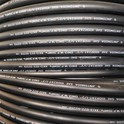
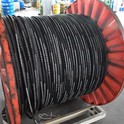
As a supplier of RUBBER Hose SAE R13, I am often asked about the materials used in these high - performance hoses. In this blog post, I will delve into the various materials that make up RUBBER Hose SAE R13, their functions, and why they are crucial for the hose's performance.
Inner Tube Material
The inner tube of a RUBBER Hose SAE R13 is the part that comes into direct contact with the fluid being transported. It must be resistant to the chemical properties of the fluid, as well as being able to withstand the pressure and temperature conditions within the system.
One of the most commonly used materials for the inner tube is nitrile rubber (NBR). Nitrile rubber has excellent resistance to oil, fuel, and other petroleum - based fluids. It can maintain its integrity even when exposed to a wide range of temperatures, typically from - 40°C to 100°C. This makes it suitable for use in hydraulic systems where oil is the primary fluid. The high - strength molecular structure of NBR also gives it good abrasion resistance, which is important as the inner tube is constantly in contact with the flowing fluid, which may contain small particles.


Another material that can be used for the inner tube is fluorocarbon rubber (FKM). FKM has superior chemical resistance compared to NBR. It can resist a wider range of aggressive chemicals, including acids, solvents, and high - temperature fluids. However, FKM is more expensive than NBR, so it is usually used in applications where the fluid is highly corrosive or the operating temperature is extremely high, often above 200°C.
Reinforcement Layers
The reinforcement layers of a RUBBER Hose SAE R13 are responsible for providing the hose with the necessary strength to withstand high pressures. There are several types of materials used for reinforcement.
Steel wire is a popular choice for reinforcement. High - tensile steel wires are braided or spiraled around the inner tube. Braided steel wire provides a more flexible hose, which is suitable for applications where the hose needs to be bent or routed around obstacles. On the other hand, spiraled steel wire offers higher pressure - resistance, making it ideal for high - pressure hydraulic systems. The steel wire used is typically made of carbon steel or stainless steel. Carbon steel is strong and relatively inexpensive, but it may be prone to corrosion if not properly protected. Stainless steel, on the other hand, has excellent corrosion resistance, but it is more expensive.
Synthetic fibers such as aramid and polyester can also be used for reinforcement. Aramid fibers, like Kevlar, have extremely high strength - to - weight ratios. They are lightweight yet can withstand high pressures. Polyester fibers are also strong and have good dimensional stability. They are often used in applications where a balance between strength, flexibility, and cost is required.
Outer Cover Material
The outer cover of a RUBBER Hose SAE R13 protects the inner components from environmental factors such as abrasion, weathering, and chemical exposure.
Chloroprene rubber (CR) is a commonly used outer cover material. It has good resistance to ozone, weather, and abrasion. Chloroprene rubber can form a tough, protective layer around the hose, preventing damage from external factors. It also has good flame - retardant properties, which is an important safety feature in many industrial applications.
Another option for the outer cover is polyurethane (PU). Polyurethane has excellent abrasion resistance, even better than chloroprene rubber in some cases. It is also very flexible, which allows the hose to be easily bent and installed. Additionally, PU has good resistance to oil and chemicals, making it suitable for use in harsh industrial environments.
Comparison with Other SAE Rubber Hoses
When comparing RUBBER Hose SAE R13 with other SAE rubber hoses such as RUBBER Hose SAE R9, RUBBER Hose SAE R1AT, and RUBBER Hose SAE R12, the materials used can vary significantly.
SAE R9 hoses are often used for high - pressure applications and may use more advanced materials for reinforcement and inner tube. For example, they may use multiple layers of high - strength steel wire for reinforcement and a specialized inner tube material to handle extreme pressures.
SAE R1AT hoses are designed for low - pressure applications. They may use less expensive materials such as textile fibers for reinforcement and a simpler inner tube material like natural rubber in some cases.
SAE R12 hoses are high - pressure hoses with a focus on high - temperature resistance. They may use materials like FKM for the inner tube and high - temperature - resistant steel wire for reinforcement.
Importance of Material Selection
The selection of materials for RUBBER Hose SAE R13 is crucial for its performance and longevity. Using the wrong material can lead to premature failure of the hose, which can result in costly downtime and potential safety hazards.
For example, if a hose with an NBR inner tube is used in a system where the fluid is highly corrosive, the inner tube may degrade quickly, leading to leaks. Similarly, if the reinforcement material is not strong enough for the operating pressure, the hose may burst, causing a loss of fluid and potential damage to the surrounding equipment.
Conclusion
In conclusion, the materials used in RUBBER Hose SAE R13 play a vital role in its performance. The inner tube, reinforcement layers, and outer cover each have specific functions, and the choice of materials depends on factors such as the type of fluid, operating pressure, temperature, and environmental conditions.
If you are in the market for high - quality RUBBER Hose SAE R13, we are here to provide you with the best products. Our hoses are manufactured using the highest - quality materials and strict quality control processes to ensure reliable performance. Contact us for more information and to discuss your specific requirements. We look forward to working with you to meet your hydraulic hose needs.
References
- "Handbook of Rubber Technology" by Maurice Morton
- "Hydraulic Systems and Components" by John F. Dini